Best Outdoor Lighting for Driveways: The Definitive Architectural Guide
The architectural transition from public thoroughfares to private residential territory relies heavily on thresholds. When night falls, the driveway transforms. It shifts from a utilitarian strip of concrete into a critical spatial corridor requiring careful navigation. Designing this nocturnal transition involves balancing vehicular safety, pedestrian guidance, and visual integration. Without deliberate planning, twilight turns these long approaches into hazardous zones or blinding tunnels.
At the center of this engineering challenge lies the precise orchestration of luminous intensity and optical cut-off. Introducing light to a vehicular path requires more than lining edges with generic stakes. Instead, it demands a sophisticated synchronization of electrical loads, hardscape tolerances, and regional climate durability. When multiple elements converge, uncoordinated placement strategies inevitably fail. As a result, they produce visual clutter and unsafe driving conditions.
Achieving a resilient approach requires an analytical methodology. It treats nighttime visibility as an integrated structural layer rather than an afterthought. Navigating this domain successfully involves mastering optical physics and electrical distribution theory. Consequently, designing durable exterior access corridors demands an exhaustive framework. This framework evaluates how light interacts with varied paving materials, topography, and weather patterns.
Understanding Best Outdoor Lighting for Driveways
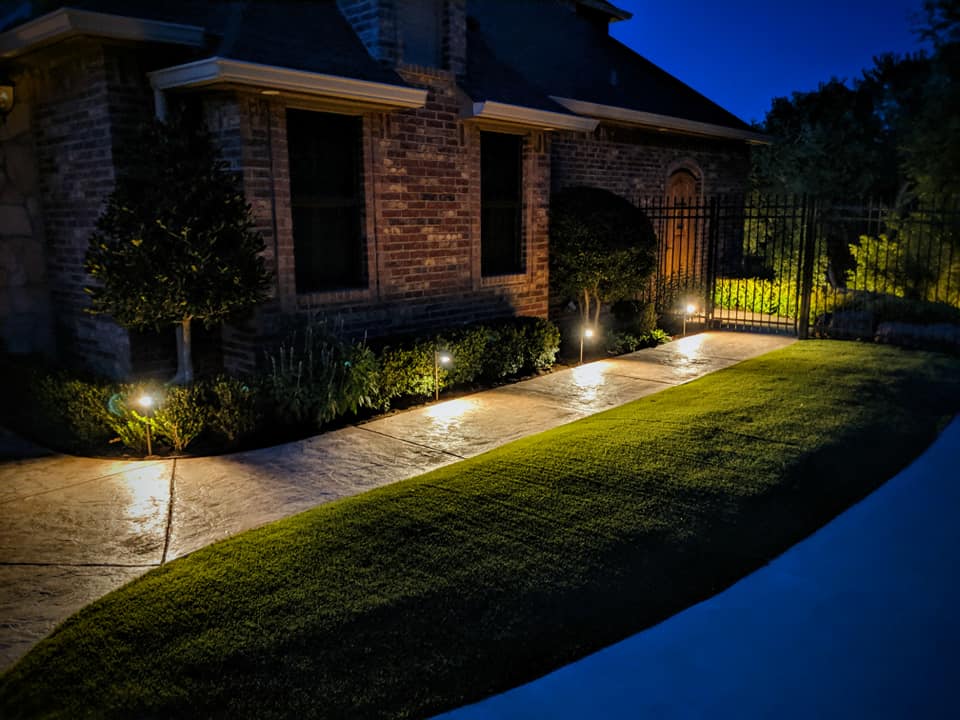
The phrase best outdoor lighting for driveways denotes a comprehensive architectural and engineering strategy. It synchronizes every electrical, optical, and structural element of an exterior vehicular approach. People frequently misconstrue it as a static product recommendation list or a simple hardware shopping catalog. In reality, it represents an interdisciplinary master standard. It reconciles vehicular ergonomics, site topography, circuit engineering, load calculations, and municipal dark-sky regulations into a unified operational strategy.
Oversimplification in this sector typically manifests as a fixation on decorative fixture styling while entirely ignoring systemic coordination. Property owners and amateur designers often evaluate luminaires based entirely on daytime appearance. They relegate circuit capacity, voltage drop management, and optical distribution to secondary concerns. This oversight results in pervasive field complications. These include severe voltage starvation on long low-voltage runs and blinding drivers via unshielded optics. True engagement requires treating the entire driveway layout as an interdependent network.
Another prevalent misconception is that high-end exterior illumination is only necessary for sprawling commercial parking structures or grand luxury estates. Even compact suburban driveways encounter complex spatial constraints, strict environmental ordinances, and intricate hardscape integrations. Recognizing these systemic interdependencies prevents costly installation errors, eliminates retrofitting expenses, and ensures that lighting elevates the overarching architectural vision without compromising safety.
Deep Contextual Background
The lineage of vehicular approach illumination traces back to the mid-20th century. During this era, suburban expansion and the widespread adoption of the private automobile transformed residential architecture. Garages shifted from detached rear-lot outbuildings to prominent forward-facing features. Consequently, this stretched the domestic driveway into a major spatial element. Historically, exterior illumination depended on incandescent high-voltage post lanterns or harsh, industrial mercury-vapor floodlights mounted high on building facades. Each approach carried heavy constraints regarding high energy consumption and severe thermal output.
Then, the commercialization of high-output solid-state lighting and low-voltage transformer technology in the late 2000s fundamentally disrupted these physical boundaries. Thermal management transitioned from heavy cast-iron heat sinks to engineered aluminum chassis. Simultaneously, control systems evolved from simple mechanical timers to sophisticated digital addressable networks. Concurrently, the rapid proliferation of municipal dark-sky advocacy reshaped engineering priorities. Cities and suburban communities enacted strict codes limiting upward-directed light and maximum luminous intensities.
This regulatory pressure forced design professionals to move away from isolated fixture selections. Instead, they adopted holistic design protocols. Environmental stewardship, energy efficiency mandates, and human-centric safety principles thus became embedded directly into foundational engineering and spatial planning.
Conceptual Frameworks and Mental Models
Navigating complex exterior illumination along vehicular routes requires moving past intuition and employing structured mental models. These models account for human visual response, environmental impact, and systemic interdependence.
-
The Visual Guidance Rhythm Model: This framework organizes path illumination into sequential pacing tiers: threshold orientation, continuous guidance, and arrival termination. Threshold lighting marks the property entrance off the public road. Furthermore, continuous guidance uses low-level markers to define edges, while termination lighting highlights parking aprons. Violating this rhythm by flooding the entire length with uniform light causes visual fatigue.
-
The Glare-Cutoff Equilibrium: Driving safety depends on the balance between source luminance, mounting height, and optical cut-off angles. Unshielded or poorly aimed luminaires project high-angle light directly into a driver’s windshield, destroying night adaptation. Modern planning mitigates this through fully shielded optical assemblies and precise horizontal beam-spread mapping.
-
The Layered Approach Envelope: Instead of treating a driveway as a flat ribbon of concrete, this mental model divides the corridor into vertical zones: the running surface, immediate shoulders, and background landscape canopy. Each zone requires distinct luminous intensities to build visual depth without causing distracting hot spots.
-
The Vehicular Load and Thermal Index: Driveway fixtures operate in extremely demanding physical environments involving vehicular weight impacts, snowplow clearing, thermal expansion, and severe moisture accumulation. This model evaluates the lighting network based on mechanical impact resistance, drive-over load ratings, and long-term driver accessibility.
Key Categories or Variations
Driveway illumination comprises several distinct functional categories. Each category utilizes specialized optical assemblies and mechanical mountings to achieve specific spatial and safety effects across a coordinated site.
-
Low-Profile Drive-Over In-Grade Paver Lights: Flush-mounted structural luminaires engineer to withstand heavy vehicular weight. They install directly into paving surfaces to delineate edges.
-
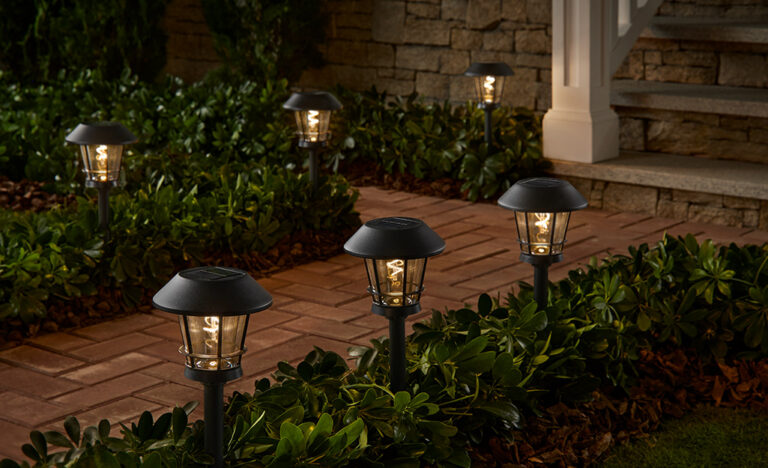
Low-Voltage Path and Bollard Markers: Vertical posts or shielded mushroom fixtures install along planting beds adjacent to driveways to define spatial boundaries.
-
Architectural Pillar and Gate Sconces: Heavy-duty luminaires mount on masonry entry columns to mark property thresholds from public streets.
-
Tree-Mounted Canopy Downlights: Remote fixtures secure high within mature trees above driveways to cast wide, dappled washes resembling natural moonlight.
-
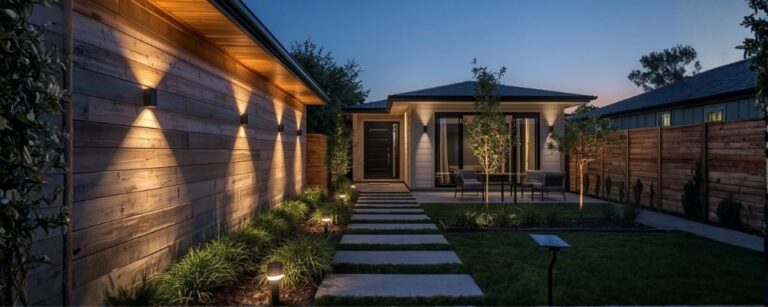
Wall-Mounted Garage Apron Sconces: High-output, fully shielded architectural boxes affix adjacent to garage doors to illuminate parking maneuver zones.
-
Linear Hardscape Retaining Wall Extrusions: Continuous LED channels integrate into raised masonry retaining walls flanking sloping driveways.
-
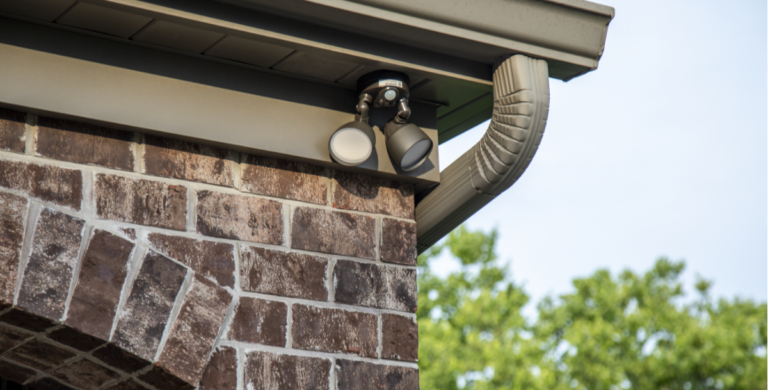
Motion-Activated Security Projectors: Precision-aimed flood luminaires pair with passive infrared sensors to illuminate unexpected movement near parking bays.
| Category | Typical Mounting | Primary Optical Effect | Common Application | Primary Trade-Off |
| Drive-Over In-Grade | Flush with paving surface | Vertical upward fan or graze | Edge delineation, modern entries | Prone to tire tracking, dirt accumulation, and water pooling |
| Bollard Markers | Surface-bolted to grade | 360-degree or asymmetric lateral spread | Straight driveways, landscape borders | Vulnerable to accidental impact from vehicles or snowplows |
| Pillar Entry Sconces | Masonry gate columns | Threshold downward wash | Property entrance, main gate | Requires pre-planned conduit routing through stone columns |
| Tree Canopy Downlights | High branch rigging | Broad, dappled overhead wash | Long winding rural driveways | Requires mature trees; regular adjustment as branches grow |
| Garage Apron Sconces | Wall-mounted structure | Wide task wash over parking zone | Parking apron, turnaround bays | Can cause glare if mounted too low or unshielded |
Decision Logic for Category Selection
Choosing the appropriate category depends primarily on the physical geometry of the driveway and surrounding landscape profile. For long, straight suburban driveways flanked by open lawns, low-profile bollards or recessed in-grade markers provide optimal guidance. Where mature tree canopies overhang the approach, remote-mounted moonlighting fixtures eliminate the need for physical ground stakes entirely. The guiding principle is to match mounting methods to operational stress. Specifically, fixtures placed within vehicle paths must possess certified drive-over load ratings.
Detailed Real-World Scenarios
Analyzing practical applications reveals how lighting theory translates into physical execution across diverse residential settings.
Scenario 1: The Steep Mountain Switchback Driveway
A winding, steep asphalt driveway climbs a heavily wooded hillside featuring sharp switchback turns and deep drop-offs.
-
Constraints: Severe grade changes; complete lack of vertical walls for mounting; high risk of vehicle run-off during winter ice storms; strict dark-sky mandates.
-
Decision Points: The designer abandons traditional ground bollards, which remain vulnerable to snow removal equipment. Instead, they specify high-output tree-mounted directional downlights along switchback curves. Furthermore, they supplement these with heavy-duty drive-over markers embedded flush into outer asphalt edges.
-
Failure Modes: Low bollards would shear off during winter snowplow clearing. Additionally, unshielded floodlights would bounce glare off wet asphalt.
-
Second-Order Effects: The overhead canopy wash provides naturalistic, glare-free orientation across slopes. Meanwhile, flush edge markers give drivers absolute physical confirmation of pavement boundaries.
Scenario 2: The Urban Narrow Infront Apron
A short, wide urban concrete driveway squeezes between two neighboring property lines, directly abutting a busy sidewalk and street.
-
Constraints: Zero lot line tolerances; strict light trespass restrictions; heavy pedestrian foot traffic crossing aprons; high risk of vehicle bumper impact.
-
Decision Points: The design utilizes heavy bronze step-style wall fixtures recessed into low flanking brick retaining walls. Moreover, it couples these with wide-beam shielded sconces mounted on garage faces. All optical assemblies feature asymmetric forward-throw lenses that direct light strictly downward.
-
Failure Modes: Standard unshielded post lights would blast light directly into neighbor bedroom windows. Furthermore, they would blind pedestrians on adjacent sidewalks.
-
Second-Order Effects: Low-level horizontal wash highlights masonry texture while ensuring 100% of luminous output stays confined within private property boundaries.
Scenario 3: The Expansive Country Estate Entry
A grand half-mile asphalt drive sweeps across open rolling meadows toward a central motor court and formal residence.
-
Constraints: Massive wiring runs causing severe voltage drop; absence of vertical structures along middle stretches; vast open sky exposing installations to intense weather.
-
Decision Points: Electrical engineers specify robust multi-tap magnetic 12V systems utilizing heavy 10-gauge direct-burial cable. Entry columns feature custom cast-bronze pillar sconces, while long straightaways utilize low-voltage louvered bollards spaced at precise structural intervals.
-
Failure Modes: Standard electronic transformers would fail due to voltage drop over extended distances. Moreover, incompatible cable gauges would result in terminal fixtures operating below design output.
-
Second-Order Effects: Rhythmic bollard spacing creates a sophisticated sense of arrival, guiding visitors effortlessly across open landscapes without creating unnatural runway effects.
Scenario 4: The Coastal Sandy Dune Approach
A crushed-shell and paver driveway winds through coastal dunes exposed to salt spray, shifting sand, and aggressive winds.
-
Constraints: Shifting sand substrates destabilizing traditional stake fixtures; severe galvanic corrosion from marine humidity; strict turtle-nesting optical regulations.
-
Decision Points: All fixtures specify marine-grade 316 stainless steel or solid bronze. In-grade fixtures mount on deep concrete footings below shifting sand lines, and optical modules utilize amber-shifted LEDs compliant with coastal wildlife codes.
-
Failure Modes: Standard aluminum fixtures corrode into structural failure within two seasons. Furthermore, standard stake-mounted lights quickly lean or bury entirely as sand dunes migrate.
-
Second-Order Effects: Deep-anchored, corrosion-resistant hardware withstands severe coastal storms. Meanwhile, warm amber spectrums preserve local marine ecosystems.
Planning, Cost, and Resource Dynamics
Executing a sophisticated driveway lighting plan involves balancing direct hardware costs with extensive trenching labor, electrical infrastructure, and long-term energy expenditures. Unlike interior lighting or simple garden beds where fixtures easily add later, driveway installations require heavy-duty underground conduit routing, core drilling, and structural sub-base integration. Because of this, post-paving alterations become exceptionally expensive.
Direct costs are driven by luminaire build quality, optical engineering, and drive-over load ratings. High-end architectural fixtures feature precision-machined metals, replaceable LED light engines, and sophisticated internal drivers. Meanwhile, indirect costs include deep trenching beneath paving, heavy-gauge copper cabling, multi-tap magnetic transformer placement, and professional core-drilling. Opportunity costs typically manifest as the trade-off between coordinating electrical rough-ins prior to pouring concrete versus cutting channels into finished hardscapes later.
| Cost Component | Budget Range (USD) | Primary Variables | Long-Term Financial Impact |
| Entry-Level Fixtures | $75 – $200 per unit | Stamped aluminum, integrated non-replaceable LED | Frequent replacement cycle; high failure rate under vehicle weight |
| Mid-Tier Architectural | $200 – $600 per unit | Cast brass / heavy aluminum, replaceable light engines | Balanced lifespan; reliable thermal and mechanical performance |
| High-End Custom / Spec | $600 – $1,800+ per unit | Marine-grade stainless, custom optics, drive-over rating | Maximum durability; lowest lifecycle replacement cost |
| Infrastructure & Wiring | $3,000 – $12,000+ total | Trenching length, core drilling, transformer capacity | Foundation of system stability; extremely costly to upgrade post-paving |
| Professional Design & Commissioning | $2,000 – $6,000+ flat fee | Site complexity, zoning compliance, photometrics | Prevents layout errors, glare hazards, and code violations |
Tools, Strategies, and Support Systems
Deploying a resilient, high-performance exterior driveway illumination system requires a structured toolkit of diagnostic instruments, design software, and infrastructural support components.
-
Photometric Simulation Software: Professionals use this software to model vehicle stopping sight distances, foot-candle distributions, and boundary spill prior to physical installations.
-
Digital Light Meter: A lux or foot-candle meter is essential for commissioning systems on-site, verifying that actual light levels conform to safety guidelines and dark-sky compliance thresholds.
-
Heavy-Duty Magnetic Transformers: Unlike electronic transformers, heavy-duty magnetic low-voltage transformers compensate for severe voltage drop over long wire runs common along extended driveways.
-
Gel-Filled Waterproof Direct-Burial Connectors: Specialized connectors prevent moisture ingress and subsequent galvanic corrosion at low-voltage splice points beneath grade.
-
Smart Astronomical Timers & Control Hubs: Automated control systems link to local sunrise and sunset schedules as well as astronomical coordinates, eliminating manual adjustments.
-
Heavy-Duty Core Drilling Rig: Technicians require this rig for cutting precise mounting cavities into cured concrete or stone pavers for flush in-grade luminaires.
-
Insulated Trenching and Boring Equipment: This minimizes landscape disruption when routing heavy-gauge conduit beneath established driveways and aprons.
Risk Landscape and Failure Modes
The intersection of vehicular traffic, heavy electrical loads, and aggressive natural environments generates a distinct taxonomy of operational risks for driveway lighting systems.
-
Vehicular Impact and Shear Stress: Accidental strikes from delivery trucks, passenger vehicles, or snowplows can shear off bollards and crush flush in-grade fixtures if load ratings remain inadequate.
-
Sub-Base Drainage Failure: In-grade fixtures installed without dedicated aggregate drainage sumps fill with standing water during heavy rains. Consequently, this leads to hydrostatic pressure and immediate seal failure.
-
Voltage Drop and Luminous Degradation: Inadequate wire gauge sizing over long driveway runs results in voltage starvation. Thus, this manifests as dim fixtures and electronic flicker at far circuit ends.
-
Thermal Overload in Paving: Enclosing high-output LED drivers within concrete or asphalt without adequate thermal dissipation paths accelerates semiconductor degradation.
-
Galvanic Corrosion: Direct contact between dissimilar metals—such as aluminum fixture housings touching steel rebar in concrete without dielectric separation—triggers rapid electrochemical breakdown.
-
Root and Rodent Damage: Unarmored cabling installed too shallowly in flanking planting beds frequently severs due to landscape cultivation or chewing by subterranean rodents.
Compounding risks occur when multiple minor failures interact. For instance, a minor seal compromise in an in-grade paver light allows seasonal condensation to enter. When combined with high thermal output from unvented housings and continuous vehicle vibration, trapped moisture vaporizes. It then accelerates corrosion on circuit boards and causes catastrophic driver failure during first winter freeze cycles.
Governance, Maintenance, and Long-Term Adaptation
Maintaining an architectural driveway lighting system requires a disciplined, cyclical governance framework that goes beyond simple bulb replacement. Because modern fixtures frequently utilize integrated LED arrays or heavy flush-mounted housings, maintenance strategies must focus on systemic health monitoring and mechanical clearing rather than reactive repairs.
Regular inspection cycles should synchronize with seasonal shifts. In autumn, clearing flush in-grade fixtures of accumulated organic debris, fallen leaves, and mud is essential to prevent blocked lenses and trapped moisture. Then, in spring, inspecting wiring connections within remote junction boxes for frost heave damage or moisture intrusion is vital. Furthermore, low-voltage transformer outputs require verification with a digital multimeter.
Adjustment triggers for system modification include landscape maturation—where growing perimeter shrubs obstruct previously positioned bollards—and changes in vehicular fleet size or turning patterns. When new wider vehicle configurations begin tracking over edge fixtures, protective bollards or repositioned aiming angles become necessary. Finally, establishing a digital asset management ledger that records fixture part numbers, driver specifications, and circuit mapping ensures future maintenance executes with minimal diagnostic friction.
Measurement, Tracking, and Evaluation
Assessing the ongoing success of an exterior driveway lighting installation requires balancing quantitative metrics with qualitative experiential evaluations. Relying solely on numerical specifications ignores human perception of space, speed, and safety.
-
Quantitative Indicators: Measured foot-candle levels along pavement centerlines and property boundaries verify dark-sky compliance. Additionally, tracking total system wattage draw per linear foot, voltage drop percentages at terminal fixtures, and impact resistance ratings provides critical data.
-
Qualitative Signals: Driver visual comfort assessments evaluate the absence of windshield glare during approach. Other signals include clear visual definition of turning radii and parking aprons, seamless transitions from public roads to private property, and the absence of intrusive light spill into habitable rooms.
Documentation Examples
-
Photometric Compliance Log: A tabular record compares target foot-candle calculations against actual on-site meter readings taken at midnight along property perimeters and driveway centerlines.
-
Circuit Schematic and Load Ledger: A master electrical drawing details transformer loads, cable gauges, run lengths, and zone allocations to prevent future over-allocation.
-
Driver and Optic Replacement Matrix: A maintenance catalog lists exact manufacturer part numbers, replacement LED module availability, and optical lens dispersion angles for every installed fixture type.
Common Misconceptions and Oversimplifications
-
Myth: Higher lumen counts equate to superior driveway safety.
-
Correction: Excessive brightness creates blinding glare, washes out visual depth, and destroys night vision. Instead, modern design relies on optical precision and controlled luminance rather than raw power.
-
-
Myth: Any outdoor light fixture can install along a driveway.
-
Correction: Driveway fixtures face unique mechanical loads, vibration, and moisture conditions requiring certified drive-over ratings, heavy-duty housing materials, and specialized sealing.
-
-
Myth: Color temperature does not matter for vehicular approaches.
-
Correction: Cool color temperatures above 4000K create harsh, institutional atmospheres and impair contrast perception. Conversely, warm spectrums between 2700K and 3000K preserve natural material warmth and visual comfort.
-
-
Myth: Low-voltage systems eliminate all electrical planning requirements.
-
Correction: While low-voltage systems reduce shock hazards, improper wire sizing over long driveway runs causes severe voltage drop, overheating, and potential failure at high-current transformer terminals.
-
-
Myth: In-grade fixtures are maintenance-free once sealed in concrete.
-
Correction: Flush in-grade fixtures constantly collect dirt, tire rubber, and moisture, requiring regular manual cleaning and seal inspections to prevent premature failure.
-
-
Myth: Motion sensors eliminate the need for continuous pathway guidance.
-
Correction: While motion sensors work well for security zones, delayed sensor triggers create sudden darkness during slow vehicular navigation, increasing accident risks along complex driveway turns.
-
Ethical, Practical, and Contextual Considerations
The deployment of artificial light along residential driveways carries profound environmental responsibilities. Unshielded exterior illumination disrupts nocturnal wildlife movement corridors, interferes with insect pollination cycles, and suppresses foraging behaviors. Furthermore, light trespass across property boundaries infringes upon the privacy and circadian health of neighbors.
Adhering to strict dark-sky principles—such as utilizing fully shielded optical assemblies, programming curfews via astronomical timers, and deploying minimum necessary wattages—reconciles modern architectural aspirations with ecological stewardship. Ultimately, the objective is to honor the natural rhythm of day and night while providing precise functional clarity required for safe vehicular navigation.
Conclusion
The discipline of driveway illumination within modern architecture demands an integration of rigorous technical planning and sensitive aesthetic restraint. By prioritizing optical precision, mechanical resilience, and environmental responsibility over sheer brightness, contemporary design transforms utilitarian vehicular approaches into harmonious architectural thresholds. True mastery lies in understanding that darkness and light are equal partners in spatial composition.