Best Estate Outdoor Lighting in the US: Architectural Design Guide
The configuration of large-scale residential grounds across North America has evolved from rudimentary site safety toward a sophisticated discipline of landscape architecture and optical physics. Contemporary expansive properties—spanning sprawling rural acreage, coastal compounds, and manicured suburban compounds—require nocturnal illumination strategies that balance architectural dignity, ecological stewardship, and spatial depth. Evening darkness across these extensive parcels is no longer treated as an obstacle requiring brute-force illumination, but rather as an active structural medium. Designers manipulate shadow, contrast, and chromatic temperature to articulate topography, frame vegetation morphology, and extend interior living volumes outward into the landscape.
Yet, engineering a high-performance nocturnal ecosystem across extensive acreage introduces severe technical and environmental hurdles. Managing voltage drop across multi-thousand-foot low-voltage wire runs, resisting corrosive microclimates, and complying with stringent municipal dark-sky regulations demand meticulous planning. Hardware selection cannot rely on consumer-grade assumptions; instead, it requires industrial-grade metallurgy, precise optical control, and resilient closed-loop power distribution. Consequently, realizing a cohesive visual environment across a large property requires looking past catalog aesthetics to analyze the underlying electrical infrastructure, thermodynamic limits, and long-term maintenance realities.
Navigating this specialized field necessitates an analytical mindset that treats exterior lighting as permanent civil infrastructure. Property owners, landscape architects, and electrical engineers must collaborate to integrate sub-surface distribution channels, digital zoning hubs, and luminaire typologies that withstand decades of environmental exposure. This reference manual explores the structural realities, economic frameworks, and engineering systems that govern elite night-design implementations across high-end American residential grounds.
Understanding “best estate outdoor lighting in the us”
The phrase best estate outdoor lighting in the us is frequently misinterpreted in commercial marketing as a simple ranking of luxury hardware brands or high-priced retail fixtures. On the contrary, this reductive framing obscures the complex technical ecosystem, site-specific engineering parameters, and environmental regulations that define truly elite installations. A premier nighttime system is determined not by the logo stamped on a luminaire housing, but by the seamless synthesis of optical precision, structural metallurgy, thermal management, and invisible electrical architecture.
A widespread misconception involves conflating high initial price tags or excessive lumen output with design excellence. Property owners frequently assume that flooding a landscape with high-intensity light conveys prestige, when in practice, unmanaged brightness destroys spatial depth, creates blinding glare, washes out botanical coloration, and violates local dark-sky ordinances. Furthermore, another persistent oversimplification treats estate lighting as a static commodity that requires no adaptation over time. In reality, mature landscape expansion, seasonal foliage shifts, and firmware evolution demand continuous system calibration and thoughtful zoning flexibility.
True mastery in this discipline requires evaluating the entire ecosystem of power delivery, luminous distribution, and environmental interaction. An elite specification accounts for color rendering indices that preserve natural foliage pigmentation, beam control mechanisms that eliminate light trespass, and heavy-gauge power topologies that prevent voltage degradation. Shifting perspective from isolated decorative objects to an engineered, closed-loop infrastructural network is therefore the foundational step toward achieving professional-grade results across the expansive landscapes of North American luxury properties.
Deep Contextual Background: The Evolution of Estate Illumination
The historical trajectory of American estate illumination reflects a steady transition from crude, high-voltage line-voltage floodlighting toward highly regulated, low-voltage solid-state systems. In early twentieth-century country houses and grand suburban estates, outdoor lighting relied on exposed incandescent or carbon-arc fixtures wired directly into high-voltage residential circuits. These early installations generated massive thermal outputs, consumed prohibitive amounts of electrical energy, and offered zero optical control beyond casting a wide, unmanaged arc of harsh light that flattened the visual field.
Subsequently, the late twentieth century introduced the low-voltage 12-volt halogen era, driven by the proliferation of magnetic toroidal transformers and compact MR16 lamps. This technological shift democratized landscape design, enabling property owners to weave flexible low-voltage cables through garden beds and highlight specific architectural elements or specimen trees with unprecedented precision. However, halogen installations brought severe operational drawbacks. Rapid bulb burnout rates, heavy thermal dissipation, and substantial electrical draw necessitated frequent maintenance, seasonal bulb replacements, and oversized wiring runs to combat severe voltage drop across long acreages.
Today, the field is dominated by solid-state semiconductor technology. Modern high-end installations leverage integrated LED arrays, specialized total internal reflection (TIR) optics, and sophisticated wireless mesh control hubs that allow precise zoning, scheduling, and dimming via digital interfaces. Understanding this generational shift clarifies why contemporary design relies on advanced power distribution and thermal engineering rather than legacy retrofit methodologies.
Conceptual Frameworks and Mental Models for Nocturnal Planning
Effective exterior lighting design relies on mental models that prevent light pollution, spatial disorientation, and premature hardware failure. Applying these frameworks ensures that every installed lumen serves a distinct structural, safety, or aesthetic function.
The Layered Illumination Matrix
This model rejects uniform yard illumination, breaking the nocturnal environment into distinct functional layers: ambient wayfinding, architectural accentuation, task illumination, and specimen focal highlighting. Balancing these layers creates visual depth and architectural hierarchy rather than flattening the landscape into an artificial glow.
The Glare Control and Shielding Horizon
An analytical tool evaluating human viewing angles relative to fixture placement. By utilizing deep cowls, honeycomb louvers, and strict directional shielding, designers ensure that only illuminated surfaces—never the raw light source—remain visible from primary living and viewing zones.
The Kelvin Temperature Continuity Model
Chromaticity consistency is vital for psychological comfort and visual stability. This model establishes strict rules for color temperature blending, ensuring that warm architectural accents are never jarringly juxtaposed against cool commercial sources above 4000K, thereby preserving a natural nocturnal atmosphere.
The Electrical Voltage Drop Equilibrium
A physical model accounting for low-voltage power distribution limits across sprawling acreages. It evaluates how cable length, wire gauge thickness, and cumulative fixture wattage interact across long runs, preventing terminal dimming and color shifting caused by excessive electrical resistance.
Key Categories, System Variations, and Trade-Offs
Selecting the correct luminaire typology is a critical design choice. The market features several distinct functional categories, each carrying unique trade-offs between optical performance, material durability, and installation complexity.
Solid Brass and Bronze Accent Uplights
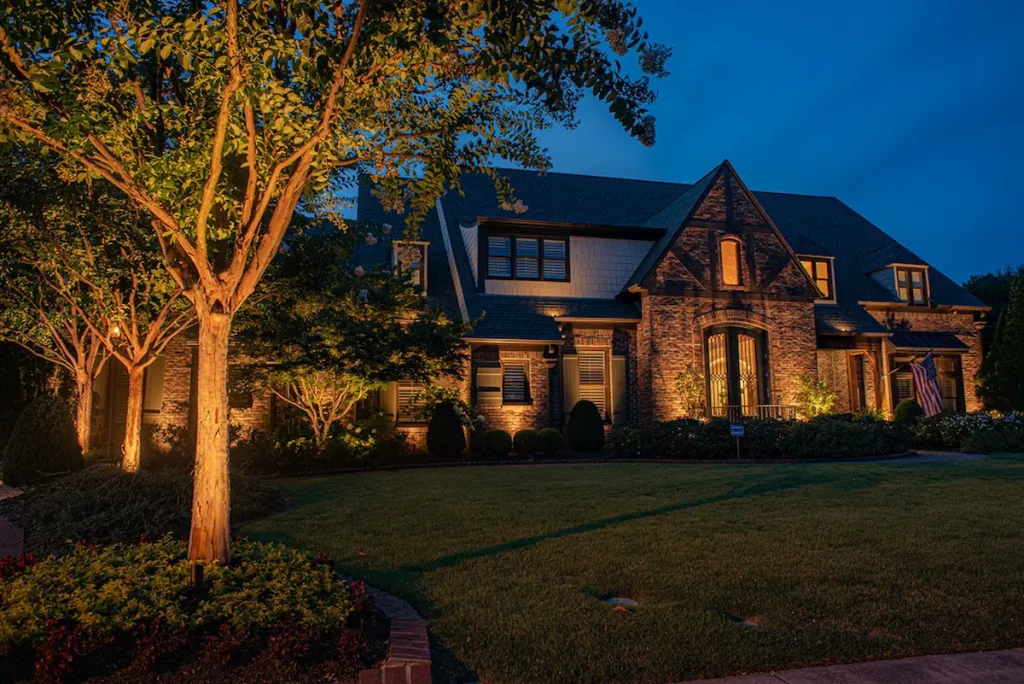
Engineered for highlighting tree trunks, masonry pillars, and architectural facades, these heavy-metal fixtures develop a natural protective patina over time. Nevertheless, their high initial capital cost and heavy weight require secure anchoring or staking to prevent physical displacement.
Architectural Linear Grazers and Wall Washers
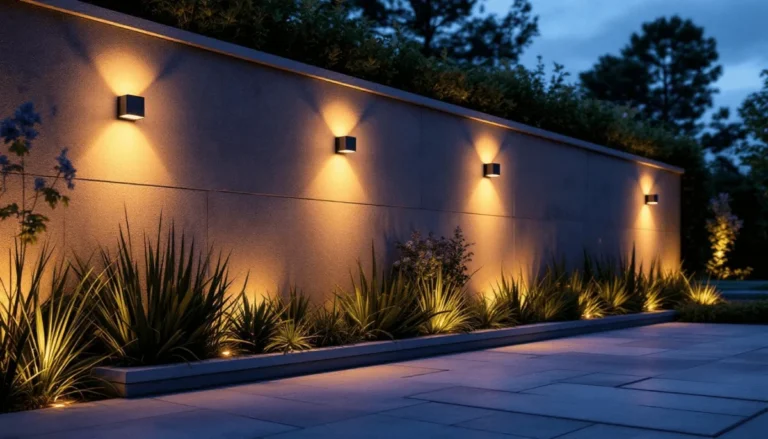
Designed to sweep uniform illumination across rough stone walls or vertical wood siding, these linear fixtures reveal fine surface textures. Yet, they demand precise mounting tolerances and concealed wiring chases to prevent visual clutter.
Recessed In-Grade Well Lights
Flush-mounted into paving stones or turf, these fixtures provide dramatic upward illumination for columns or overhangs. Conversely, they are highly susceptible to internal condensation and water pooling if subsurface drainage beds fail.
Low-Profile Path and Bollard Luminaires
Providing pedestrian wayfinding along long estate driveways and garden staircases, these fixtures prevent tripping hazards. Although essential for safety, unshielded bollards can emit excessive lateral glare and light pollution into neighboring properties.
Submersible Underwater Luminaires
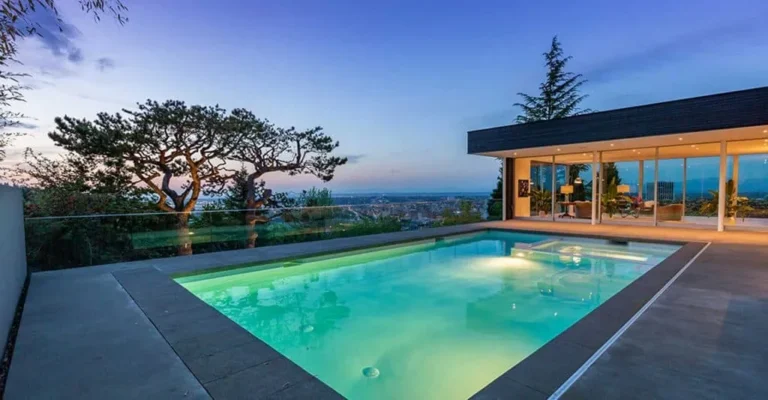
Engineered for estate ponds, decorative fountains, and swimming pool perimeters, these fixtures must withstand continuous immersion and high water pressure. Furthermore, they require rigorous IP68 waterproofing ratings and low-voltage isolation transformers for absolute safety.
Integrated Smart-Control Transformers and Hubs
Representing the central nervous system of modern lighting networks, these units manage power conversion, zoning, and wireless protocols. While offering immense scheduling flexibility, complex digital control boards introduce potential electronic failure liabilities over extended operational lifecycles.
| Fixture Typology | Capital Investment | Maintenance Overhead | Optical Precision | Primary Structural Trade-Off |
| Solid Brass Uplights | High | Low | High | High initial material cost and heavy anchor requirements |
| Linear Wall Grazers | Very High | Medium | Very High | Requires meticulous mounting alignment and concealed chases |
| In-Grade Well Lights | High | High | Moderate | Extreme vulnerability to internal condensation and water pooling |
| Path and Bollard Lights | Moderate | Low | Moderate | Risk of lateral glare and mechanical damage from turf equipment |
| Submersible Fixtures | Extreme | High | High | Strict requirement for IP68 ratings and periodic seal replacements |
| Smart Control Hubs | Moderate | Medium | High (Systemic) | Susceptible to firmware obsolescence and lightning surge damage |
Realistic Decision Logic
When evaluating options against professional standards, properties should prioritize corrosion-resistant metals like cast brass, bronze, and 316 stainless steel over painted aluminum alloys. Investing in robust housing materials ultimately minimizes long-term replacement cycles and guarantees structural resilience across aggressive environments.
Detailed Real-World Scenarios and Implementation Pathways
To translate abstract optical planning principles into execution, consider how lighting challenges manifest across distinct American residential contexts.
A : The Coastal Compound Facing Severe Marine Corrosion
-
Constraints: High airborne salinity, constant moisture exposure, aggressive marine winds, and strict environmental regulations.
-
Decision Points: Specifying powder-coated aluminum or cheap steel fixtures results in catastrophic structural corrosion and paint blistering within eighteen months.
-
Failure Modes: Total housing disintegration, electrical short circuits in socket assemblies, and regulatory fines for non-compliant wildlife-safe wavelengths.
-
Second-Order Effects: Upgrading exclusively to raw marine-grade bronze or copper fixtures that patina safely, coupled with amber-shifted LED lamps designed to bypass wildlife visual sensitivity thresholds.
B : The Sprawling Wooded Estate with Massive Canopy Trees
-
Constraints: Immense physical scale, long low-voltage cable runs, massive tree trunk dimensions, and deep shadow creation.
-
Decision Points: Relying on standard 12-gauge direct-burial wire and small low-output fixtures creates severe voltage drop and fails to register against mature tree bark.
-
Failure Modes: Terminal dimming at the end of cable runs, premature LED driver burnout from under-voltage stress, and completely invisible focal points.
-
Second-Order Effects: Utilizing multi-tap toroidal transformers, heavy-duty 8-gauge or 10-gauge trunk lines, and high-lumen narrow-spot fixtures mounted high in tree branches (moonlighting techniques).
C : The Modern Minimalist Desert Compound
-
Constraints: Extreme diurnal temperature swings, high UV exposure, exposed concrete surfaces, and zero tolerance for visible hardware.
-
Decision Points: Surface-mounting bulky conduit boxes or visible fixtures destroys the clean architectural intent of the minimalist aesthetic.
-
Failure Modes: Thermal expansion cracking of housing seals, UV degradation of polymer lenses, and stark glare against reflective sand.
-
Second-Order Effects: Pre-planning precise form-work recesses for cast-in-place in-grade luminaires, utilizing micro-scale linear slot fixtures, and focusing entirely on indirect bounce lighting.
Planning, Cost Structures, and Resource Dynamics
Achieving design excellence in exterior illumination demands a granular breakdown of project economics. Common budgeting errors stem from failing to account for subterranean cable trenching, transformer sizing overhead, and professional optical alignment labor.
Direct Material and Labor Expenses
-
Luminaire Hardware: Precision-machined brass bodies, optical lenses, anti-glare cowls, and integrated LED modules.
-
Power Distribution Infrastructure: Multi-tap magnetic transformers, photocells, digital astronomical timers, and wireless control nodes.
-
Subsurface Cabling and Connectors: Direct-burial stranded copper wire, waterproof gel-filled wire connectors, and protective PVC electrical conduit.
-
Installation Labor: Trenching, physical fixture staking, core drilling into hardscape surfaces, and final nighttime aiming adjustments.
Indirect and Opportunity Costs
-
Design and Engineering Fees: Comprehensive lighting master planning, photometric calculations, and mock-up testing sessions.
-
Permitting and Compliance Reviews: Adherence to local dark-sky ordinances, historical district preservation guidelines, and HOA architectural covenants.
-
Ongoing Operational Energy Input: Continuous electrical consumption and periodic professional maintenance auditing.
| Project Scope Tier | Typical Capital Outlay Range | Primary Cost Drivers | Expected Maintenance Liability |
| Basic Perimeter Kit | Low ($2,500 – $7,500) | Retail plug-and-play kits, thin cable, aluminum fixtures | High (Frequent component failures, corroded connectors) |
| Custom Architectural Suite | Moderate ($7,500 – $25,000) | Cast brass fixtures, magnetic transformers, professional burial | Low to Medium (Occasional lens cleaning, minor adjustments) |
| Bespoke Estate Masterpiece | High ($25,000 – $75,000+) | Marine-grade hardware, smart mesh hubs, high-tree rigging | Low (Professional annual audits, driver servicing) |
Tools, Strategies, and Support Systems for Precision Execution
Executing a complex exterior illumination network requires specialized diagnostic and installation instruments to ensure electrical balance and optical perfection.
-
True-RMS Digital Multimeter: Essential for measuring exact operating voltage at fixture terminals, ensuring LED chips receive optimal voltage without dropping below manufacturer tolerances.
-
Light Meter: Used to quantify light levels on pathways, architectural walls, and neighboring property lines to verify dark-sky compliance.
-
Heavy-Duty Cable Trenching Machine: A mechanical trencher required to bury low-voltage lines below standard frost and landscape cultivation depths.
-
Wire Strippers and Crimping Calipers: Precision hand tools needed to install gel-filled waterproof connectors, thereby preventing moisture infiltration at splices.
-
Core Drilling Rig with Diamond Bits: Required to drill clean access holes through thick stone pavers, concrete patios, and masonry retaining walls.
-
Laser Aiming Sliders and Thermal Imagers: Used during nighttime aiming sessions to check beam distribution angles and identify potential electrical resistance hot spots in transformers.
Risk Landscape, Failure Modes, and Mitigation Strategies
Exterior lighting installations expose delicate electronics and conductive metals to heavy moisture, fluctuating temperatures, and mechanical impacts. Anticipating failure modes protects both capital investments and aesthetic continuity.
Terminal Voltage Drop and Lamp Flicker
-
Risk: Excessive cable length or undersized wire gauge causes voltage starvation at the end of a run, leading to dimming, color shifting, or LED driver flickering.
-
Mitigation: Calculate total amp loads meticulously, use heavy-gauge trunk lines, and distribute fixtures across multiple transformer taps.
Subsurface Splice Moisture Corrosion
-
Risk: Standard wire nuts exposed to moist soil corrode rapidly, causing intermittent short circuits and tripping transformer breakers.
-
Mitigation: Utilize exclusively gel-filled, waterproof wire nuts or heat-shrink marine-grade butt connectors coupled with dielectric grease.
Thermal Overheating of Solid-State Drivers
-
Risk: Enclosing high-wattage LED drivers in tight, unventilated landscape boxes causes thermal runaway and premature electronic failure.
-
Mitigation: Mount power supplies in well-ventilated, shaded enclosures with adequate ambient airflow and thermal overload protection.
Accidental Mechanical Shear
-
Risk: Landscape maintenance equipment striking and shearing low-profile fixture stems or path lights.
-
Mitigation: Install heavy-duty cast-metal mounting stakes driven deep into compacted soil, keeping fixture bodies clear of turf edges.
Governance, Maintenance, and Long-Term Adaptation
A sophisticated exterior lighting system is a dynamic electrical asset that requires structured oversight to maintain its initial design integrity across decades of environmental exposure.
Monitoring and Review Cycles
-
Spring Post-Frost Audit: Check fixtures for frost heave displacement, inspect wire connections exposed by spring erosion, and test automated timer schedules.
-
Summer Foliage Growth Review: As deciduous trees leaf out and shrubs expand, examine whether new botanical growth blocks light paths, requiring fixture repositioning or pruning.
-
Autumn Pre-Winter Shutdown: Clear accumulated leaf litter from in-grade fixtures, verify transformer photocell cleanliness, and test backup battery systems.
Adjustment Triggers
-
Mature Landscape Expansion: Significant growth of specimen trees alters shadow projections, necessitating higher mounting adjustments or wider optic lenses.
-
Architectural Modifications: Exterior remodeling or painting changes surface reflectance values, requiring adjustments to luminaire beam spreads and lumen outputs.
Layered Maintenance Checklist
-
Clean glass lenses and optical covers with non-abrasive mineral solvent to remove hard water deposits and organic film.
-
Inspect all copper and brass housings for secure mounting set-screws and adjust directional angles.
-
Test operating voltage output at the furthest fixture terminal on every zone.
-
Update smart-hub firmware and review wireless mesh network connectivity parameters.
Measurement, Tracking, and Evaluation Metrics
To validate whether a lighting installation has successfully achieved its design and functional goals, stakeholders must evaluate performance across qualitative and quantitative indicators.
Leading vs. Lagging Indicators
-
Leading Indicators: Precise voltage drop calculations under 3% at furthest loads, proper IP68 waterproof rating verifications, and compliance with local municipal lumen caps. These metrics reliably predict long-term system survival.
-
Lagging Indicators: Zero moisture condensation inside optical chambers after two full winter cycles, absence of premature LED driver replacements, and sustained visual comfort without neighboring complaints.
Quantitative and Qualitative Signals
-
Quantitative Metrics: Lumens per watt system efficacy, total operating wattage draw per zone, and foot-candle intensity measurements along primary pathways.
-
Qualitative Signals: Absence of harsh glare across primary sitting areas, seamless transition from indoor ambient lighting to outdoor dark, and natural rendering of plant pigmentation at night.
Documentation Frameworks
Maintaining a comprehensive lighting system binder prevents guesswork during future maintenance or expansions:
-
As-Built Electrical Schematic: Detailed mapping of transformer locations, wire gauge runs, zone splits, and fixture wattages.
-
Fixture Specification Log: Exact manufacturer model numbers, LED Kelvin ratings, beam spread angles, and replacement part inventory lists.
-
Control Programming Matrix: Documentation of custom wireless zone scenes, astronomical timer offsets, and dimming schedules.
Common Misconceptions, Myths, and Oversimplifications
Navigating exterior lighting design successfully requires dispelling persistent cultural myths that lead to costly installation mistakes.
-
Myth 1: Higher Wattage Always Creates a Better Nighttime Look: Excessive wattage washes out shadows, creates blinding glare, and violates dark-sky principles.
-
Myth 2: All Outdoor Lights Are Inherently Waterproof: Standard retail fixtures often rely on basic rubber gaskets that degrade quickly under UV light, leading to internal water short circuits.
-
Myth 3: Low-Voltage Systems Cannot Experience Electrical Shocks: While safer than line voltage, overloaded low-voltage transformers can still overheat and present fire or equipment damage risks.
-
Myth 4: LED Lamps Never Need Replacement: While solid-state diodes last tens of thousands of hours, poor thermal management or power surges can cause premature driver and diode failure.
-
Myth 5: Color Temperature Doesn’t Matter Outdoors: Mixing 6000K cool-white lights with 2700K warm lights creates a jarring, unappealing chromatic clash across the landscape.
-
Myth 6: Solar Landscape Lights Perform Equal to Hardwired Systems: Consumer solar units lack sufficient battery storage and panel efficiency to maintain consistent illumination through overcast winter months.
Ethical, Practical, and Contextual Considerations
Responsible exterior lighting design extends far beyond private property lines, intersecting with regional dark-sky preservation, nocturnal wildlife conservation, and energy resource management. Unshielded or excessively bright outdoor lighting contributes significantly to urban and suburban skyglow, thereby disrupting astronomical observation, human circadian rhythms, and migratory bird navigation patterns. Furthermore, harsh artificial light sources disorient nocturnal pollinators such as moths and beetles, altering local food webs and native plant reproduction cycles.
Thoughtful lighting engineering naturally aligns with environmental stewardship by strictly enforcing full cut-off shielding, utilizing warm-spectrum LED sources, and programming automated curfews or motion sensors to power down systems during dormant late-night hours. By balancing human aesthetic desires with ecological sensitivity, lighting designers ensure that domestic illuminations enhance architecture without compromising the integrity of the night environment.
Conclusion
Designing and executing high-performance residential exterior illumination networks across expansive North American properties is ultimately an exercise in applied optical engineering, electrical precision, and spatial discipline. Property owners can construct resilient, elegant, and highly functional lighting systems through disciplined adherence to structural fundamentals. Success rests on meticulous voltage drop calculations, corrosion-resistant metallurgical selections, layered optical distribution strategies, and patient, long-term maintenance governance. Through rigorous planning and intellectual honesty, estate environments transform into enduring architectural assets that enrich daily life across decades of nocturnal use.