How to Avoid Outdoor Lighting Glare Risks: The Ultimate Guide
Exterior architectural and landscape illumination networks operate within strict physiological and psychological thresholds, where human visual adaptation is easily disrupted by unmanaged high-intensity luminance vectors. Specifically, property developers, security consultants, and municipal lighting engineers frequently encounter severe ocular discomfort, compromised night vision safety, and neighboring property disputes caused by uncontrolled light distribution. Addressing these environmental hazards demands a rigorous examination of luminaire cut-off classifications, mounting height geometries, surface reflection coefficients, and shielding configurations across extended property boundaries.
Beneath the visual layout of modern hardscape designs, exterior lighting arrays endure constant scrutiny from unshielded floodlights, low mounting positions, and excessive lumen packages that generate blinding visual clutter rather than functional clarity. Consequently, without a comprehensive optical containment strategy, facility managers often mistake high-intensity glare for effective security protection, failing to diagnose underlying positioning errors or incorrect aiming angles. Thus, achieving balanced visual comfort requires granular photometric analysis, intelligent luminaire placement vectors, and systematic control over direct beam paths.
Navigating these optical and architectural challenges simultaneously nevertheless requires balancing initial installation convenience against long-term visual safety and structural harmony. Furthermore, the following reference explores diagnostic frameworks, spatial calculation models, economic optimization structures, risk taxonomies, and multi-year governance protocols for professional exterior lighting engineering.
Understanding how to avoid outdoor lighting glare risks
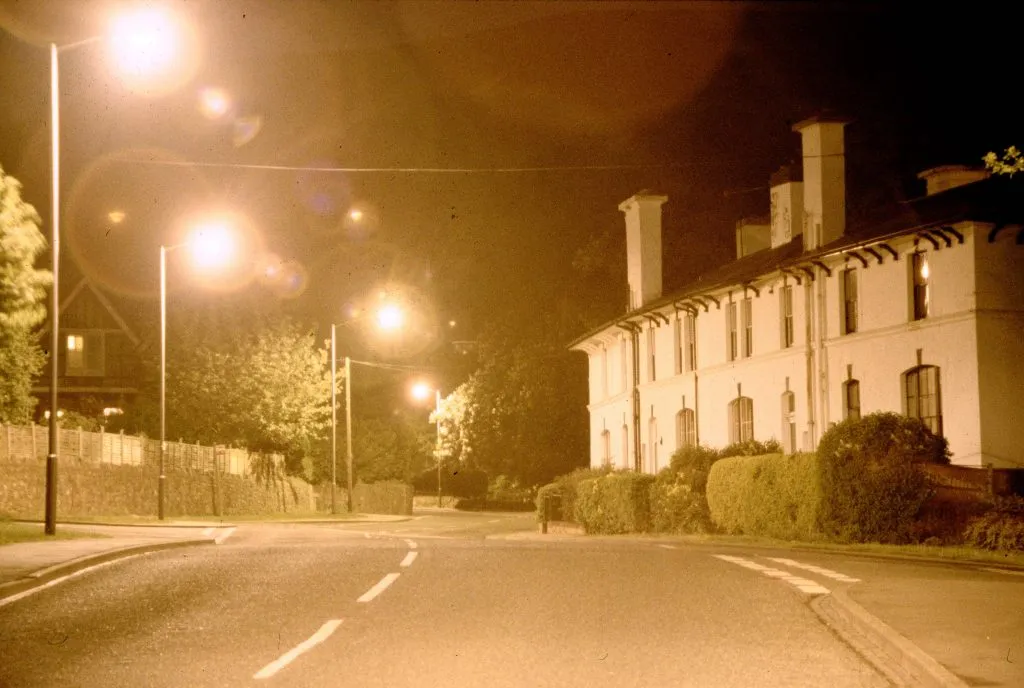
When facility directors and lighting consultants evaluate how to avoid outdoor lighting glare risks, they look past superficial aesthetic brightness metrics and examine total candela distribution curves, observer sightline vectors, and surface luminance ratios. Senior optical engineers specifically study how an unshielded luminaire mounted too low within a pedestrian field of view causes transient retinal bleaching, rendering surrounding dark zones invisible and inviting severe accident hazards. Consequently, a robust optical framework rejects arbitrary fixture placement. Rather, it categorizes spatial zones by human activity levels, enforces strict full cut-off shielding standards, and traces performance anomalies back to core photometric metrics. Meanwhile, common market confusion treats high-lumen output as a direct indicator of safety, thereby compounding night blindness and degrading property security.
Effective spatial management balances proper luminaire setback distances against precise downward shielding to eliminate light trespass and disability glare. When operators oversimplify this process, however, they fail to account for how positioning high-output uplights directly beneath glossy architectural walls bounces chaotic beams across adjacent living spaces. For instance, mounting unshielded floodlights immediately adjacent to primary pathways guarantees severe visual discomfort regardless of lamp efficiency or color temperature.
Furthermore, ignoring proper fixture aiming angles leads to harsh directional glare and scattered light pollution across night skies. Specifically, tilting floodlights upward above a horizontal plane projects raw light directly into human eyes and neighboring windows. Ultimately, mastering how to avoid outdoor lighting glare risks treats exterior spatial configuration as a precision optics and human comfort discipline.
Deep Contextual Background
The evolution of exterior lighting glare management tracks parallel to the technological transition from wide-beam legacy incandescent floodlamps to directional, high-output solid-state light-emitting diodes. Historically, exterior illumination relied heavily on broad, unmanaged legacy fixtures that dumped raw lumens indiscriminately across properties, masking poor optical design through sheer brute-force wattage. These legacy configurations required heavy electrical infrastructure while paying little attention to optical cutoff or glare containment.
Eventually, the commercial standardization of solid-state light-emitting diodes and precision secondary optics transformed placement benchmarks by allowing narrow beam angles and intense directional control. Concurrently, the proliferation of dark-sky advocacy and municipal lighting ordinances introduced strict legal boundaries regarding light trespass and luminaire shielding. Despite these technical improvements, however, habitual bad habits, improper aiming, and miscalculated mounting heights continue to cause widespread visual errors across commercial and residential sectors.
Modern regulatory frameworks, including stringent municipal dark-sky codes, light trespass ordinances, and commercial architectural standards, have further elevated the precision expected from exterior lighting layouts. Facilities managers increasingly demand documented photometric audits, precise glare evaluations, and strict adherence to vertical illuminance limits across all property zones. Therefore, contemporary spatial planning initiatives must prioritize systematic fixture positioning, precise angle adjustment, and advanced optical shielding.
Conceptual Frameworks and Mental Models
Navigating the operational intricacies of exterior lighting glare mitigation becomes manageable when applying specific mental models to evaluate visual adaptation, glare vectors, and spatial distribution efficiency.
-
The Disability Glare and Retinal Adaptation Model: Calculates how unshielded high-lumen sources overwhelm human eye adaptation, reducing contrast sensitivity and night vision safety. Limit: Individual age-related differences in glare sensitivity can alter subjective visual comfort thresholds.
-
The Setback and Shielding Proportionality Index: Evaluates how positioning luminaires at correct distances and integrating full cut-off cowls prevents direct line-of-sight exposure. Limit: Complex architectural geometry can require non-linear fixture shielding adjustments.
-
The Light Trespass and Boundary Vector Taxonomy: Assesses how improper aiming vectors cause light to spill across neighboring parcels, violating zoning ordinances and privacy standards. Limit: Highly reflective ground surfaces can bounce directed light beyond calculated boundary vectors.
-
The Vertical-to-Horizontal Illuminance Framework: Guides the balance between ground-level pathway lighting and vertical face recognition lighting to prevent blinding hot spots. Limit: Over-emphasizing vertical illumination without shielding can introduce severe upward sky glow.
Key Categories or Variations
Outdoor lighting glare issues and their respective technical corrections fall into distinct analytical classifications. Each category carries specific trade-offs regarding hardware modification labor, optical performance, and long-term visual harmony.
| Glare Risk Category | Primary Technical Focus | Typical Target Infrastructure | Main Trade-offs |
| Unshielded Floodlight Blinding | Correcting low-mounted, open-face floodlights that project raw light into direct eye lines | Building perimeters, parking zones, residential entryways | Eliminates blinding glare instantly; however, requires adding physical shields or repositioning hardware. |
| Up-Lighting Sky Glow and Glare | Adjusting unshielded tree uplights that shoot raw light past branches directly into observers’ eyes | Mature canopy trees, architectural focal points, open lawns | Complies with dark-sky standards; nevertheless, reduces dramatic upward lighting intensity. |
| Pathway Zebra-Striping and Hot Spots | Re-spacing bollards and path lights to eliminate alternating pools of harsh light and glare | Long walkways, corporate courtyards, residential garden paths | Delivers even horizontal illumination; along with increasing total fixture count and material costs. |
| Building Façade Wall-Washing Glare | Re-aiming grazing uplights positioned too close or too far from reflective stone and glass walls | Stone facades, brick feature walls, glass commercial towers | Achieves smooth textural accentuation; however, requires precise millimeter-level setback adjustments. |
| Canopy and Soffit Downlight Glare | Recessing overhead downlights properly or adding internal baffles to eliminate side-vector glare | Covered entryways, commercial porticos, outdoor dining patios | Protects pedestrian sightlines; nevertheless, requires structural cutting and fixture modifications. |
| Over-Lit Perimeter Saturation | Removing excessive high-lumen fixtures that create harsh artificial daylight conditions | Boundary fences, commercial parking lots, estate perimeters | Restores natural nocturnal contrast; however, can initially cause unease if security perceptions rely on high glare. |
Realistic Decision Logic
When evaluating these glare mitigation strategies against site constraints, facility managers weigh relocation labor costs against long-term visual safety improvements. Expansive commercial properties warrant systematic photometric re-evaluations because unshielded glare invites liability and municipal code violations. Smaller residential sites likewise focus on adjusting fixture aiming angles and adding optical hoods to correct glare risks economically.
Detailed Real-World Scenarios
A : Corporate Headquarters with Blinding Entrance Floodlighting
-
Constraints: A corporate office building featuring powerful unshielded floodlights mounted at low heights above main pedestrian entry doors, blinding arriving visitors.
-
Decision Points: Replacing open-face floodlights with fully shielded architectural cut-off luminaires and repositioning mounting brackets higher up the facade.
-
Failure Modes: Simply dimming the existing lamps without changing their aiming angle, failing to resolve the direct line-of-sight glare issue.
-
Second-Order Effects: Proper shielding and higher mounting eliminate direct glare completely while providing safe, comfortable illumination across the entry plaza.
B : Residential Estate with Severe Tree Uplighting Glare
-
Constraints: A sprawling residential property running powerful upward spotlights placed at the base of trees, sending unmitigated light beams directly into neighboring windows.
-
Decision Points: Installing narrow beam-spread lenses, adding cowl glare shields, and adjusting aiming angles to capture foliage without spilling light upward.
-
Failure Modes: Pushing fixtures too close to tree trunks to hide them, resulting in unnatural harsh shadows and blocked light distribution.
-
Second-Order Effects: Controlled tree lighting highlights canopy architecture effectively while complying with dark-sky regulations and eliminating light pollution.
C : Municipal Park Walkway Suffering from Zebra-Striping and Glare
-
Constraints: A public park pathway featuring irregularly spaced path lights that create alternating patches of blinding brightness and dangerous dark zones.
-
Decision Points: Re-calculating fixture spacing intervals based on photometric distribution curves and re-positioning bollards into a balanced staggered layout.
-
Failure Modes: Adding extra path lights haphazardly between existing fixtures without verifying overall circuit wattage limits, causing electrical overload.
-
Second-Order Effects: Balanced spatial re-spacing creates a smooth, continuous ribbon of light that enhances pedestrian safety and eliminates security blind spots.
D : Retail Strip Center with Light Trespass and Glare Violations
-
Constraints: A retail strip center where unshielded perimeter pole lights project intrusive light and blinding glare directly into adjacent residential windows across the street.
-
Decision Points: Retrofitting pole fixtures with internal house-side shields, adjusting tilt angles downward, and replacing wide-distribution lenses with asymmetric optics.
-
Failure Modes: Lowering pole heights without recalculating beam throw, creating dense hot spots directly underneath the poles.
-
Second-Order Effects: Asymmetric shielding eliminates neighbor complaints and municipal citation risks while maintaining safe parking lot illumination levels.
Planning, Cost, and Resource Dynamics
Establishing a disciplined approach to mitigating exterior lighting glare involves balancing upfront fixture modification outlays, professional photometric consulting fees, and long-term liability reduction. Financial variability typically stems from property scale, mounting complexity, and shielding reconfiguration needs.
| Glare Mitigation Tier | Financial Range (USD) | Primary Variables |
| Basic Aiming & Shield Retrofit | $200 – $1,000 total | Glare hoods, internal louvers, adjustment labor |
| Intermediate Fixture Relocation | $1,000 – $4,000 | Re-trenching short runs, mounting bracket updates, wiring labor |
| Commercial Pole & Flood Overhaul | $4,000 – $15,000 | Bucket truck rental, cut-off fixture replacements, asymmetric optics |
| Comprehensive Site Photometric Redesign | $15,000 – $50,000+ | Professional lighting engineering, complete layout overhaul, municipal compliance review |
-
Direct Costs include optical shields, replacement luminaires, mounting hardware, and specialized lenses.
-
Indirect Costs cover professional lighting design consultations, bucket truck rentals, and landscape restoration labor.
-
Opportunity Costs emerge when ignoring glare risks leads to municipal fines, neighbor disputes, and compromised nighttime security.
Tools, Strategies, and Support Systems
Executing precise glare mitigation requires an ecosystem of specialized diagnostic instruments, calculation software, and physical alignment aids.
-
Handheld Illuminance Light Meters: Essential for measuring foot-candle levels at ground level, property boundaries, and vertical surfaces to verify compliance. Limit: Light meters require calibration and correct sensor orientation to read accurate incident light.
-
Photometric Layout and Simulation Software: Mathematical models that simulate light throw, beam spreads, and glare vectors across three-dimensional site plans. Limit: Inaccurate surface reflectance inputs in software models can produce misleading output predictions.
-
Laser Alignment and Inclinometer Tools: Precision instruments used by technicians to verify exact fixture tilt angles and aiming vectors during nighttime commissioning. Limit: Laser tools must be used in complete darkness to visualize beam centerlines accurately.
-
Glare Shields, Cowls, and Louvers: Physical metal accessories attached to fixture housings to physically block off-axis light and prevent direct eye-level glare. Limit: Installing excessive shielding can restrict total light output and alter designed beam distribution.
-
Telescopic Mounting Poles and Test Fixtures: Temporary deployment tools that allow technicians to test fixture heights and locations before permanent installation. Limit: Telescopic test rigs are difficult to secure safely in high winds during outdoor testing.
-
Asymmetric Refractive Lenses: Specialized optical glass inserts that reshape circular beam patterns into targeted rectangular distribution fields. Limit: Retrofitting lenses requires opening sealed fixture housings, risking moisture seal degradation if not re-sealed properly.
Risk Landscape and Failure Modes
Exterior lighting glare risks present significant technical hazards, subjecting properties to night vision impairment, municipal code violations, neighbor disputes, and optical saturation. Understanding failure modes prevents compounding spatial design errors.
-
Night Vision Impairment from Unshielded Glare: Placing blinding light sources in primary visual fields, causing temporary blindness and increasing accident risks.
-
Municipal Code Violations from Light Trespass: Exceeding maximum allowable foot-candle limits at property boundaries, resulting in legal fines and forced system shutdowns.
-
Architectural Distortion from Incorrect Grazing Angles: Positioning uplights too close to flat walls, creating harsh, exaggerated shadows that distort building textures.
-
Security Blind Spots from High-Contrast Shadows: Creating deep, unlit pockets adjacent to over-lit hot spots, providing ideal cover for intruders.
-
Thermal and Optical Degradation from Misaimed High-Wattage Beams: Directing concentrated beams onto combustible building materials or non-rated landscaping, creating fire hazards.
Governance, Maintenance, and Long-Term Adaptation
Maintaining optimal spatial lighting placement and visual comfort across multi-year operational cycles requires structured governance protocols, regular site audits, and proactive hardware checks.
-
Monitoring Cycles: Conducting annual nighttime audits and post-season alignment inspections catches emerging placement drift caused by settling soil or overgrown landscaping.
-
Adjustment Triggers: Technicians initiate corrective re-aiming whenever structural modifications, tree growth, or new hardscape additions alter lighting sightlines. Consequently, ignoring spatial changes causes gradual glare creep and shadow distortion.
-
Layered Maintenance Checklist:
-
Conducting nighttime visual inspections from visitor entry points to check for direct eye-level glare.
-
Measuring boundary light levels with an illuminance meter to verify compliance with local trespass ordinances.
-
Inspecting fixture aiming angles and mounting brackets for physical slippage caused by wind or vibration.
-
Trimming surrounding foliage that has grown into light beams and caused unwanted shadows or glare reflection.
-
Measurement, Tracking, and Evaluation
Evaluating the success of a glare mitigation program balances quantitative photometric measurements against qualitative visual comfort signals.
-
Quantitative Indicators: Measured via photometric survey logs. Key benchmarks include maintaining boundary light trespass below specified foot-candle limits, achieving uniform uniformity ratios along pathways, and eliminating glare complaints.
-
Qualitative Signals: Assessed through visual verification of comfortable night adaptation, clear architectural feature definition, and the complete absence of blinding hot spots.
-
Documentation Examples:
-
Nighttime Photometric Survey Report: Detailed measurement logs recording foot-candle readings across property boundaries and active zones.
-
Fixture Aiming and Tilt Schedule: Comprehensive engineering logs documenting precise degree angles and shielding configurations for every exterior luminaire.
-
Visual Audit and Glare Log: Historical records noting observer sightline evaluations, glare assessments, and corrective adjustment dates.
-
Common Misconceptions and Oversimplifications
-
Myth: Pointing a bright floodlight upward toward the sky provides the best possible perimeter security coverage. Correction: Instead, unshielded upward floodlights create blinding glare and severe dark shadows that actually conceal intruders rather than exposing them.
-
Myth: All outdoor lighting glare risks can be fixed simply by installing lower-wattage lamps. Correction: On the contrary, reducing wattage fails to solve fundamental geometry, aiming angle, and shielding deficiencies.
-
Myth: Positioning path lights as far apart as possible saves installation costs without impacting safety. Metric best practice instead requires proper spacing intervals to eliminate dangerous dark gaps and zebra-striping.
-
Myth: Tree uplighting can be aimed at any angle as long as the fixture itself is hidden from direct daytime view. Correction: Rather, nighttime viewing angles and canopy penetration require precise upward tilt limits to prevent severe light pollution.
-
Myth: Step lights can be installed at any height along a stairway as long as some light reaches the steps. In contrast, improper step light placement creates blinding glare for ascending pedestrians or leaves tread edges in deep shadow.
-
Myth: Light trespass and glare are subjective annoyances that have no bearing on professional lighting engineering standards. Industry best practice instead treats glare as a strict optical failure governed by precise horizontal and vertical illuminance limits.
Ethical, Practical, and Contextual Considerations
Responsible exterior spatial illumination management extends beyond property boundaries to support dark-sky preservation, reduce light pollution, and respect neighbor privacy. Unshielded, poorly placed exterior lighting disrupts nocturnal ecosystems, alters animal migration patterns, and violates the fundamental right to a dark night sky. Furthermore, invasive glare creates interpersonal friction and legal liabilities for property owners.
Adhering strictly to optical shielding principles, respecting setback distances, and utilizing precise aiming vectors ensures exterior lighting networks remain functional, neighborly, and environmentally responsible. Balancing spatial engineering precision, human comfort, and ecological awareness ensures exterior illumination infrastructure operates harmoniously over decades of service.
Conclusion
Mastering how to avoid outdoor lighting glare risks requires synthesizing photometric optics, human visual adaptation principles, and precise spatial layout planning. Instead of relying on guesswork or brute-force illumination, facility managers and property owners who implement structured glare mitigation frameworks build resilient, comfortable, and efficient exterior environments. Consequently, disciplined spatial planning transforms glaring, uncoordinated installations into harmonious, professional nocturnal landscapes. Thus, rigorous technical evaluation elevates the standard of contemporary architectural illumination management.