How to Reduce Outdoor Lighting Costs: The Ultimate Efficiency Guide
Exterior energy management merges utility rate-structure economics, solid-state luminous efficacy metrics, astronomical automation logic, and optical distribution efficiency. Facility directors, municipal planners, and commercial property owners investigating how to reduce outdoor lighting costs frequently confront an entrenched legacy infrastructure dominated by inefficient high-intensity discharge lamps and unmanaged dusk-to-dawn runtime schedules. Optimizing sprawling exterior lighting systems requires a rigorous analytical approach that examines peak demand charges, power factor correction, driver parasitic losses, and multi-year return on capital expenditure.
Beneath the deceptively simple exterior of standard landscape and parking lot installations, electrical waste compounds silently over decades of operation. Oversized transformers, unmitigated line-voltage drop, obsolete magnetic ballasts, and lack of motion-based dimming profiles continuously inflate operational expenditures. Without a structured financial and engineering blueprint, operators frequently mistake minor bulb swaps for comprehensive energy reform, resulting in persistent financial bleed. Consequently, mastering how to reduce outdoor lighting costs demands a deep understanding of electrical physics, behavioral psychophysics, and tariff optimization.
Navigating these financial complexities meanwhile requires balancing immediate capital outlays against long-term operational savings and dark-sky regulatory compliance. Furthermore, the following reference explores financial frameworks, efficiency metrics, technological upgrades, and multi-year governance protocols for professional exterior illumination cost reduction.
Understanding “How to Reduce Outdoor Lighting Costs”
When financial controllers and facilities managers evaluate how to reduce outdoor lighting costs, they look past simple wattage ratings to analyze total system efficacy, driver efficiency curves, and time-of-use utility tariff structures. Senior energy auditors specifically examine how lumen depreciation and ballast parasitic draw inflate baseline electricity consumption across multi-acre properties. A robust financial framework rejects arbitrary fixture shutdowns; rather, it tailors lighting output to actual human occupancy patterns through intelligent scheduling and micro-zoning. Meanwhile, common market confusion treats energy reduction as a simple bulb replacement exercise, thereby causing unexpected financial shortfalls when legacy infrastructure continues to waste power.
Effective cost optimization balances peak demand avoidance against minimum safety illumination thresholds. When property managers oversimplify this requirement, they fail to account for how indiscriminate midnight dimming can violate municipal safety codes or compromise liability protections. For instance, lowering commercial parking lot illumination below legal foot-candle thresholds during active business hours exposes the entity to severe legal liability risks that outweigh minor energy savings.
Furthermore, ignoring transformer core losses and power factor penalties leads to invisible financial waste. Specifically, magnetic low-voltage transformers consume electricity even when lamps are inactive if primary circuits remain energized. Ultimately, executing a strategy on how to reduce outdoor lighting costs treats exterior illumination as an integrated electrical and financial asset network.
Deep Contextual Background
The evolution of exterior energy management tracks parallel to the transition from inefficient high-pressure sodium and metal halide floodlights to high-efficacy solid-state light-emitting diodes and intelligent digital networking. Historically, exterior illumination was treated as a blunt utility cost of doing business, relying on continuous dusk-to-dawn burning schedules and heavy electrical feeds that demanded immense power generation. These legacy configurations offered zero dynamic dimming control and suffered from severe lumen depreciation, requiring frequent lamp replacements and high maintenance labor overhead.
Eventually, the commercial introduction of electronic ballasts and compact fluorescent fixtures offered marginal efficiency gains, but lacked the durability required for harsh outdoor microclimates. Concurrently, the rapid maturation of high-efficacy solid-state LEDs and smart wireless mesh controls revolutionized energy reduction by permitting granular dimming, precise scheduling, and dramatic wattage reductions. Despite these technological advances, high upfront capital costs and complex digital commissioning hurdles continue to challenge facility operators.
Modern regulatory pressures, including stringent commercial building energy codes and municipal dark-sky ordinances, have further elevated the financial stakes of exterior illumination. Jurisdictions increasingly penalize wasteful upward light spill and excessive energy density per square foot. Therefore, contemporary cost reduction strategies must prioritize optical precision, intelligent automation, and ultra-low power consumption over simple brute-force illumination.
Conceptual Frameworks and Mental Models
Navigating the financial and operational intricacies of exterior energy management becomes more manageable when applying specific mental models to evaluate power consumption, automation logic, and asset lifecycle economics.
-
The Total Cost of Ownership and Payback Matrix: Maps initial capital expenditure against multi-year utility savings and reduced maintenance labor. Limit: However, unexpected utility tariff hikes can alter projected payback timelines unpredictably.
-
The Lumen-per-Watt Efficacy and Parasitic Load Model: Evaluates the mathematical ratio of useful light output against total system power draw, including driver losses. Limit: Nevertheless, degrading optical lenses can reduce usable lumens over time despite stable electrical draw.
-
The Occupancy-Driven Dynamic Dimming Hierarchy: Assesses how multi-stage motion sensing reduces power draw during low-traffic overnight hours. Limit: Assuming proper sensor coverage, dense wildlife or swaying foliage can cause false activation spikes.
-
The Tariff-Structure and Peak-Demand Avoidance Principle: Guides the scheduling of high-draw lighting zones around expensive commercial utility peak pricing windows. Limit: Consequently, inflexible municipal safety codes can prevent turning off lights during peak pricing hours.
Key Categories or Variations
Exterior energy reduction strategies fall into distinct functional classifications. Each category carries specific trade-offs regarding capital investment, installation complexity, and potential savings yield.
| Cost Reduction Strategy | Primary Technical Focus | Typical Target Infrastructure | Main Trade-offs |
| LED Retrofit and Driver Upgrade | Replacing legacy HID lamps with high-efficacy solid-state modules | Commercial wall-packs, pole-top fixtures, and architectural floods | Dramatic energy drop; furthermore, requires verifying existing housing thermal compatibility. |
| Astronomical Timeclock Automation | Programming precise sunset-to-sunrise schedules based on geographic coordinates | Retail parking lots, corporate campuses, and residential estate perimeters | Eliminates daytime burning; therefore, requires periodic battery backups for clock memory. |
| Multi-Stage Motion Dimming | Automatically reducing output to ten percent until motion triggers full brightness | Pedestrian pathways, loading docks, and low-traffic parking zones | Exceptional energy savings; along with potential user discomfort during sudden light transitions. |
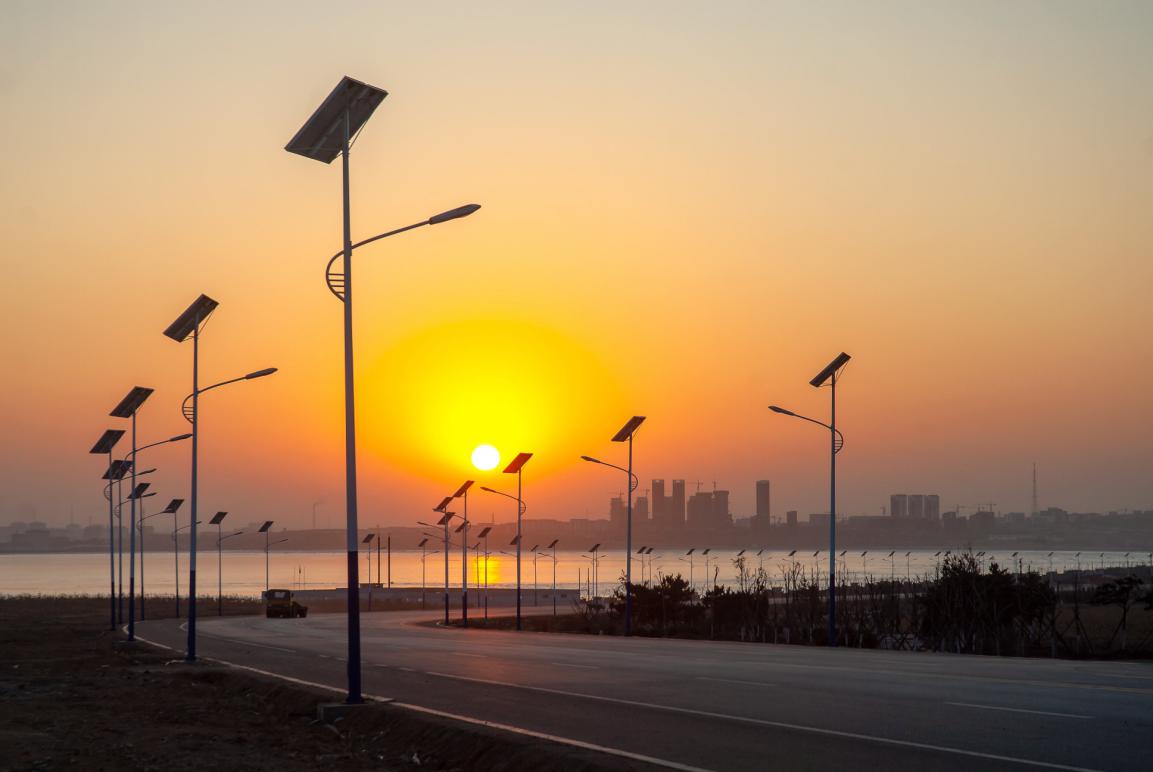
| Photovoltaic Off-Grid Conversion | Replacing grid-tied fixtures with standalone solar-powered lighting units | Remote perimeter fences, rural driveways, and isolated pathway segments | Zero ongoing utility cost; nevertheless, requires adequate winter sun access and battery upkeep. |
| Transformer Load Balancing & Elimination | Removing inefficient magnetic transformers and optimizing voltage distribution | Low-voltage landscape lighting arrays and architectural accent zones | Reduces core parasitic loss; thus, requires professional electrical recalculation of wire runs. |
| Photometric Micro-Zoning Redesign | Re-engineering fixture layouts to eliminate overlapping light trespass | Entire commercial facilities, municipal plazas, and industrial parks | Maximizes efficiency; along with high initial engineering design and layout re-installation labor. |
Realistic Decision Logic
When evaluating these strategies against budgetary constraints, facility managers weigh capital outlay against immediate utility bill reduction. For example, large industrial warehouses prioritize full LED retrofits and astronomical timeclock automation to slash multi-thousand-dollar monthly power bills. Conversely, smaller residential properties favor simple wireless smart switches and strategic LED bulb swaps to achieve modest, cost-effective savings.
Detailed Real-World Scenarios
Scenario A: Large Commercial Retail Plaza with Legacy Metal Halide Pole Lights
-
Constraints: High monthly utility demand charges, aging 400-watt metal halide fixtures burning all night, frequent ballast failures.
-
Decision Points: Replacing legacy fixtures with high-efficacy 150-watt LED retrofit heads paired with smart wireless mesh controllers and motion sensors.
-
Failure Modes: Selecting cheap LED retrofit kits with inferior drivers that fail prematurely from high internal pole temperatures.
-
Second-Order Effects: Installing industrial-grade, thermally isolated LED modules slashes energy consumption by sixty-five percent while eliminating annual lamp replacement labor.
Scenario B: Corporate Campus with 24/7 Perimeter Security Lighting
-
Constraints: Municipal code mandating minimum night safety lighting, strict corporate sustainability budgets, rising local electricity tariffs.
-
Decision Points: Implementing a dynamic dimming schedule where perimeter lights operate at thirty percent power during early night hours, scaling to full brightness only upon motion detection.
-
Failure Modes: Setting motion sensor sensitivity too low, causing dark perimeters during subtle intruder approaches.
-
Second-Order Effects: Fine-tuning microwave and PIR sensor overlaps achieves maximum compliance and safety while cutting overnight energy draw by half.
Scenario C: Historic Boutique Hotel with Complex Architectural Accent Lighting
-
Constraints: Strict preservation rules prohibiting visible conduit changes, high-voltage incandescent accent lamps running continuously, fragile masonry.
-
Decision Points: Upgrading to warm 2700K low-voltage LED lamps and installing centralized astronomical lighting control panels in the main electrical room.
-
Failure Modes: Voltage drop issues causing remote accent fixtures to dim excessively when powered by old sub-sized wiring runs.
-
Second-Order Effects: Rewiring critical long runs and balancing transformer taps restores uniform brightness while reducing overall estate electrical load.
Scenario D: Municipal Public Park with Vandalism and High Maintenance Costs
-
Constraints: Frequent manual switch neglect causing lights to burn during daylight hours, frequent copper wire theft, tight municipal budgets.
-
Decision Points: Transitioning to automated astronomical controllers with cellular remote monitoring and rugged vandal-resistant LED fixtures.
-
Failure Modes: Cellular communication loss isolating remote park controllers from the central scheduling network.
-
Second-Order Effects: Onboard backup astronomical timeclocks ensure lights operate on correct schedules even during cellular network dropouts.
Planning, Cost, and Resource Dynamics
Establishing a comprehensive program on how to reduce outdoor lighting costs involves balancing upfront capital acquisition outlays, professional engineering fees, and multi-year utility savings projections. Financial variability typically stems from scale of implementation, existing infrastructure condition, and labor market rates.
| Investment Tier | Financial Range (USD) | Primary Variables |
| Basic Automation & Smart Switches | $200 – $1,000 total | Plug-in smart timers, photocells, wireless control hubs |
| Mid-Scale LED Retrofit Projects | $2,500 – $10,000 | Commercial LED conversion heads, driver upgrades, basic labor |
| Comprehensive Campus Smart Overhaul | $15,000 – $50,000+ | Full mesh control systems, new poles, architectural fixtures, engineering |
| Utility-Scale Municipal Conversion | $100,000 – $500,000+ | Thousands of streetlights, smart city telemetry nodes, specialized crews |
-
Direct Costs: LED luminaires, smart control gateways, astronomical timeclocks, mounting hardware, and wiring supplies.
-
Indirect Costs: Professional energy audits, electrical engineering consulting, permit acquisition, and old equipment recycling disposal fees.
-
Opportunity Costs: Delaying efficiency upgrades locks facilities into paying inflated legacy utility bills. Whereas, targeted capital investment yields compounding savings that amortize initial project costs within two to four years.
Tools, Strategies, and Support Systems
Executing precise energy reduction strategies requires an ecosystem of specialized measurement instruments, management software, and diagnostic tools.
-
Digital Power Quality Analyzers: Essential for measuring true RMS voltage, current, power factor, and harmonic distortion across exterior lighting circuits. Limit: However, connecting analyzers requires safe access to energized commercial breaker panels.
-
Foot-Candle Light Meters: Verify that post-retrofit illumination levels continue to meet safety and building code minimum requirements. Limit: Ambient reflection from surrounding structures can distort precision readings.
-
Energy Management Software (EMS): Centralizes monitoring of facility lighting circuits, tracking real-time kilowatt-hour consumption and automated schedules. Limit: EMS platforms require stable internet connectivity and regular software license updates.
-
Thermal Imaging Infrared Cameras: Identify high-resistance electrical connections, overloaded breakers, and failing LED driver thermal sinks. Limit: External solar heating can obscure internal cabinet thermal profiles.
-
True-RMS Multimeters: Measure individual fixture current draw and verify line voltage stability across expansive properties. Limit: Multimeters only provide single-point data rather than continuous multi-hour consumption logging.
-
Smart Lighting Commissioning Tablets: Program wireless mesh networks, adjust sensor timeout delays, and configure astronomical schedules on-site. Limit: Firmware incompatibilities between different manufacturer nodes can complicate network pairing.
Risk Landscape and Failure Modes
Exterior energy reduction projects present significant technical hazards, subjecting electrical hardware to power surges, thermal extremes, and network communication dropouts. Understanding failure modes prevents compounding financial and operational losses.
-
Incompatible Dimming Protocols: Mixing zero-to-ten-volt dimming drivers with incompatible phase-cut controllers results in flickering, failure to dim, and rapid driver burnout.
-
Thermal Management Overload: Enclosing high-output LED retrofit kits inside unventilated legacy fixture housings causes rapid junction temperature spikes and premature diode failure.
-
Voltage Surge Transients: Lightning strikes and grid switching spikes travel along long exterior circuits, frying sensitive smart control microprocessors.
-
Control System Latency: Wireless mesh network signal degradation caused by newly constructed landscape obstacles or metal buildings disrupts automated schedules.
-
Under-Lighting Liability: Excessively aggressive energy reduction measures reduce illumination below legal safety thresholds, inviting slip-and-fall liability claims.
Governance, Maintenance, and Long-Term Adaptation
Maintaining optimal energy performance across multi-year operational cycles requires structured governance protocols, regular efficiency audits, and proactive hardware maintenance.
-
Monitoring Cycles: Conducting monthly utility bill audits and quarterly power meter checks ensures projected savings are actively realized on utility statements.
-
Adjustment Triggers: Facility operators modify automation schedules and sensor sensitivity settings whenever seasonal occupancy patterns shift or utility time-of-use rates change. Consequently, ignoring seasonal schedule adjustments wastes thousands of kilowatt-hours annually.
-
Layered Maintenance Checklist:
-
Inspecting luminaire lenses for dirt and yellowing to maintain maximum optical efficiency and lumen transmission.
-
Verifying astronomical timeclock coordinates and battery backups after seasonal daylight saving time shifts.
-
Testing wireless control gateway connections and updating firmware to patch security vulnerabilities.
-
Reviewing monthly utility consumption data against historical baselines to detect anomalous power spikes.
-
Measurement, Tracking, and Evaluation
Evaluating the success of an exterior energy reduction initiative balances quantitative utility metrics against qualitative operational feedback.
-
Quantitative Indicators: Measured via utility billing statements and sub-meter telemetry logs. Key benchmarks include tracking kilowatt-hour reduction percentages, peak demand charges, and return on investment payback duration.
-
Qualitative Signals: Assessed through tenant comfort surveys, security team feedback, and verification of consistent nighttime aesthetic quality.
-
Documentation Examples:
-
Energy Audit Baseline Report: Comprehensive records documenting pre-retrofit energy consumption, fixture wattages, and operating hours.
-
Post-Retrofit Savings Verification Ledger: Detailed financial statements tracking actual utility cost reductions against projected budgetary models.
-
Master Lighting Control Schedule: Scaled programming documentation detailing zone dimming levels, motion sensor timeouts, and astronomical triggers.
-
Common Misconceptions and Oversimplifications
-
Myth: Simply turning off exterior lights all night is the best way to reduce outdoor lighting costs. Correction: Instead, total darkness creates severe security vulnerabilities and liability risks that far outweigh energy savings.
-
Myth: All LED replacement bulbs and fixtures deliver identical energy efficiency regardless of manufacturing quality. Correction: On the contrary, cheap LEDs feature low luminous efficacy and high driver losses, yielding disappointing real-world savings.
-
Myth: Exterior lighting control systems require constant manual adjustment by on-site staff. Correction: Rather, modern astronomical timeclocks and automated sensors operate entirely autonomously without human intervention.
-
Myth: Upgrading exterior lighting requires completely replacing every single physical pole and housing structure. Correction: In contrast, specialized LED retrofit kits allow facilities to upgrade internal mechanics while keeping existing structural housings.
-
Myth: Voltage drop only affects lamp brightness and has no impact on total electrical power consumption. Correction: While dimming occurs, excessive voltage drop can reduce driver efficiency and alter power factor dynamics across long wiring runs.
-
Myth: Solar-powered exterior lighting is always cheaper than grid-tied LED systems in commercial applications. Correction: While utility bills are zero, expensive commercial battery banks and high-capacity solar arrays create massive upfront capital costs.
Ethical, Practical, and Contextual Considerations
Responsible exterior energy management extends beyond corporate financial ledgers to impact community ecology and environmental sustainability. Overly bright, unshielded lighting implemented to compensate for inefficient design contributes directly to artificial night glow, disrupting nocturnal wildlife and wasting massive amounts of fossil-fuel-generated electricity. Furthermore, reckless disposal of retired high-intensity discharge lamps containing toxic heavy metals like mercury poses severe environmental hazards if not handled through certified recycling streams.
Adhering to strict dark-sky optical cut-off standards, optimizing energy density per square foot, and practicing responsible e-waste recycling ensures cost-reduction initiatives remain ecologically sound and socially responsible. Balancing financial savings, environmental stewardship, and human safety ensures exterior lighting infrastructure remains efficient and sustainable over decades of operation.
Conclusion
Mastering how to reduce outdoor lighting costs requires synthesizing utility rate structures, solid-state optical engineering, and intelligent automation logic. Instead of relying on superficial energy hacks, facility managers who implement structured engineering and financial frameworks build resilient, highly efficient exterior systems that dramatically lower operational expenses. Consequently, disciplined energy management transforms chronic utility budget drains into streamlined, profitable architectural assets. Thus, rigorous technical evaluation elevates the standard of contemporary exterior infrastructure management.