Compare Outdoor Lighting Fixtures: The Ultimate Architectural Guide
Exterior lighting engineering intersects material science, optical physics, domestic electrical standards, and architectural psychology. Property owners and facility managers evaluating site security, aesthetic depth, and pathway safety frequently attempt to compare outdoor lighting fixtures across a crowded commercial landscape filled with conflicting specifications, varying metallurgical grades, and vastly different electronic driver topologies. Rather than acting as a simple shopping exercise, a rigorous comparative evaluation requires weighing beam angles, candela distribution patterns, ingress protection ratings, and long-term thermal dissipation capacities against the unique microclimate challenges of an architectural site.
Beneath the surface gloss of consumer marketing brochures, exterior luminaires operate under severe environmental stress factors. Ultraviolet degradation, thermal expansion cycles, moisture accumulation, and aggressive soil chemistry constantly test structural integrity. Without a structured analytical method, buyers frequently mistake high initial lumen output for durable performance, ending up with premature driver failures and glaring light trespass. Consequently, achieving optimal outdoor safety and visual grace demands a granular understanding of how metallurgy, optics, and electrical design interact over years of continuous exposure.
Navigating these complexities meanwhile requires balancing immediate budgetary constraints against lifecycle maintenance realities. Additionally, the following reference dissects foundational mechanics, operational frameworks, hardware categories, and long-term adaptation strategies for professional exterior illumination assessments.
Understanding compare outdoor lighting fixtures
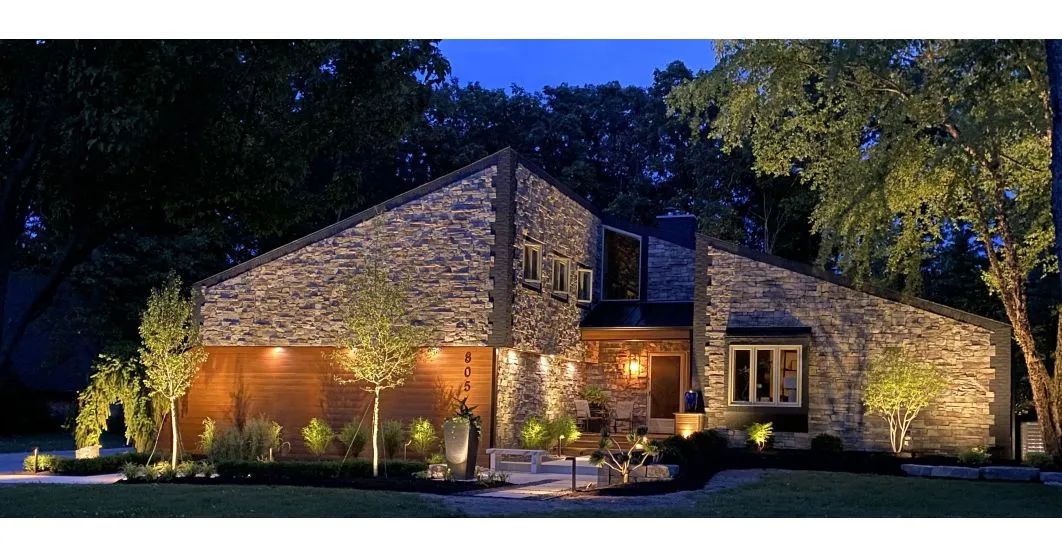
When professionals compare outdoor lighting fixtures, they look past stylistic silhouettes to analyze optical physics, thermal management architectures, and electrical driver efficiencies. Senior specifiers specifically evaluate how luminaire distribution curves interact with stone pavers, wooden decking, and vertical masonry surfaces. A robust comparative framework instead rejects single-metric purchasing; rather, it balances lumen efficacy, glare control, beam spread, and housing metallurgy. Meanwhile, common market confusion equates heavy weight with superior durability, thereby obscuring critical vulnerabilities like poor internal potting compounds or corrosive dissimilar-metal contacts.
Effective comparison balances horizontal illuminance for pedestrian navigation alongside vertical illuminance for architectural features and perimeter boundaries. When buyers oversimplify this dynamic, they fail to account for how color rendering indices and correlated color temperatures shift under environmental stress. For instance, low-quality phosphor coatings degrade rapidly under high operating temperatures, whereas premium ceramic metal halide or high-bin solid-state diodes maintain color stability, thus necessitating entirely different lifecycle expectations.
Furthermore, ignoring driver topology leads to unexpected system failures across multi-zone properties. Specifically, pairing non-dimmable line-voltage fixtures with low-voltage magnetic transformers creates dangerous electrical feedback loops. Ultimately, true comparative analysis treats a luminaire as an integrated thermodynamic and optical system rather than a static decorative shell.
Deep Contextual Background
The evolution of exterior luminaire engineering tracks parallel to the maturation of solid-state semiconductor physics, marine-grade metallurgy, and strict municipal dark-sky regulations. Historically, property illumination relied on high-wattage incandescent floodlights, fragile quartz-halogen bulbs, or energy-intensive mercury vapor systems housed in stamped steel enclosures. These legacy configurations demanded heavy-gauge metal conduit and massive electrical overhead, subsequently restricting sophisticated optical control to commercial infrastructure.
Eventually, the advent of high-output light-emitting diodes and low-voltage architectural distribution completely altered this paradigm. Solid-state arrays shrunk luminaire footprints, reduced operating temperatures, and allowed precise optical steering via total internal reflection lenses. Concurrently, the widespread adoption of marine-grade 316 stainless steel, solid cast brass, and architectural powder-coated aluminum transformed physical housing durability against aggressive weather conditions.
Despite these technical leaps, regulatory and ecological pressures have intensified. Modern municipalities enforce strict ordinances targeting light trespass, lumen caps, and nocturnal glare to protect human circadian health and local ecosystems. Therefore, contemporary fixture comparisons must prioritize optical cut-off angles and precision shielding over raw output power.
Conceptual Frameworks and Mental Models
Navigating the vast array of exterior luminaire options becomes more manageable when applying specific mental models to evaluate physical durability, optical performance, and electrical efficiency.
-
The Thermodynamic Dissipation Model: Evaluates how effectively a housing material conducts heat away from the LED junction. Limit: However, enclosed landscape sleeves or dense mulching can trap ambient heat, invalidating laboratory thermal ratings.
-
The Optical Beam Spread Matrix: Maps candela distribution curves against target surfaces to prevent hot spots and dark voids. Limit: Nevertheless, weathering lenses and dust accumulation alter beam distribution patterns over time.
-
The Ingress Protection and Corrosion Hierarchy: Assesses housing seals and metallurgical compatibility against local moisture and soil chemistry. Limit: Consequently, minor installation mistakes during wire stripping instantly breach IP68 waterproof ratings.
-
The Total Cost of Ownership Formula: Guides financial evaluations based on initial capital outlay versus projected driver replacement and maintenance labor. Limit: Assuming steady component availability, it fails to account for discontinued proprietary modular parts.
Key Categories or Variations
Exterior lighting hardware falls into distinct functional classifications. Each category accordingly carries specific trade-offs regarding installation complexity, optical control, and maintenance overhead.
| Category | Primary Function | Typical Fixture Types | Main Trade-offs |
| Directional Bullet Floods | Highlighting specimen trees, architectural flags, and focal points | Cast brass or aluminum adjustable spot/flood fixtures | Easily misaligned by landscape crews; furthermore, narrow beams require precise aiming. |
| Linear Wall Grazers | Emphasizing vertical stone masonry, textures, and retaining walls | Low-profile linear LED bars, inground slot fixtures | Exposes every surface wall defect; therefore, demands exact rough-in installation. |
| Path and Spread Lights | Safe pedestrian navigation along walkways, steps, and garden beds | Hat-style path lights, bollards, louvered step pucks | Vulnerable to string trimmers and snowplows; if unsealed, water shorts circuits. |
| Inground Drive-Over Units | Defining vehicular circulation routes, driveways, and parking pads | Heavy-duty brass or stainless steel recessed floor fixtures | Subject to extreme static loads; additionally, prone to internal condensation buildup. |
| Overhead Architectural Sconces | Illuminating entryways, patios, and vertical building perimeters | Damp- or wet-rated wall lanterns, down-light cylinders | Limited projection reach; if poorly shielded, creates severe horizontal glare. |
| Submersible Water Accents | Illuminating integrated ponds, fountains, and swimming pools | Submersible IP68 LED rings, weighted bronze projectors | Demands strict low-voltage compliance along with regular scale and algae cleaning. |
| Overhead Canopy Pendants | Providing ambient and dining illumination in covered outdoor rooms | Weather-resistant damp-rated hanging pendants, ceiling cans | Wind exposure causes swaying; thus, requires secure structural mounting points. |
Realistic Decision Logic
When evaluating these variations against site requirements, specifiers weigh physical environment constraints against aesthetic goals. For example, coastal properties with high salt spray prioritize solid cast bronze bullet floods and sealed fixtures. Conversely, inland commercial plazas prioritize flush inground linear grazers and architectural bollards to handle heavy pedestrian and vehicular traffic.
Detailed Real-World Scenarios
Scenario A: Coastal Waterfront Residence Facing Severe Salt Spray
-
Constraints: Aggressive marine air, blowing sand, high humidity, and intense ultraviolet radiation.
-
Decision Points: Selecting solid cast bronze or marine-grade 316 stainless steel luminaires instead of powder-coated die-cast aluminum options.
-
Failure Modes: Galvanic corrosion seizing standard steel fasteners and pitting aluminum housings within months unless protective dielectric compounds are utilized.
-
Second-Order Effects: Higher upfront metallurgy expenditure reduces long-term replacement frequency significantly across the property lifecycle.
Scenario B: Commercial Plaza with Heavy Vehicular and Foot Traffic
-
Constraints: Concrete slab foundation, snowplow operations, heavy foot traffic, and vehicle weight loads.
-
Decision Points: Implementing heavy-duty cast bronze inground drive-over fixtures with tempered borosilicate glass lenses coupled with waterproof junction boxes.
-
Failure Modes: Snowplow blades catching protruding bezels or thermal shock cracking cold glass lenses during winter flash freezes.
-
Second-Order Effects: Robust structural installation prevents catastrophic housing collapse, consequently eliminating costly concrete core-drilling repairs.
Scenario C: Shaded Woodland Estate with Complex Root Networks
-
Constraints: Deep organic soil, dense root systems, animal activity, and long cable runs.
-
Decision Points: Deploying surface-mounted tree canopy hanging fixtures and heavy base-staked directional spots rather than trenching recessed inground units.
-
Failure Modes: Shifting tree roots crushing direct-burial cable conduits and burying ground-staked fixtures beneath organic debris over time.
-
Second-Order Effects: Flexible mounting configurations accommodate natural landscape growth, as required by environmental conservation maintenance standards.
Scenario D: Modern Minimalist Courtyard with Strict Dark-Sky Rules
-
Constraints: Zero light trespass allowed, strict municipal lumen caps, and sleek architectural lines.
-
Decision Points: Utilizing fully shielded, 2700K warm-color-temperature steplights and downward-directed wall grazers with asymmetric optics.
-
Failure Modes: Improper aiming angle spilling light above the horizontal plane, thereby triggering municipal code violations and neighbor complaints.
-
Second-Order Effects: Precision optical control preserves nocturnal starry skies, while achieving sophisticated aesthetic depth across the courtyard walls.
Planning, Cost, and Resource Dynamics
Evaluating exterior lighting hardware involves navigating direct capital outlays, indirect installation complexities, and ongoing operational costs. Financial variability typically stems from fixture metallurgy, optical engineering quality, and driver serviceability.
| Cost Component | Financial Range (USD) | Primary Variables |
| Consumer Retail Tier | $30 – $120 per fixture | Stamped aluminum/plastic, integrated non-serviceable LEDs, basic plug-in drivers |
| Professional Trade Tier | $150 – $500 per fixture | Cast brass/aluminum, replaceable LED modules, multi-tap remote magnetic transformers |
| Architectural Custom Tier | $600 – $2,000+ per fixture | Solid bronze/316 stainless, custom beam optics, DMX smart control integration |
| Annual Maintenance Overhead | $400 – $2,000 site-wide | Lens cleaning, seal inspections, driver replacements, voltage drop testing |
-
Direct Costs: Luminaire housing acquisition, specialized LED modules, direct-burial cable spools, and low-voltage transformers.
-
Indirect Costs: Electrical permitting, core-drilling equipment rentals, design engineering fees, and specialized installation labor.
-
Opportunity Costs: Purchasing low-cost integrated fixtures means discarding entire housing assemblies upon driver failure. Whereas, modular fixtures with replaceable components incur lower lifecycle costs.
Tools, Strategies, and Support Systems
Executing a comprehensive hardware comparison and installation layout requires an ecosystem of physical tools, software instruments, and operational strategies.
-
Goniophotometers and IES photometric files: Computer-simulated distribution data used to model light output across surfaces. Limit: However, they require accurate environmental absorption inputs to reflect reality.
-
Multi-Tap Low-Voltage Transformers: Allow voltage adjustment at terminal blocks to compensate for line-loss over long cable runs. Limit: If over-volted, it shortens LED driver lifespans.
-
Digital Multimeters: Essential for measuring operational voltage drop at furthest fixtures to verify electrical integrity. Limit: Nevertheless, this requires basic electrical competency and live-circuit safety protocols.
-
Gel-Filled Wire Connectors: Prevent moisture ingress at underground wire splices, thus eliminating primary causes of ground-fault circuit tripping. Limit: Moreover, this is a single-use application.
-
Thermal Imaging Infrared Cameras: Detect overheating drivers and poor heat-sink dissipation before physical component burnout occurs. Limit: Since they measure surface emissivity, highly reflective brass can skew readings.
-
Torque Screwdrivers: Ensure waterproof gasket compression bolts are tightened to exact manufacturer specifications. Limit: Otherwise, over-tightening strips threads, while under-tightening permits water entry.
Risk Landscape and Failure Modes
Exterior luminaire environments are exceptionally hostile, subjected to thermal cycling, moisture saturation, soil acidity, and mechanical impact. Understanding failure modes therefore prevents compounding operational failures.
-
Moisture Ingress and Hydrostatic Pressure: Water entering unsealed fixture housings triggers short circuits that subsequently trip thermal breakers or GFCI outlets.
-
Thermal Runaway: Inadequate heat-sink design traps heat inside solid brass or aluminum housings, leading to premature LED phosphor yellowing and driver degradation.
-
Galvanic Corrosion: Contact between dissimilar metals in damp soil or salt air creates electrochemical reactions, while secondary stress seizes threaded fasteners.
-
Voltage Drop and Line Starvation: Undersized wiring running over long distances reduces terminal voltage, thereby causing erratic dimming or color shifting.
-
Mechanical Impact and Landscaping Damage: Lawn mowers, string trimmers, and heavy foot traffic crush exposed lenses and bend mounting stakes.
Governance, Maintenance, and Long-Term Adaptation
Maintaining optimal performance across seasonal transitions requires structured governance routines and proactive monitoring protocols.
-
Monitoring Cycles: Conducting bi-annual night audits reveals how plant growth, mulch accumulation, and hardscape shifting obstruct luminaire output.
-
Adjustment Triggers: Technicians reposition directional spotlights whenever adjacent shrubs mature. Consequently, failing to adjust fixtures results in light blocked entirely by dense foliage.
-
Layered Maintenance Checklist:
-
Inspecting ground lenses for mineral scale, dirt, and organic debris accumulation to ensure optical clarity.
-
Verifying waterproof wire connectors housed beneath soil or stone remain sealed so that moisture intrusion is prevented.
-
Checking transformer timer settings against daylight saving time shifts in order to maintain automated scheduling accuracy.
-
Testing output voltage at final fixtures of each branch run to confirm structural electrical integrity.
-
Measurement, Tracking, and Evaluation
Evaluating success in exterior lighting hardware selection balances quantitative metrics against qualitative environmental impressions.
-
Quantitative Indicators: Measured in foot-candles using calibrated light meters. Key benchmarks include maintaining minimum safety illuminance along paths and verifying candela distributions do not exceed property boundary limits.
-
Qualitative Signals: Assessed through nocturnal visual audits. Successful selections eliminate harsh glare, maintain balanced contrast ratios between social zones and dark perimeter voids, and preserve comfortable visual transition zones.
-
Documentation Examples:
-
As-Built Photometric Map: Scaled site drawings annotated with actual measured foot-candle levels across all zones.
-
Hardware Specification Ledger: Spreadsheets tracking luminaire serial numbers, metallurgy types, wattage draws, and warranty expiration dates.
-
Maintenance Log: Historical records detailing replacement driver parts, cleaning dates, and seasonal adjustment notes.
-
Common Misconceptions and Oversimplifications
-
Myth: Higher total lumen output always guarantees a superior architectural result. Correction: Instead, excessive brightness creates harsh glare and washes out delicate textures.
-
Myth: All brass fixtures are identical regardless of price or manufacturing origin. Correction: Although labeled brass, cheap alloys contain high zinc content that leaches and degrades rapidly in acidic soil.
-
Myth: Integrated LED fixtures last indefinitely without maintenance or service access. Correction: While semiconductor diodes possess long lifespans, electronic drivers fail regularly, thus making modular, field-serviceable fixtures preferable.
-
Myth: Color temperature is irrelevant as long as the fixture housing is waterproof. Correction: On the contrary, cold 5000K ratings create sterile aesthetics, whereas warm 2700K options harmonize better with human architecture.
-
Myth: Solar property lights match the performance and reliability of wired low-voltage systems. Correction: In contrast, consumer solar units fail to maintain consistent lumen output through overcast winter months.
-
Myth: IP67 and IP68 ratings mean fixtures can be installed anywhere without regard to drainage. Correction: Rather, poor drainage basins will drown even IP68 fixtures through continuous hydrostatic pressure.
Ethical, Practical, and Contextual Considerations
Responsible exterior hardware selection extends beyond private property lines to impact nocturnal ecosystems and community character. Unshielded luminaires contribute directly to skyglow, obscuring stellar visibility and disrupting local insect populations and migratory bird navigation paths which rely on celestial cues. Furthermore, light trespass—the spilling of unwanted property light onto neighboring bedroom windows—infringes upon community privacy and disturbs neighborly relations.
Adhering to International Dark-Sky Association guidelines, utilizing fully shielded cutoff fixtures, and specifying warm color temperatures (maximum 3000K, preferably 2700K) therefore mitigates external impacts. Balancing human safety, security, and architectural expression with ecological stewardship ultimately ensures nighttime property environments remain functional, beautiful, and respectful of surrounding ecosystems.
Conclusion
Mastering exterior property illumination requires synthesizing technical precision, architectural sensitivity, and material science. Instead of relying on simplistic retail shortcuts, property owners who carefully compare outdoor lighting fixtures create resilient environments enduring heavy use and seasonal shifts. Consequently, thoughtful hardware selection transforms dark grounds into secure, legible, and visually compelling extensions of indoor architecture. Thus, the precise intersection of metallurgy, optics, and spatial design elevates the standard of modern property management.