Top Outdoor Lighting Plans: The Ultimate Architectural Guide
The integration of exterior illumination into landscape architecture and residential site planning represents a sophisticated synthesis of electrical engineering, spatial psychology, and architectural preservation. When property owners and designers evaluate top outdoor lighting plans, they engage with complex variables involving beam spread geometry, optical physics, circadian biology, and municipal dark-sky regulations. Far from a superficial aesthetic layer, artificial light fundamentally redefines how nocturnal environments are experienced, turning boundary walls, grade changes, and garden canopies into coherent, functional extensions of human living space.
Moving beyond basic visibility requires a multi-layered design strategy that balances safety, legibility, and atmospheric depth. Without a structural framework, exterior lighting schemes frequently suffer from severe glare, accelerated driver degradation, and washed-out architectural textures caused by excessive lumen density. Achieving balance demands a meticulous look at surface reflectance, fixture shielding, color temperature consistency, and the physical dynamics of low-voltage electrical distribution across varied terrain.
Analyzing these complexities necessitates an examination of both physical hardware constraints and the behavioral responses provoked by contrast ratios, shadows, and spatial orientation. Furthermore, the following reference dissects the foundational mechanics, operational frameworks, and long-term maintenance realities governing professional exterior illumination.
Understanding “top outdoor lighting plans”
Evaluating top outdoor lighting plans demands looking past generic product packaging or stylistic Pinterest boards to examine how distinct illumination layers function within complex architectural landscapes. Consequently, a resilient design never relies on a single source of unmitigated brilliance; instead, it orchestrates ambient, task, and accent layers to establish safety, legibility, and mood. Meanwhile, a frequent misunderstanding equates high lumen output with superior quality, leading to harsh glare, washed-out structural textures, and light pollution that violates local municipal codes.
Effective planning balances horizontal illuminance, which accounts for light falling on paths, steps, and grade changes, alongside vertical illuminance, which renders facades, plantings, and vertical barriers. When plans oversimplify this dynamic—treating all exterior spaces as uniform blank canvases—they fail to account for surface reflectivity. Specifically, dark stone, dense evergreens, and weathered wood absorb light dramatically, whereas light concrete, smooth glass, and pale stucco reflect it, necessitating disparate luminaire spacing and wattage allocations.
Furthermore, failing to respect dark-sky parameters or ignoring color temperature harmonization results in visual dissonance. For instance, mixing cold, clinical 5000K LEDs with warm, incandescent-matching 2700K arrays disrupts circadian rhythms and creates an uncoordinated aesthetic. Ultimately, truly robust plans treat light as a physical medium, sculpting shadow to define space just as deliberately as illumination defines form.
Deep Contextual Background
The historical trajectory of exterior illumination tracks parallel to the expansion of electrical grid infrastructure, low-voltage transformer technology, and semiconductor physics. Historically, exterior lighting was constrained by high-wattage incandescent and high-intensity discharge sources such as metal halide and high-pressure sodium. These legacy systems demanded heavy-gauge wiring, bulky enclosures, and substantial energy overhead, thereby restricting sophisticated landscape integration to commercial properties and high-end estates.
Subsequently, the widespread adoption of solid-state lighting altered this paradigm completely. Low-voltage 12V and 24V systems powered by remote magnetic or electronic transformers reduced installation hazards, eliminated the need for deep trenching in many residential contexts, and allowed fixtures to shrink significantly in physical footprint. Concurrently, the rise of smart automation protocols—ranging from simple astronomical timers to DMX and Zigbee mesh networks—transferred dynamic control of outdoor spaces directly to the user.
Despite these technological leaps, regulatory pressures have intensified. Municipalities increasingly enforce strict ordinances targeting light trespass, lumen caps, and nocturnal glare to protect urban and suburban ecosystems. Consequently, modern planning must incorporate optics designed to direct lumens precisely where needed, reflecting a cultural and legal shift toward responsible illumination.
Conceptual Frameworks and Mental Models
Navigating exterior layout designs becomes more manageable when applying specific mental models to evaluate spatial behavior and visual hierarchy.
-
The Three-Layer Lighting Matrix: Divides the environment into ambient (general navigation), task (functional work areas like outdoor kitchens), and accent (focal points such as specimen trees or masonry textures). Limit: Over-layering in small spaces creates visual clutter.
-
The Contrast-to-Glare Ratio Model: Assesses the relationship between a light source’s luminance and its surrounding dark background. High contrast enhances drama; however, it increases eye fatigue if shielding is inadequate. Limit: Difficult to calculate accurately without specialized photometer equipment.
-
The Circadian and Ecological Zoning Concept: Maps illumination intensity and color temperature relative to wildlife corridors and human sleep cycles. Limit: Restricts high-output illumination near sensitive natural habitats, sometimes compromising security visibility.
-
The Inverse Square Law Application: Guides the mathematical spacing of luminaires based on the principle that light intensity drops off in proportion to the square of the distance from the source. Limit: Assumes free-air propagation without accounting for inter-reflection off nearby walls or foliage.
Key Categories or Variations
Outdoor lighting configurations generally fall into distinct structural and functional classifications, each carrying specific trade-offs regarding installation complexity, aesthetic impact, and maintenance overhead.
| Category | Primary Function | Typical Fixture Types | Main Trade-offs |
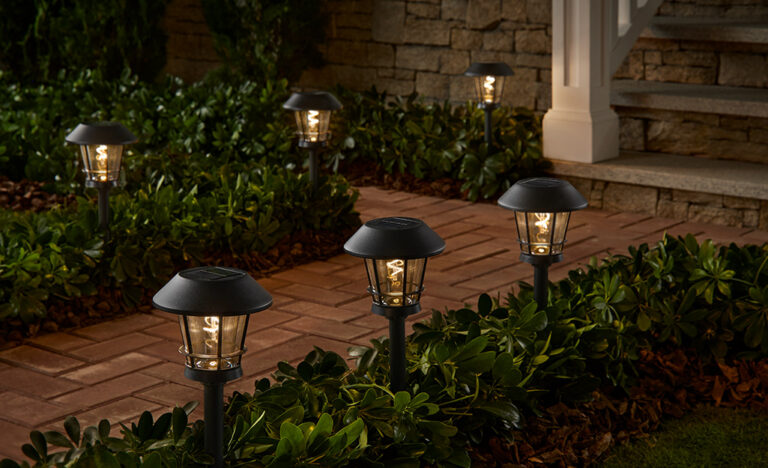
| Path and Step Lighting | Safety and navigation along walkways and grade changes | Bollards, low-profile louvers, riser lights | Vulnerable to mechanical damage from foot traffic and landscaping tools; furthermore, requires careful trenching. |
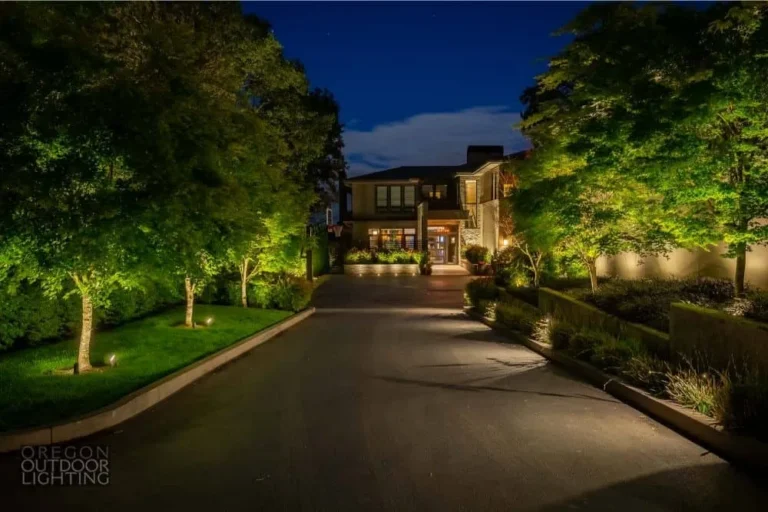
| Up-lighting | Emphasizing vertical elements, trees, and architectural columns | Bullet floods, well lights, integrated ground units | Can cause severe upward light pollution if beam angles are misaligned or unshielded. |
| Down-lighting (Moonlighting) | Mimicking natural moonlight through canopy positioning | Wide-beam floods secured high in tree limbs or eaves | Installation requires high-altitude work; additionally, it demands careful cabling management through growing branches. |
| Grazing and Wall Washing | Revealing textural details on stone, brick, or stucco walls | Linear bar lights, narrow flood fixtures placed close to surfaces | Exposes every surface imperfection; therefore, demands precise alignment to avoid hot spots. |
| Task and Kitchen Lighting | Food preparation and grilling safety in outdoor living areas | Under-counter strips, pendant fixtures, directional spotlights | Requires weather-resistant (IP-rated) fixtures and robust electrical safety enclosures. |
| Underwater and Water Feature | Illuminating pools, ponds, and cascading fountains | Submersible IP68-rated LED rings and directional projectors | Demands strict adherence to low-voltage safety codes and regular cleaning to prevent mineral scaling. |
| Accent and Silhouette Lighting | Creating graphic silhouettes against illuminated backdrops | Backlight panels, directional spotlights aimed at feature walls | Requires precise spatial clearance between object and background plane. |
Realistic Decision Logic
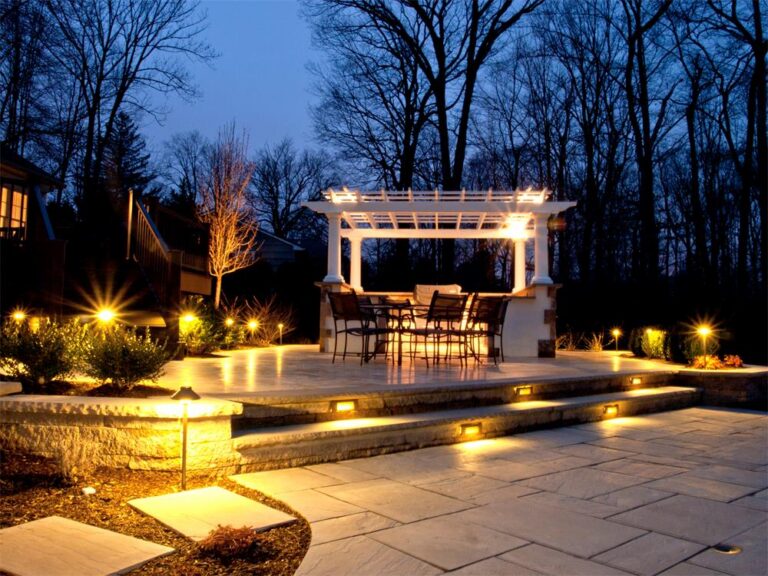
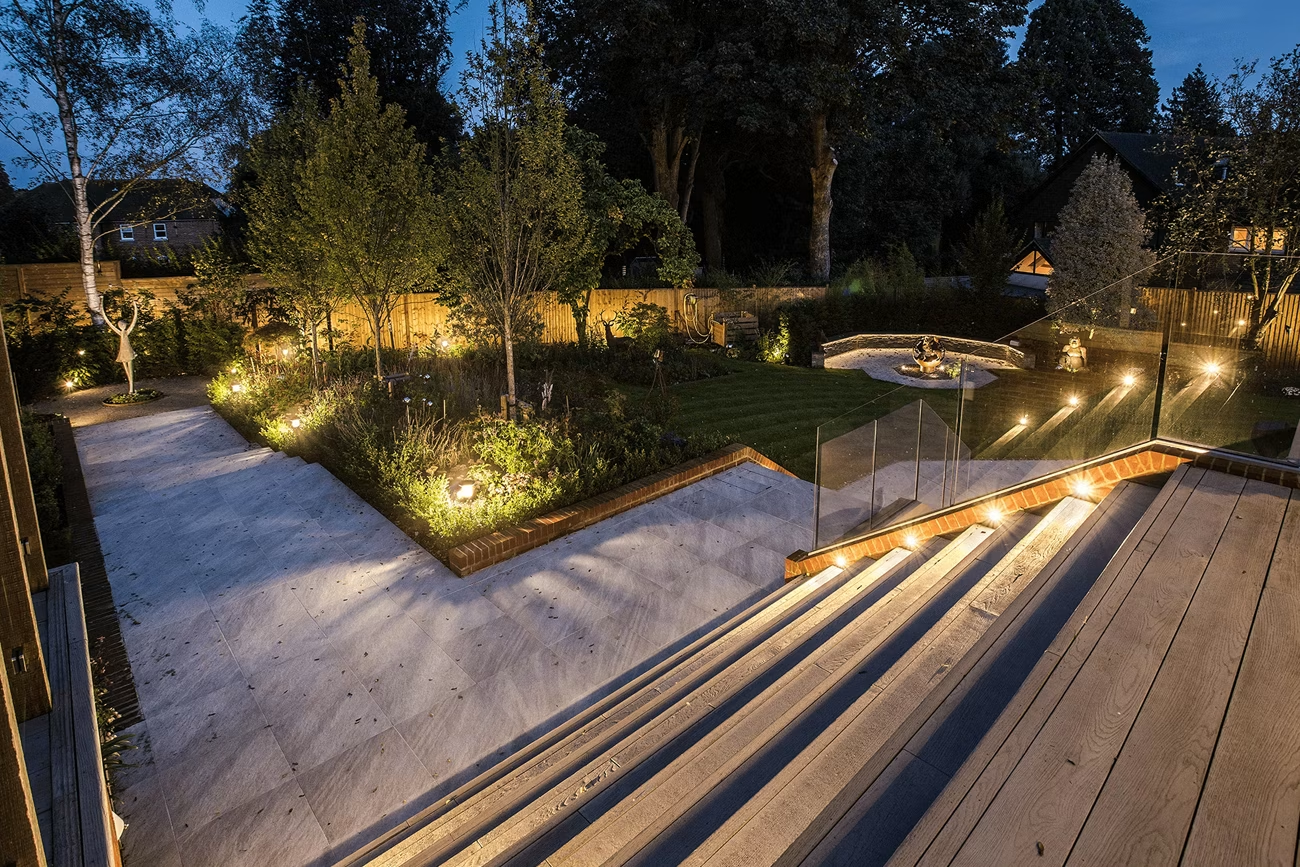
When selecting among these variations, designers must weigh structural constraints against site goals. For instance, if a property features extensive mature stonework, grazing takes precedence over general floodlighting to accentuate material depth. Conversely, narrow urban lots prioritize low-profile path lighting and shielded down-lighting to prevent light pollution from spilling onto neighboring parcels.
Detailed Real-World Scenarios
Scenario A: Sloped Suburban Backyard with Terraced Retaining Walls
-
Constraints: Grade changes exceeding four feet, heavy clay soil prone to shifting, and dense surrounding plantings.
-
Decision Points: Selecting low-voltage step lights integrated directly into retaining wall caps rather than ground-staked path lights that could be displaced by soil movement.
-
Failure Modes: Water infiltration into improperly sealed connections within the retaining wall core, leading to driver short circuits.
-
Second-Order Effects: Enhanced nighttime usability of the lower patio increases seasonal entertaining, yet requires localized mosquito mitigation strategies due to extended evening occupancy.
Scenario B: Coastal Property Facing Marine Environments
-
Constraints: High salt-spray concentration, aggressive humidity, and sandy soil conditions.
-
Decision Points: Mandating solid brass or marine-grade 316 stainless steel fixtures to resist galvanic corrosion, coupled with gel-filled waterproof wire connectors.
-
Failure Modes: Premature pitting and housing degradation on standard powder-coated aluminum fixtures within 18 months.
-
Second-Order Effects: Higher upfront capital expenditure for corrosion-resistant hardware drastically reduces long-term maintenance labor and replacement frequency.
Scenario C: Historic Urban Townhouse Courtyard
-
Constraints: Zero tolerance for drilling into historic brick facades, strict historical preservation guidelines, and limited footprint.
-
Decision Points: Utilizing freestanding container-integrated uplighting, magnetic mounting brackets on non-historic metal elements, and discreet heavy-base directional fixtures.
-
Failure Modes: Accidental displacement of movable fixtures by maintenance staff, disrupting pre-set optical angles.
-
Second-Order Effects: Flexibility in fixture placement allows seasonal adaptation of the lighting layout as potted flora changes throughout the year.
Scenario D: Expansive Rural Estate with Long Driveway Approach
-
Constraints: Long cable runs resulting in voltage drop, absence of nearby structural power sources, and wildlife preservation mandates.
-
Decision Points: Implementing a multi-zone 24V trunk-line architecture with heavy-gauge cable (10 AWG or 8 AWG) or opting for high-efficiency solar-assisted commercial bollards.
-
Failure Modes: Voltage starvation at the terminal end of long runs, causing noticeable dimming and color shifting in LED diodes.
-
Second-Order Effects: Improved perimeter visibility enhances property security, but requires ongoing brush clearance along the driveway to maintain sensor and fixture clarity.
Planning, Cost, and Resource Dynamics
Executing a resilient illumination strategy involves navigating direct capital outlays, indirect installation complexities, and ongoing operational costs. The primary financial variability stems from labor requirements, trenching depth, transformer capacity, and fixture metallurgy.
| Cost Component | Financial Range (USD) | Primary Variables |
| Entry-Level DIY Kit | $150 – $500 | Plug-and-play plastic fixtures, light-duty transformer, light-gauge wire |
| Mid-Tier Professional Setup | $1,500 – $5,000 | Cast aluminum/brass fixtures, multi-tap transformer, basic zone timing |
| High-End Architectural Array | $7,500 – $25,000+ | Solid brass/copper fixtures, smart mesh controls, professional trenching, custom optics |
| Ongoing Maintenance (Annual) | $200 – $1,000 | Lens cleaning, fixture realignment, driver replacement, wire splicing checks |
-
Direct Costs: Fixture acquisition, wire spools, transformers, junction boxes, and mounting hardware.
-
Indirect Costs: Professional design consultation fees, electrical permitting, landscape restoration post-trenching, and specialized excavation equipment rentals.
-
Opportunity Costs: Opting for lower-cost, non-serviceable integrated LED fixtures means the entire unit must be discarded upon diode failure, whereas modular fixtures with replaceable lamps incur lower long-term lifecycle costs despite higher initial pricing.
Tools, Strategies, and Support Systems
Deploying complex layouts requires an ecosystem of physical tools, software instruments, and operational strategies to ensure precise execution.
-
Photometric Design Software (e.g., AGi32, Dialux): Generates computer simulations of light distribution, calculating foot-candles across a site before physical installation. Limit: Requires accurate 3D modeling and surface material reflectance inputs to yield reliable predictive data.
-
Multi-Tap Low-Voltage Transformers: Allow voltage adjustment (typically 12V, 13V, 14V, or 15V) at the terminal block to compensate for line-loss over extended cable runs. Limit: Over-volting to correct excessive distance can shorten LED driver lifespan if not calculated precisely.
-
Digital Multimeters: Essential for measuring voltage drop at the furthest fixture in a run to verify that operating parameters remain within manufacturer specifications. Limit: Requires basic electrical competency and live-circuit testing safety protocols.
-
Gel-Filled Wire Connectors (Dry-Splice Caps): Prevent moisture ingress at underground wire junctions, eliminating the primary cause of ground-fault tripping. Limit: Single-use application; cannot be re-opened easily for circuit reconfiguration without cutting and stripping wire.
-
Leveling and Alignment Lasers: Assist in setting precise beam angles for grazing and architectural wall-washing during dusk alignment sessions. Limit: Ineffective during daylight hours; requires nocturnal setup windows.
-
Trenching Shovels and Vibratory Plows: Mechanical tools designed to bury low-voltage cable below standard landscaping disturbance depths (typically 6 to 12 inches). Limit: Risk of severing undisclosed irrigation lines or utility conduits if Julie/811 underground locates are skipped.
Risk Landscape and Failure Modes
Outdoor electrical environments are inherently hostile, subjected to thermal expansion, ultraviolet radiation, moisture saturation, and mechanical disturbance. Understanding failure modes prevents compounding catastrophes.
-
Moisture Ingress: Water entering poorly sealed fixture housings or wire splices triggers short circuits that trip transformer thermal breakers or GFCI outlets.
-
Thermal Cycling and Driver Degradation: Continuous temperature swings cause internal components to expand and contract, leading to solder joint fatigue, driver failure, flickering, and premature lumen depreciation.
-
Voltage Drop and Fault Cascades: Undersized wiring running over long distances reduces voltage at the load end, causing operational instability while secondary environmental stress triggers ground-fault circuit interruptions.
-
Over-Excavation and Cable Severing: Subsequent landscape renovations, core aeration, or planting updates frequently sever buried low-voltage runs if cables are not protected by conduit or marked with warning tape.
-
Thermal Runaway in Enclosed Fixtures: Installing high-output LED modules in unvented or tightly recessed ground wells causes heat to trap within the housing, degrading internal electronic drivers.
Governance, Maintenance, and Long-Term Adaptation
Maintaining optimal performance across seasonal transitions requires a structured governance routine and proactive monitoring protocols.
-
Monitoring and Review Cycles: Conducting bi-annual night audits during spring and autumn equinoxes helps reveal how seasonal foliage changes, deciduous leaf drop, and plant growth obstruct or alter light distribution patterns.
-
Adjustment Triggers: Technicians reposition uplights and directional spots whenever nearby trees expand their canopy breadth or shrubs undergo heavy seasonal pruning. Failing to adjust fixtures results in light blocked entirely by newly dense foliage or, conversely, unshielded glare escaping past sparse branches.
-
Layered Maintenance Checklist:
-
Inspecting all ground-level lenses for mineral deposits, hard-water scaling, and organic debris accumulation ensures maximum optical clarity.
-
Verifying that waterproof wire connectors buried in soil beds remain sealed prevents standing water intrusion and electrical shorts.
-
Checking transformer timer settings against daylight saving time shifts and seasonal sunset variations maintains automated scheduling accuracy.
-
Testing output voltage at the final fixture of each home run confirms structural electrical integrity.
-
Measurement, Tracking, and Evaluation
Evaluating the success of an exterior lighting layout requires balancing quantitative metrics against qualitative environmental impressions.
-
Quantitative Indicators: Measured in foot-candles (or lux) using a calibrated light meter. Key benchmarks include maintaining minimum safety illuminance along pathways (typically 0.5 to 1.0 foot-candles) and verifying that luminaire candela distributions do not exceed property boundary limits.
-
Qualitative Signals: Assessed through nocturnal visual audits. Successful layouts eliminate harsh hot spots, maintain balanced contrast ratios between illuminated focal points and dark background voids, and preserve comfortable visual transition zones as human eyes move from bright interiors to dark exteriors.
-
Documentation Examples:
-
As-Built Photometric Map: A scaled site drawing annotated with actual measured foot-candle levels at key transition points.
-
Circuit Load Ledger: A spreadsheet tracking transformer wattage capacity, active circuit loads, and voltage drop calculations for every branch line.
-
Maintenance Log: A historical record detailing replacement part serial numbers, cleaning dates, and seasonal adjustment notes.
-
Common Misconceptions and Oversimplifications
-
Myth: More lumens always equate to a safer, more secure property. Correction: Excessive brightness creates deep, dark shadows where intruders can conceal themselves while blinding security cameras and causing uncomfortable glare for occupants.
-
Myth: Low-voltage 12V systems are entirely safe and require no professional electrical knowledge. Correction: While low voltage reduces shock hazards, overloaded transformers can overheat, cause thermal damage, and create fire risks if primary-side wiring is botched.
-
Myth: Integrated LED fixtures last indefinitely and never need servicing. Correction: While semiconductor diodes possess long lifespans, electronic drivers fail regularly due to heat and power surges, making modular, field-serviceable fixtures preferable.
-
Myth: Color temperature does not matter outdoors as long as the area is bright. Correction: High Kelvin ratings (cool white) attract significantly more nocturnal insects and disrupt local wildlife corridors compared to warm 2700K options.
-
Myth: Solar-powered garden lights match the performance of wired low-voltage systems. Correction: Consumer solar fixtures rarely maintain consistent lumen output through overcast winter months and suffer from rapid battery degradation.
-
Myth: Lighting every single bush and path creates the most luxurious look. Correction: Negative space is critical; strategic darkness provides visual rest and accentuates the brightness of true focal points.
Ethical, Practical, and Contextual Considerations
Responsible exterior lighting design extends beyond private property lines to impact nocturnal ecosystems and community character. Unshielded luminaires contribute directly to skyglow, obscuring stellar visibility and disrupting migratory bird navigation paths, which rely on celestial cues. Furthermore, light trespass—the spilling of unwanted light onto neighboring properties—infringes upon privacy and disturbs sleep cycles.
Adhering to International Dark-Sky Association guidelines, utilizing fully shielded fixtures (zero percent upward light emission), and specifying warm color temperatures (maximum 3000K, preferably 2700K) mitigates these external impacts. Balancing human safety and architectural expression with ecological stewardship ensures that nighttime landscapes remain functional, beautiful, and respectful of the surrounding environment.
Conclusion
Mastering exterior illumination requires synthesizing technical precision, architectural sensitivity, and environmental responsibility. By rejecting simplistic, high-lumen shortcuts and embracing layered, carefully calculated strategies, property owners create resilient outdoor environments that endure seasonal shifts and technological updates. Thoughtful planning transforms nocturnal spaces from dark voids into secure, legible, and visually compelling extensions of human architecture.