Best Outdoor Lighting for Walkways: The Ultimate Architectural Guide
Exterior pathway illumination merges optical engineering, low-voltage power distribution dynamics, hardscape integration, and human psychophysics. Property owners, landscape architects, and municipal designers searching for the best outdoor lighting for walkways frequently encounter a fragmented market dominated by superficial aesthetic summaries rather than rigorous technical standards. Furthermore, specifying durable pedestrian path illumination requires analyzing light distribution curves, color rendering index parameters, direct-burial cable voltage drop mathematics, and thermal dissipation metrics within enclosed fixture housings.
Beneath the sleek aesthetic of modern landscape fixtures, path lighting installations endure harsh environmental conditions. Sub-grade moisture migration, freeze-thaw soil shifts, lawn-care equipment impacts, and ultraviolet radiation degradation constantly challenge structural integrity. Without a structured engineering framework, specifiers frequently mistake high initial lumen output for long-term performance, resulting in blinding glare, severe light pollution, and premature LED driver failure. Consequently, achieving balanced walkway illumination requires a deep understanding of optical physics and electrical distribution constraints.
Navigating these technical complexities meanwhile requires balancing immediate capital expenditure against multi-year maintenance overhead and dark-sky compliance standards. Additionally, the following reference explores foundational optical mechanics, fixture classifications, economic frameworks, and multi-year governance protocols for professional pedestrian pathway lighting.
Understanding Best Outdoor Lighting for Walkways
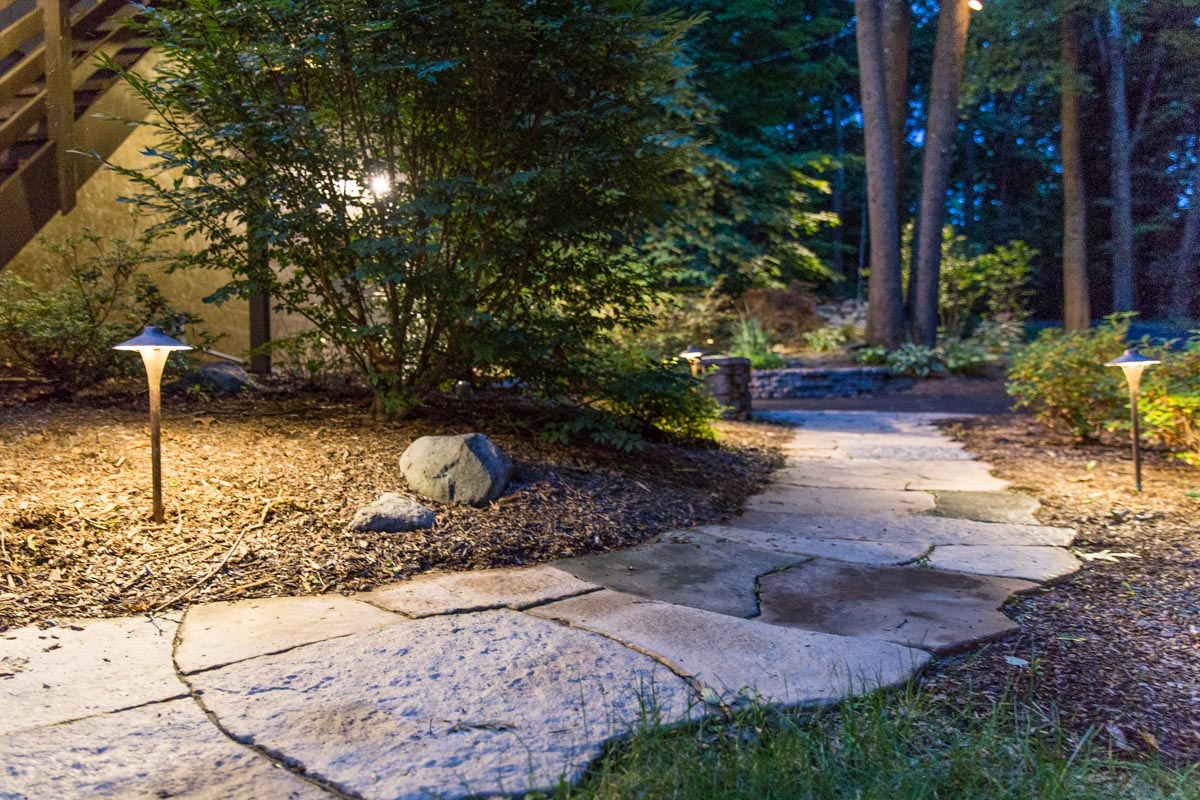
When lighting designers and facility directors evaluate the best outdoor lighting for walkways, they look past decorative housing designs to analyze foot-candle uniformity ratios, vertical illumination angles, and glare control shields. Senior specifiers specifically examine how beam spread patterns interact with surrounding paving materials and planting beds to prevent hazardous hot spots and deep shadows. A robust engineering framework rejects uniform grid spacing; rather, it tailors fixture placement to pathway geometry, elevation changes, and natural decision points. Meanwhile, common market confusion treats pathway lighting as a generic decorative accessory, thereby causing excessive light trespass and visual fatigue for pedestrians.
Effective layout planning balances low-level path markers against ambient step lighting and adjacent architectural wash fixtures. When system planners oversimplify this requirement, they fail to account for how light reflectance values of different paving stones alter perceived brightness, thus necessitating adjustable lumen outputs or optical glare louvers. For instance, dark slate absorbs significant light energy, whereas light-colored concrete reflects heavily, thus altering the required fixture spacing and wattage calculations.
Furthermore, ignoring low-voltage transformer capacity and cable voltage drop leads to uneven lamp brightness across long pathway runs. Specifically, uncalculated voltage loss causes fixtures at the end of a run to emit lower lumens and altered color temperatures. Ultimately, selecting the best outdoor lighting for walkways treats pedestrian illumination as a precision optical and electrical network.
Deep Contextual Background
The evolution of pedestrian pathway illumination tracks parallel to the transition from high-voltage incandescent and gas lanterns to low-voltage solid-state light-emitting diodes. Historically, walkways relied on tall post-top fixtures and high-voltage line-vessels that demanded deep trenching, heavy steel conduit, and rigid municipal installation codes. These legacy configurations restricted design flexibility and generated significant upward light pollution, clashing with contemporary dark-sky preservation mandates.
Eventually, the introduction of 12-volt low-voltage landscape lighting systems revolutionized residential and commercial path design by permitting shallow trenching and localized transformer distribution. Concurrently, the rapid maturation of high-efficiency solid-state LEDs enabled miniature path lights, steplights, and recessed paver fixtures with exceptional color rendering and multi-decade lifecycles. Despite these technical advances, thermal management challenges and driver compatibility issues have intensified across diverse climates.
Modern regulatory frameworks and accessibility standards, including the Americans with Disabilities Act, have further elevated the functional demands placed on pedestrian lighting. Municipalities and commercial developers increasingly require minimum horizontal and vertical foot-candle levels along public corridors to ensure safe navigation for visually impaired individuals. Therefore, contemporary fixture selection must prioritize optical precision, glare control, and robust weather sealing over mere decorative appeal.
Conceptual Frameworks and Mental Models
Navigating the operational intricacies of pedestrian illumination hardware becomes more manageable when applying specific mental models to evaluate optical performance, structural resilience, and spatial integration.
-
The Photometric Uniformity and Glare Control Matrix: Maps light distribution curves to prevent blinding hotspots along dark pathways. Limit: However, highly reflective ice or wet paving can distort calculated uniformity ratios.
-
The Sub-Grade Soil Stability and Thermal Dissipation Model: Evaluates how soil compaction and underground thermal entrapment affect buried fixture housings. Limit: Nevertheless, seasonal moisture shifts alter local ground thermal conductivity unpredictably.
-
The Low-Voltage Voltage Drop and Wire Gauge Hierarchy: Assesses electrical resistance losses across long linear pathway runs. Limit: Assuming proper initial calculations, unexpected cable splices can still introduce hidden resistance.
-
The Optical Shielding and Dark-Sky Compliance Principle: Guides the selection of cut-off optics to direct all photons downward onto the walking surface. Limit: Consequently, strict cut-off designs can reduce lateral path width coverage if spaced too far apart.
Key Categories or Variations
Exterior pathway lighting fixtures fall into distinct functional classifications. Each category accordingly carries specific trade-offs regarding optical distribution, physical durability, and installation complexity.
| Fixture Category | Primary Technical Focus | Typical Target Infrastructure | Main Trade-offs |
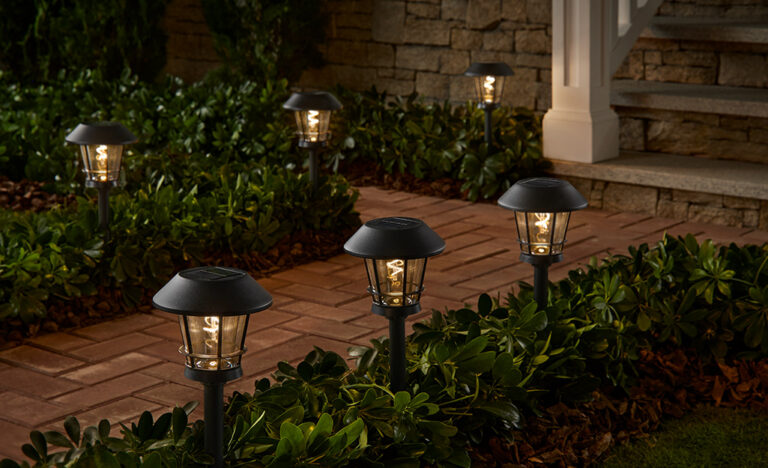
| Traditional Mushroom Path Lights | 360-degree symmetrical downward light spread via reflector caps | Residential garden paths, winding stone walkways, and planting beds | Broad ambient glow; furthermore, prone to glare if mounted too high or unshielded. |
| Directional Cowl Path Lights | Asymmetrical, targeted illumination focused strictly on the walking tread | Linear walkways, property boundaries, and directional transition points | Excellent glare reduction; therefore, covers a narrower linear distance per fixture. |
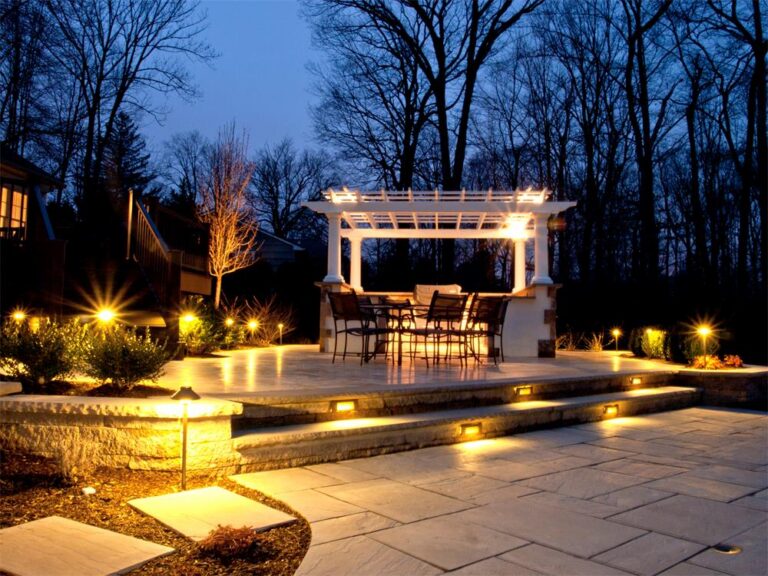
| Recessed In-Grade Paver Lights | Flush-mounted structural optics embedded directly into concrete or pavers | Modern architectural walkways, courtyards, and zero-threshold entries | Clean architectural profile; if unsealed, vulnerable to water pooling and lens scratching. |
| Integrated Step and Riser Lights | Low-level horizontal illumination built into stair risers and retaining walls | Exterior stairways, terraced walkways, and retaining wall caps | Superior safety guidance; along with complex core-drilling or masonry installation requirements. |
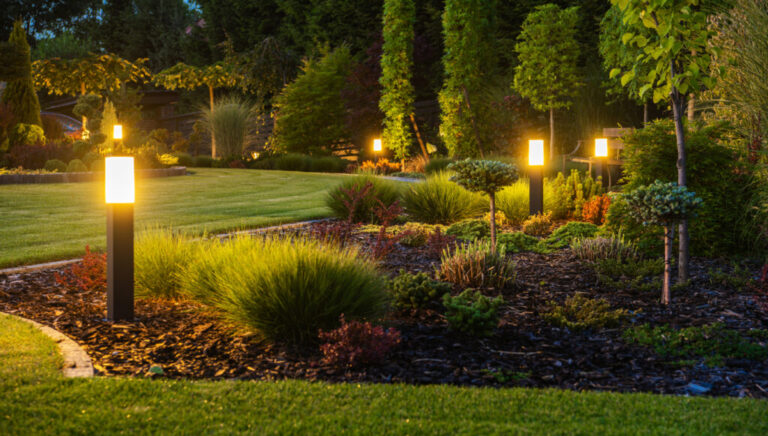
| Low-Profile Bollard Fixtures | Sturdy vertical posts with internal optical louvers for wide pathways | Commercial campuses, public plazas, and wide civic walkways | High mechanical durability; thus, requires secure anchor bolts and substantial wiring bases. |
| Tree-Mounted Downlighting (Moonlighting) | Elevated downward projection simulating natural moonlight through branches | Broad woodland paths, estate driveways, and expansive courtyards | Expansive area coverage; however, depends on mature tree structure and canopy health. |
Realistic Decision Logic
When evaluating these fixture variations against site requirements, system specifiers weigh environmental constraints against pedestrian traffic volume. For example, high-traffic commercial walkways prioritize low-profile bollards and robust in-grade fixtures to withstand heavy foot traffic and maintenance machinery. Conversely, private residential gardens favor shielded cowl path lights to preserve intimate scale and minimize light pollution.
Detailed Real-World Scenarios
Scenario A: Winding Suburban Garden Walkway with Dense Mature Trees
-
Constraints: Uneven flagstone paving, low-hanging tree branches, and root interference limiting trench depth.
-
Decision Points: Deploying flexible low-voltage cable paths routed around root systems, utilizing adjustable cowl path lights with warm 2700K color temperatures.
-
Failure Modes: Heavy root growth pinching direct-burial cable insulation, causing localized ground faults and transformer tripping.
-
Second-Order Effects: Flexible surface routing protected by heavy-duty conduit shields prevents electrical shorts, ensuring multi-year reliability.
Scenario B: Coastal Modern Residence with Concrete Paver Walkways
-
Constraints: Aggressive salt-air corrosion, high humidity, wind-driven moisture, and modern minimalist design mandates.
-
Decision Points: Specifying marine-grade 316 stainless steel or cast brass recessed in-grade fixtures with IP68 waterproof potting.
-
Failure Modes: Salt moisture breaching low-quality sealants, oxidizing internal LED driver boards, and causing catastrophic short circuits.
-
Second-Order Effects: Premium metallurgy and dual-gasket sealing prevent corrosion damage, saving thousands in premature fixture replacement.
Scenario C: Municipal Civic Plaza with High Pedestrian Traffic
-
Constraints: Heavy daily foot traffic, snowplow operations during winter months, and strict public safety foot-candle codes.
-
Decision Points: Installing heavy-duty cast bronze bollards anchored into reinforced concrete footings with impact-resistant polycarbonate lenses.
-
Failure Modes: Heavy snow-clearing equipment striking and shearing off low-profile path fixtures near pathway edges.
-
Second-Order Effects: Setting bollards back from the immediate plow path protects structural integrity, ensuring uninterrupted municipal compliance.
Scenario D: Historic Hotel Courtyard with Strict Aesthetic Preservation
-
Constraints: Prohibition against core-drilling historic stone paving, aesthetic mandates against modern visible hardware, and low ambient light goals.
-
Decision Points: Utilizing discreet tree-mounted downlighting and subtle wall-mounted step lights powered by hidden low-voltage wiring runs.
-
Failure Modes: Dense summer canopy foliage completely blocking tree-mounted light beams, casting dark shadows across the historic path.
-
Second-Order Effects: Regular pruning schedules maintain clear optical projection paths, preserving both historic masonry and pedestrian safety.
Planning, Cost, and Resource Dynamics
Establishing a professional pathway lighting layout involves balancing direct hardware acquisition costs, installation labor outlays, and long-term maintenance liabilities. Financial variability typically stems from material metallurgy, optical engineering complexity, and trenching requirements.
| Fixture System Tier | Financial Range (USD) | Primary Variables |
| Standard Aluminum Path Lights | $60 – $150 per fixture | Die-cast aluminum construction, integrated LED modules, basic stakes |
| Heavy-Duty Cast Brass Fixtures | $200 – $500 per fixture | Solid forged brass bodies, replaceable lamps, lifetime finish warranties |
| Architectural In-Grade Units | $300 – $900 per fixture | Stainless steel trims, IP68 water seals, tempered drive-over glass lenses |
| Commercial Bollard Systems | $800 – $2,500 per unit | Extruded aluminum or steel columns, internal drivers, bollard anchor kits |
-
Direct Costs: Luminaires, low-voltage transformers, direct-burial cable, waterproof wire connectors, and mounting hardware.
-
Indirect Costs: Trenching labor, electrical permitting, core drilling masonry, professional photometric mapping, and system commissioning.
-
Opportunity Costs: Selecting cheap plastic fixtures leads to rapid UV degradation and structural failure. Whereas, premium brass or bronze fixtures ensure multi-decade structural durability and aesthetic permanence.
Tools, Strategies, and Support Systems
Executing precise pathway lighting design requires an ecosystem of specialized measurement instruments, installation tools, and calculation software.
-
Foot-Candle Light Meters: Essential for measuring horizontal and vertical illumination levels along pathway treads to verify safety compliance. Limit: However, ambient moonlight or surrounding streetlights can skew direct fixture readings.
-
Photometric Design Software: Simulates beam spreads, uniformity ratios, and glare patterns across complex multi-tier landscapes. Limit: Nevertheless, software models require accurate digital site topography to match physical reality.
-
Digital True-RMS Multimeters: Used to measure low-voltage drop across long cable runs, ensuring proper voltage reaches terminal fixtures. Limit: Moreover, diagnostic testing requires safe access to wire termination points.
-
Heavy-Duty Cable Trenchers: Mechanize the installation of sub-grade electrical lines beneath lawns and planting beds. Limit: If unmapped irrigation lines are present, mechanical trenchers risk severe property damage.
-
Silicone-Filled Wire Connectors: Protect low-voltage wire splices from soil moisture and oxidation inside underground junction boxes. Limit: Poorly crimped wire bundles inside filled caps can still loosen over time.
-
Torque Wrenches: Ensure mounting bolts and waterproof housing seals on in-grade fixtures are tightened to exact manufacturer specifications. Limit: Over-torquing can crack glass lenses or strip threaded metal housings.
Risk Landscape and Failure Modes
Exterior pathway environments are exceptionally challenging, subjecting lighting hardware to thermal extremes, moisture intrusion, mechanical impact, and soil shifting. Understanding failure modes therefore prevents compounding operational breakdowns.
-
Water Ingress via Cable Conduits: Improperly sealed sub-grade conduits allow water to siphon directly into fixture housings through capillary action.
-
Thermal Junction Overheating: Excessive ambient summer temperatures combined with high drive currents cause LED chips to degrade prematurely.
-
Lawn Maintenance Impacts: Commercial string trimmers and lawnmowers strike low-level path stems, cracking composite bodies and shattering glass lenses.
-
Soil Settling and Tilt: Uncompacted trench backfill settles over time, causing path lights to lean awkwardly and misdirect optical beams.
-
Voltage Drop Degradation: Expanding pathway additions beyond original transformer capacity results in dimming and color shifting at remote ends.
Governance, Maintenance, and Long-Term Adaptation
Maintaining optimal performance across multi-year operational cycles requires structured governance protocols, regular optical audits, and proactive hardware inspections.
-
Monitoring Cycles: Conducting bi-annual nighttime inspections reveals how plant growth, soil settling, and lens clouding impact pathway illumination uniformity.
-
Adjustment Triggers: Technicians reposition adjustable cowl fixtures and prune obstructing ground cover whenever landscape evolution blocks light distribution. Consequently, ignoring overgrown foliage creates dangerous dark spots along pathways.
-
Layered Maintenance Checklist:
-
Inspecting fixture lens surfaces for hard water mineral deposits and dirt accumulation to maintain maximum lumen output.
-
Checking underground wire splices and waterproof gel caps to ensure complete moisture isolation.
-
Verifying transformer voltage output levels under full load to compensate for aging cable resistance.
-
Testing manual override switches, photocells, and astronomical timeclocks to confirm reliable automation schedules.
-
Measurement, Tracking, and Evaluation
Evaluating the success of a pathway lighting implementation balances quantitative foot-candle metrics against qualitative experiential feedback.
-
Quantitative Indicators: Measured via field light meter surveys. Key benchmarks include tracking minimum-to-average uniformity ratios and maintaining required code-compliant foot-candle levels.
-
Qualitative Signals: Assessed through pedestrian comfort and safety reviews. Successful installations eliminate blinding glare, provide clear boundary definition, and create inviting night navigation.
-
Documentation Examples:
-
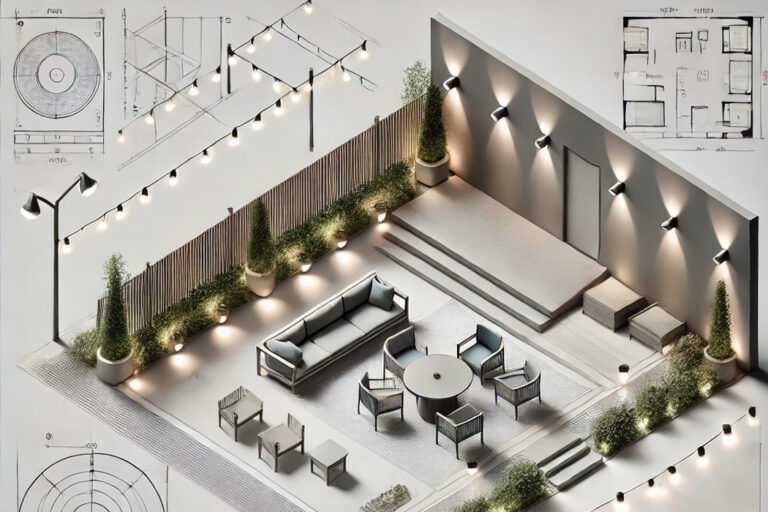
Photometric Layout Plan: Scaled architectural drawings detailing fixture locations, beam angles, and calculated foot-candle contours.
-
Electrical Distribution Schematic: Comprehensive wiring diagrams indicating transformer loads, wire gauges, and sub-grade splice boxes.
-
Maintenance Logbook: Historical records tracking fixture cleanings, driver replacements, and seasonal landscaping adjustments.
-
Common Misconceptions and Oversimplifications
-
Myth: Solar-powered path lights are fully capable of replacing wired low-voltage fixtures for year-round reliability. Correction: Instead, consumer solar units lack sufficient battery storage and lumen output during overcast winter months, failing rapidly.
-
Myth: Higher lumen output automatically creates a safer and better illuminated walkway. Correction: Although brighter lights seem better, excessive lumen output creates harsh glare and deep shadows that impair night vision.
-
Myth: All outdoor path fixtures feature identical waterproof sealing standards regardless of price. Correction: In contrast, cheap consumer models use basic rubber O-rings, whereas professional fixtures utilize IP68 potted seals.
-
Myth: Spacing path lights in a straight, uniform grid is always the correct design approach. Correction: While uniform grids look neat, organic pathways require asymmetrical placement based on curves and elevation changes.
-
Myth: Low-voltage wire can be laid directly on top of the soil without burial protection. Correction: Without sub-grade burial, cables are easily severed by foot traffic, pets, and gardening tools.
-
Myth: LED pathway fixtures never require maintenance or thermal management over their operating life. Correction: Rather, exterior drivers and optical seals degrade from environmental exposure, requiring periodic inspection and component care.
Ethical, Practical, and Contextual Considerations
Responsible exterior pathway lighting extends beyond private property boundaries to impact nocturnal ecology and community environments. Unshielded path fixtures emitting light upward contribute directly to artificial night glow, disorienting nocturnal pollinators and disrupting migratory bird paths. Furthermore, excessive light trespass spilling onto neighboring properties creates severe nuisance glare and privacy violations.
Integrating full cut-off optics, warm color temperatures below 3000K, and precise motion sensor controls therefore mitigates environmental and social impacts. Balancing human pedestrian safety, architectural expression, and rigorous ecological stewardship ultimately ensures nighttime landscapes remain functional, secure, and respectful of surrounding communities.
Conclusion
Mastering pedestrian walkway illumination requires synthesizing optical engineering, electrical distribution discipline, and landscape architecture. Instead of relying on superficial consumer gadgets, designers who carefully select the best outdoor lighting for walkways create resilient, secure environments that withstand environmental extremes. Consequently, thoughtful fixture specification transforms dark nocturnal paths into safe, inviting architectural extensions. Thus, disciplined technical evaluation elevates the standard of contemporary landscape illumination management.