Top Outdoor Lighting Solar Plans: The Ultimate Off-Grid Guide
Autonomous photovoltaic landscape illumination integrates semiconductor physics, electrochemical energy storage chemistry, meteorological irradiance modeling, and luminaire optical distribution design. Property owners, facility engineers, and landscape designers evaluating top outdoor lighting solar plans frequently navigate an asymmetric marketplace saturated with superficial consumer claims rather than rigorous energy engineering metrics. Designing resilient off-grid exterior illumination requires analyzing panel conversion efficiencies, lithium-iron-phosphate charge cycles, maximum power point tracking algorithms, and seasonal insolation degradation vectors across diverse geographic microclimates.
Beneath the sleek industrial design of modern self-contained landscape units, autonomous solar systems endure punishing environmental stressors. Continuous thermal cycling, sub-grade moisture infiltration, canopy shading variations, and ultra-violet radiation degradation constantly threaten system reliability. Without a structured engineering framework, specifiers frequently mistake high initial brightness claims for true seasonal autonomy, resulting in premature battery sulfation or lithium cell degradation during prolonged overcast winter intervals. Consequently, achieving dependable off-grid operation requires deep insight into energy harvest mathematics and load profile management.
Navigating these technical complexities demands balancing initial capital allocation against multi-year battery replacement schedules and site-specific solar window access. Furthermore, the following reference explores foundational photovoltaic mechanics, system architectures, economic frameworks, and multi-year governance protocols for professional off-grid landscape illumination.
Understanding Top Outdoor Lighting Solar Plans
When lighting specifiers and property directors evaluate top outdoor lighting solar plans, they look past generic aesthetic housings to analyze panel wattage-to-battery capacity ratios, depth-of-discharge limits, and luminaire luminous efficacy. Senior engineers specifically examine how local insolation hours and shadow cast patterns interact with photovoltaic collection surfaces to prevent energy deficits during low-sun cycles. A robust engineering framework rejects rigid cookie-cutter layouts; rather, it tailors system sizing to microclimatic latitude, seasonal tilt angles, and specific nocturnal runtime requirements. Meanwhile, common market confusion treats autonomous solar fixtures as maintenance-free plug-and-play accessories, thereby causing premature system failure and unexpected downtime.
Effective off-grid planning balances peak sun hour availability against luminaire power draw and dimming profile automation. When system planners oversimplify this requirement, they fail to account for how winter solstice sun angle reductions drastically diminish daily energy harvest, thus necessitating higher-capacity storage banks or programmable motion sensor dimming. For instance, northern latitudes demand drastically larger photovoltaic collection areas compared to equatorial regions, altering entire array footprints.
Furthermore, ignoring thermal regulation inside sealed battery compartments leads to accelerated chemical degradation. Specifically, excessive internal heat destroys battery lifespan, whereas sub-zero temperatures temporarily inhibit charging efficiency. Ultimately, executing top outdoor lighting solar plans treats autonomous exterior illumination as a precision off-grid power generation network.
Deep Contextual Background
The evolution of autonomous landscape illumination tracks parallel to the maturation of monocrystalline silicon photovoltaic cells, high-capacity lithium chemistry storage, and high-efficacy solid-state light-emitting diodes. Historically, early solar lighting relied on inefficient nickel-cadmium batteries and low-output incandescent or rudimentary LED lamps that offered negligible runtime and failed within a single season. These legacy configurations restricted deployment to purely decorative accents, rendering them useless for functional safety or security lighting.
Eventually, the commercial introduction of lithium-iron-phosphate batteries and advanced pulse-width modulation charge controllers revolutionized off-grid design by delivering stable voltage regulation, extended thermal tolerance, and thousands of deep charge cycles. Concurrently, the rapid rise of high-efficacy LEDs enabled powerful area lights and path markers to operate overnight on minimal wattages. Despite these advances, cloud cover intermittency and localized micro-shading continue to challenge uninterrupted autonomous operation.
Modern regulatory frameworks and municipal dark-sky mandates have further elevated the technical standards expected from off-grid systems. Municipalities and commercial developers increasingly require predictable dusk-to-dawn runtime reliability without grid tie-ins. Therefore, contemporary solar fixture selection must prioritize intelligent power management, robust weather sealing, and optimal photovoltaic orientation over simple decorative appearance.
Conceptual Frameworks and Mental Models
Navigating the operational intricacies of autonomous solar illumination hardware becomes more manageable when applying specific mental models to evaluate energy harvest, storage resilience, and system autonomy.
-
The Photovoltaic Insolration and Tilt Angle Matrix: Maps seasonal solar window angles against collection surface orientation to maximize daily photon capture. Limit: However, localized structural shading or persistent atmospheric haze can severely distort calculated harvest metrics.
-
The Battery Chemistry and Depth-of-Discharge Hierarchy: Evaluates how discharge limits and chemical composition govern multi-year storage longevity. Limit: Nevertheless, extreme ambient temperature spikes degrade internal chemical stability unpredictably.
-
The Lumen-Hour Load Profile Balance Model: Assesses the mathematical equilibrium between daily energy storage capacity and luminaire electrical draw over rolling 24-hour cycles. Limit: Assuming normal weather patterns, consecutive overcast days will still deplete reserve margins.
-
The Thermal Dissipation and Enclosure Sealing Principle: Guides the protection of internal charge controllers and battery packs against moisture ingress and overheating. Limit: Consequently, ultra-tight hermetic seals can trap internal heat if thermal management channels are absent.
Key Categories or Variations
Autonomous solar illumination systems fall into distinct structural classifications. Each category carries specific trade-offs regarding energy collection efficiency, physical durability, and installation complexity.
| System Category | Primary Technical Focus | Typical Target Infrastructure | Main Trade-offs |
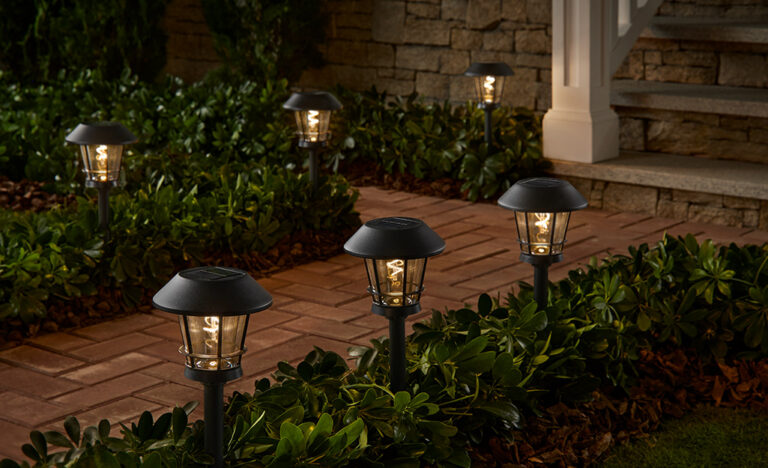
| Integrated All-in-One Path Fixtures | Compact, single-unit luminaires with small top-mounted photovoltaic panels | Residential garden paths, flower beds, and low-traffic walkways | Easy installation; however, limited panel surface area restricts energy harvest in cloudy regions. |
| Split-Panel Commercial Bollards | Remote-mounted vertical or angled PV panels wired directly to heavy-duty bollard heads | Commercial plazas, public pathways, and civic walkways | High energy harvest capacity; nevertheless, requires careful cable runs and structural mounting. |
| High-Output Flood and Area Lights | Large external solar arrays paired with high-lumen LED projection heads | Perimeter security zones, large entry gates, and expansive driveways | Exceptional illumination power; therefore, visually prominent arrays require secure wind-loading design. |
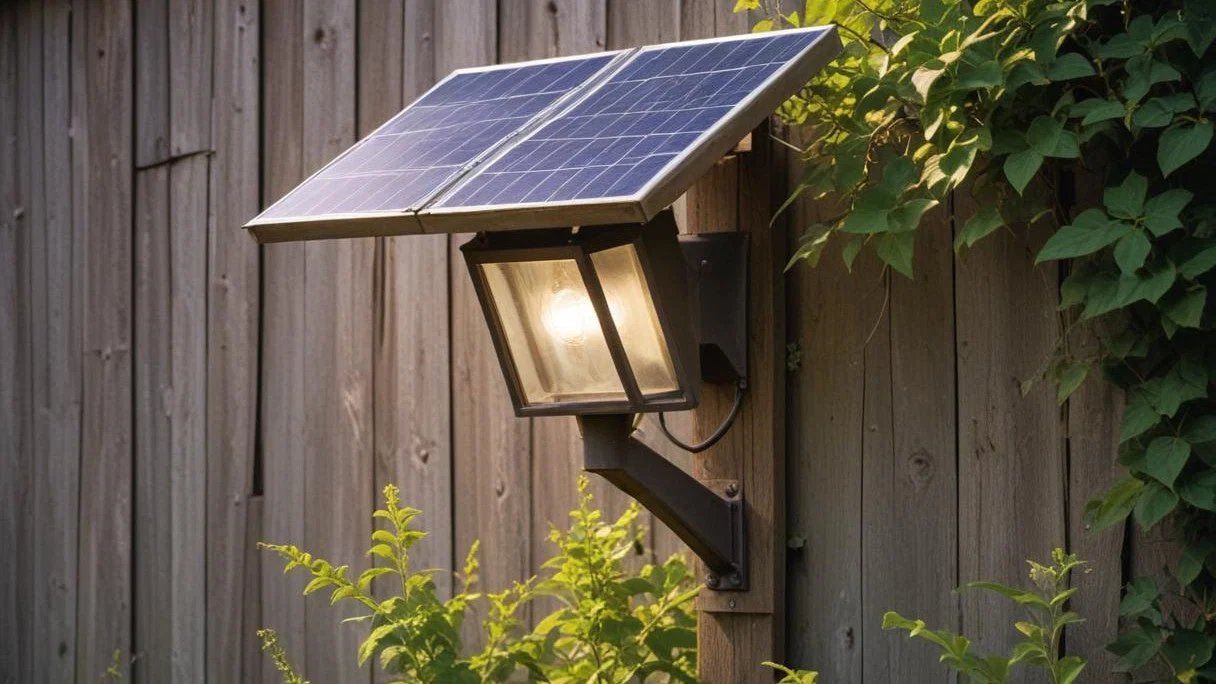
| Integrated Wall-Mounted Sconces | Compact architectural wall units featuring flush-facing solar cells | Exterior building perimeters, patio walls, and entry porches | Clean aesthetic profile; consequently, vulnerable to structural shadow casting from roof overhangs. |
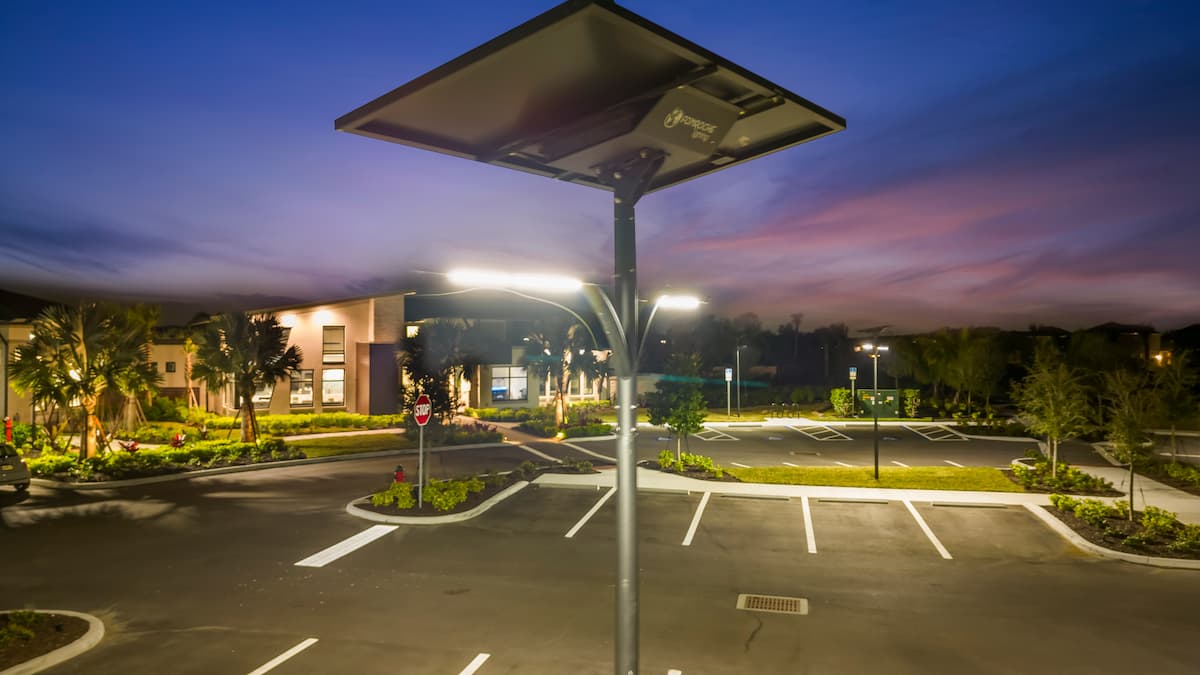
| Commercial Pole-Top Solar Systems | Utility-grade standalone poles featuring large top-of-pole panel racks and battery boxes | Parking lots, remote multi-use trails, and municipal roadways | Maximum structural autonomy; thus, demands heavy concrete foundations and professional engineering. |
| Recessed In-Grade Solar Markers | Flush driveway and pathway deck lights with tiny micro-panels | Modern architectural hardscapes, pool decks, and zero-threshold entries | Seamless flush appearance; along with vulnerability to leaf cover blocking microscopic panels. |
Realistic Decision Logic
When evaluating these system variations against site requirements, system specifiers weigh solar access constraints against illumination demands. For instance, commercial perimeters with zero shade access utilize high-output split-panel arrays to guarantee safety compliance. Conversely, residential gardens with mature overhead tree canopies require careful site auditing to determine if integrated solar units can receive sufficient direct sunlight.
Detailed Real-World Scenarios
Scenario A: Wooded Residential Driveway with Dense Seasonal Canopy
-
Constraints: Heavy tree foliage blocking direct overhead sunlight during spring and summer months, freezing winter temperatures.
-
Decision Points: Deploying remote split-panel configurations where photovoltaic modules are positioned on an unshaded post away from the fixture head, utilizing lithium-iron-phosphate batteries.
-
Failure Modes: Heavy autumn leaf accumulation covering the remote solar panel surface, halting energy replenishment entirely.
-
Second-Order Effects: Implementing automated panel cleaning schedules and strategic remote placement ensures steady charge collection despite dense canopy cover.
Scenario B: Coastal Industrial Facility Perimeter Security
-
Constraints: Severe salt-air corrosion, high wind loads, continuous dusk-to-dawn runtime requirements, and zero grid access.
-
Decision Points: Specifying marine-grade aluminum split systems with wind-rated mounting brackets, IP67 waterproof battery enclosures, and motion-activated multi-stage dimming.
-
Failure Modes: Salt-spray crust accumulation on the glass surface of the solar panel, reducing photon absorption efficiency over time.
-
Second-Order Effects: Periodic freshwater rinsing preserves optimal energy collection, maintaining uninterrupted perimeter security compliance.
Scenario C: Municipal Multi-Use Trail in Northern Climate Zone
-
Constraints: Extended winter nights, minimal winter insolation hours, heavy snow loads, and sub-zero storage temperatures.
-
Decision Points: Installing high-tilt vertical or steep-angle solar panels to shed snow naturally, paired with oversized battery banks and intelligent low-temperature battery heating circuits.
-
Failure Modes: Prolonged multi-week overcast conditions combined with deep snow blankets completely starving the storage battery.
-
Second-Order Effects: Integrating auxiliary manual charging ports and advanced hybrid power management prevents complete system shutdown during severe winter storms.
Scenario D: High-End Architectural Courtyard with Minimalist Aesthetics
-
Constraints: Prohibition against visible conduit, large poles, or remote panels; strict requirement for clean, modern lines.
-
Decision Points: Utilizing integrated architectural bollards with high-efficiency monocrystalline panels flush-integrated into the luminaire cap.
-
Failure Modes: Limited panel surface area failing to recharge the battery fully during shortened winter daylight windows.
-
Second-Order Effects: Programming adaptive dimming profiles automatically lowers lumen output during late-night hours, preserving battery reserve without compromising daytime aesthetics.
Planning, Cost, and Resource Dynamics
Establishing a professional autonomous solar lighting installation involves balancing upfront equipment acquisition costs, avoidance of electrical trenching expenses, and long-term battery maintenance cycles. Financial variability typically stems from battery chemistry quality, panel conversion efficiency, and structural mounting hardware.
| System Tier | Financial Range (USD) | Primary Variables |
| Consumer-Grade Integrated Units | $40 – $120 per fixture | Plastic housings, small thin-film panels, basic NiMH or lead-acid batteries |
| Professional Commercial Path Units | $250 – $700 per fixture | Cast aluminum bodies, monocrystalline panels, LiFePO4 batteries, smart controllers |
| High-Power Area & Flood Systems | $1,200 – $3,500 per unit | Heavy-duty steel poles, large adjustable array racks, industrial battery enclosures |
| Custom Municipal Pole Systems | $4,000 – $9,000+ per unit | Engineering wind certifications, high-capacity utility storage, remote telemetry modules |
-
Direct Costs: Photovoltaic panels, luminaire heads, energy storage batteries, charge controllers, mounting poles, and hardware.
-
Indirect Costs: Site solar insolation audits, structural engineering wind calculations, specialized installation labor, and system programming.
-
Opportunity Costs: Selecting cheap consumer solar units results in rapid battery failure within twelve months. Whereas, professional-grade systems eliminate grid infrastructure costs while delivering multi-year operational reliability.
Tools, Strategies, and Support Systems
Executing precise autonomous solar design requires an ecosystem of specialized solar measurement instruments, simulation software, and diagnostic tools.
-
Solar Power Insololation Meters: Essential for measuring peak sun hours and microclimatic solar radiation levels at exact fixture locations. Limit: However, seasonal weather fluctuations can cause significant day-to-day variance in readings.
-
Photometric and Solar Path Simulation Software: Simulates shade cast patterns, seasonal sun angles, and expected daily battery state-of-charge curves. Limit: Nevertheless, software algorithms require precise obstacle topography to match physical reality.
-
Digital DC Multimeters and Clamp Meters: Used to measure solar panel open-circuit voltage and charging current under active load conditions. Limit: Moreover, diagnostic testing requires safe physical access to internal wiring compartments.
-
Thermal Imaging Infrared Cameras: Detect hotspots on solar panels and battery management boards caused by internal resistance or cell degradation. Limit: Ambient thermal reflection can occasionally obscure internal diagnostic signatures.
-
Battery Capacity Load Testers: Evaluate the actual amp-hour retention capacity of aging lithium or lead-acid storage cells during maintenance audits. Limit: Testing requires temporarily disconnecting the battery bank from the active system.
-
Torque Wrenches: Ensure structural mounting bolts on solar panel arrays and pole bases are tightened to withstand maximum wind load ratings. Limit: Over-torquing can warp mounting brackets or crack tempered glass panel faces.
Risk Landscape and Failure Modes
Exterior off-grid environments are exceptionally challenging, subjecting autonomous solar hardware to thermal extremes, moisture intrusion, wind shear, and energy starvation. Understanding failure modes prevents compounding operational breakdowns.
-
Battery Sulfation and Chemical Degradation: Operating batteries outside specified thermal ranges or allowing deep discharge states permanently ruins storage capacity.
-
Photovoltaic Delamination and Yellowing: UV radiation and thermal cycling degrade protective ethylene-vinyl acetate encapsulants, reducing optical light transmission.
-
Charge Controller Moisture Ingress: Inadequately sealed electronic compartments allow condensation to short-circuit internal printed circuit boards.
-
Structural Wind Shear Failures: Improperly sized pole foundations or high-profile panel arrays suffer catastrophic structural failure during severe storms.
-
Shading Accumulation and Dust Deposition: Gradual buildup of pollen, dust, and organic debris on panel surfaces chokes energy harvest over time.
Governance, Maintenance, and Long-Term Adaptation
Maintaining optimal performance across multi-year operational cycles requires structured governance protocols, regular energy audits, and proactive hardware maintenance.
-
Monitoring Cycles: Conducting quarterly energy state-of-charge audits reveals how seasonal shifts, component aging, and environmental obstruction impact system autonomy.
-
Adjustment Triggers: Technicians modify motion sensor dimming profiles, clear encroaching foliage, or clean panel surfaces whenever energy reserves drop below critical thresholds. Consequently, ignoring declining battery performance leads to sudden system blackouts.
-
Layered Maintenance Checklist:
-
Inspecting photovoltaic glass surfaces for dust, bird droppings, and organic debris to maintain maximum photon absorption.
-
Checking internal battery terminal connections for corrosion, oxidation, and mechanical tightness.
-
Verifying charge controller firmware settings and voltage thresholds to prevent overcharging or deep discharge.
-
Testing manual override switches, photocell sensors, and automated dusk-to-dawn programming logic.
-
Measurement, Tracking, and Evaluation
Evaluating the success of an autonomous solar lighting implementation balances quantitative energy metrics against qualitative operational reliability.
-
Quantitative Indicators: Measured via controller telemetry logs or field audits. Key benchmarks include tracking daily state-of-charge recovery rates, battery cycle counts, and uninterrupted runtime hours.
-
Qualitative Signals: Assessed through visual verification of consistent nighttime illumination levels and absence of flickering or premature dimming.
-
Documentation Examples:
-
Solar Site Audit Report: Detailed documentation recording local horizon obstructions, peak sun hours, and shadow casting analysis.
-
Energy Balance Calculation Sheet: Mathematical models charting daily watt-hour generation versus total luminaire consumption profiles across four seasons.
-
Maintenance and Battery Logbook: Historical records tracking component replacements, firmware updates, and seasonal cleaning schedules.
-
Common Misconceptions and Oversimplifications
-
Myth: Solar fixtures operate identically regardless of geographic latitude or seasonal weather patterns. Correction: Instead, winter solstice solar window reductions drastically cut daily energy harvest, requiring oversized storage capacity.
-
Myth: All solar landscape lights utilize high-performance lithium-iron-phosphate battery chemistry. Correction: Although professional units use advanced lithium, cheap consumer fixtures rely on inferior, short-lived rechargeable cells.
-
Myth: Placing a solar panel under the shadow of a leafy tree still provides adequate daytime charging. Correction: Even partial shade across a single photovoltaic cell can drop total panel output by over fifty percent.
-
Myth: Autonomous solar systems never require maintenance, cleaning, or component replacement. Correction: In contrast, panels require periodic washing, and storage batteries inevitably degrade after several years of deep cycling.
-
Myth: Higher initial fixture lumen output guarantees better night visibility throughout the entire night. Correction: Without intelligent motion dimming, high lumen draws deplete battery reserves prematurely before morning hours.
-
Myth: Waterproof ratings are permanent and immune to environmental degradation over time. Correction: Rather, rubber gaskets and rubber seals harden and crack from UV exposure, requiring periodic inspection and replacement.
Ethical, Practical, and Contextual Considerations
Responsible off-grid exterior illumination extends beyond private property boundaries to impact nocturnal ecology and community environments. Unshielded solar path fixtures emitting excessive light upward contribute directly to artificial night glow, disorienting nocturnal pollinators and disrupting local wildlife habitats. Furthermore, improper battery disposal poses significant environmental hazards if spent chemical storage units enter municipal waste streams without proper recycling protocols.
Integrating full cut-off optics, warm color temperatures below 3000K, and strict adherence to battery recycling standards mitigates environmental and ecological impacts. Balancing human safety, aesthetic design, and rigorous ecological stewardship ensures nighttime landscapes remain functional and sustainable.
Conclusion
Mastering autonomous solar landscape illumination requires synthesizing semiconductor physics, electrochemical storage dynamics, and site-specific meteorological modeling. Instead of relying on superficial consumer marketing claims, designers who carefully evaluate top outdoor lighting solar plans build resilient, self-sustaining environments that withstand severe environmental extremes. Consequently, disciplined technical specification transforms off-grid illumination into a reliable, permanent architectural asset. Thus, rigorous engineering evaluation elevates the standard of contemporary sustainable landscape management.