Best Outdoor Lighting for Patios: The Definitive Architectural Guide
The transformation of domestic exterior architecture over recent decades has elevated the open-air patio. It has evolved from a peripheral concrete slab into an essential seasonal living space. Designing these environments requires a nuanced understanding of nocturnal optics, spatial psychology, and weather-resistant engineering. When twilight descends, natural boundaries dissolve. Consequently, the human experience within an open-air room relies entirely on artificial illumination. Without careful planning, night spaces quickly degrade into dark voids or glaring enclosures.
At the center of this architectural discipline lies the careful management of luminance, shadow, and color temperature. Introducing light to an open patio involves more than simply mounting a fixture to an exterior wall. It demands a sophisticated synchronization of electrical infrastructure, structural load-bearing capabilities, and regional climate durability. When multiple zones intersect, informal placement strategies inevitably fail. As a result, they cause visual fragmentation, blinding glare, and an uninviting atmosphere.
Achieving a truly harmonious nocturnal retreat requires an analytical approach. It must treat illumination as an integrated structural layer rather than an afterthought. Navigating this domain successfully involves mastering optical physics, electrical engineering, materials science, and human behavior. Consequently, designing resilient exterior living areas demands an exhaustive framework. This framework evaluates how light interacts with varied materials, spatial scales, and environmental constraints over time.
Understanding Best Outdoor Lighting for Patios
The phrase best outdoor lighting for patios denotes a comprehensive architectural and engineering strategy. It synchronizes every electrical, optical, and structural element of an exterior living space. People frequently misconstrue it as a static product recommendation list or a simple hardware shopping catalog. In reality, it represents an interdisciplinary master standard. It reconciles architectural intent, spatial ergonomics, circuit engineering, load calculations, and municipal dark-sky regulations into a unified operational strategy.
Oversimplification in this sector typically manifests as a fixation on decorative fixture styling while completely ignoring systemic coordination. Property owners and amateur designers often evaluate luminaires based entirely on daytime curb appeal. They relegate circuit capacity, voltage drop management, and optical distribution to secondary concerns. This oversight results in pervasive field complications. These include severe voltage starvation on long low-voltage runs, incompatible control protocols, and light trespass onto adjacent properties. True engagement with these considerations requires treating the entire patio layout as an interdependent network.
Another prevalent misconception is that high-end exterior illumination is only necessary for sprawling commercial terraces or expansive luxury estates. Even compact urban courtyards and suburban backyard patios encounter complex spatial constraints, strict environmental ordinances, and intricate hardscape integrations. Recognizing these systemic interdependencies prevents costly installation errors, eliminates retrofitting expenses, and ensures that lighting elevates the overarching architectural vision without compromising safety.
Deep Contextual Background
The lineage of patio illumination traces back to the mid-20th century. During this era, modernist architects pioneered the dissolution of boundaries between interior living rooms and surrounding exterior landscapes. Expansive sliding glass doors, open-air stone terraces, and cantilevered patio roofs demanded entirely new approaches to nighttime visibility. Historically, exterior illumination depended on incandescent, mercury vapor, or high-intensity discharge sources. Each source carried heavy constraints regarding energy consumption, thermal output, and electrical infrastructure. Bulky housings and dedicated high-voltage lines were necessary to power these systems.
Then, the commercialization of high-output solid-state lighting and low-voltage transformer technology in the late 2000s fundamentally disrupted these physical boundaries. Thermal management transitioned from heavy cast-iron heat sinks to engineered aluminum chassis. Simultaneously, control systems evolved from simple mechanical timers to sophisticated digital addressable networks. Concurrently, the rapid proliferation of municipal dark-sky advocacy and light-pollution ordinances reshaped engineering priorities. Cities and suburban communities enacted strict codes limiting upward-directed light, maximum luminous intensities, and operating hours.
This regulatory pressure forced design professionals to move away from isolated fixture selections. Instead, they adopted holistic design protocols. Environmental stewardship, energy efficiency mandates, and human-centric design principles thus became embedded directly into foundational engineering and spatial planning rather than treated as external modifications.
Conceptual Frameworks and Mental Models
Navigating complex exterior illumination requires moving past intuition and employing structured mental models. These models account for human perception, environmental impact, and systemic interdependence.
-
The Hierarchical Layering Model: This framework organizes exterior illumination into distinct functional tiers: safety navigation, task execution, and ambient mood. Safety lighting takes precedence to secure movement across grade changes and patio borders. Furthermore, task lighting illuminates cooking and dining surfaces, while ambient layers soften vertical boundaries. Violating this hierarchy by over-illuminating ambient zones while neglecting task areas creates safety hazards.
-
The Electrical-Optical Equilibrium: Visual comfort and system stability depend on the balance between source luminance, optical distribution, and circuit voltage capacity. High-contrast scenarios combined with voltage drop across long wire runs cause uneven fixture output and visual fatigue. Modern planning mitigates this through calculated cable sizing, multi-tap transformers, and precise beam-spread mapping.
-
The Layered Spatial Envelope: Instead of treating a patio as a uniform horizontal plane, this mental model divides the space into foreground, midground, and background zones. Foreground elements include seat walls and stair risers. Furthermore, midground zones encompass dining tables and outdoor kitchens, while background zones include perimeter masonry and mature planting canopies. Each zone requires distinct luminous intensities to build visual depth.
-
The Lifecycle Longevity Index: Exterior fixtures operate in demanding conditions involving moisture, thermal shock, and mechanical stress. This model evaluates the entire lighting network not just on initial lumen output. It also examines ingress protection ratings, wiring durability, driver accessibility, and optical degradation rates over a prolonged operational window.
Key Categories or Variations
Patio illumination comprises several distinct functional categories. Each category utilizes specialized optical assemblies and mechanical mountings to achieve specific spatial effects across a coordinated site.
-
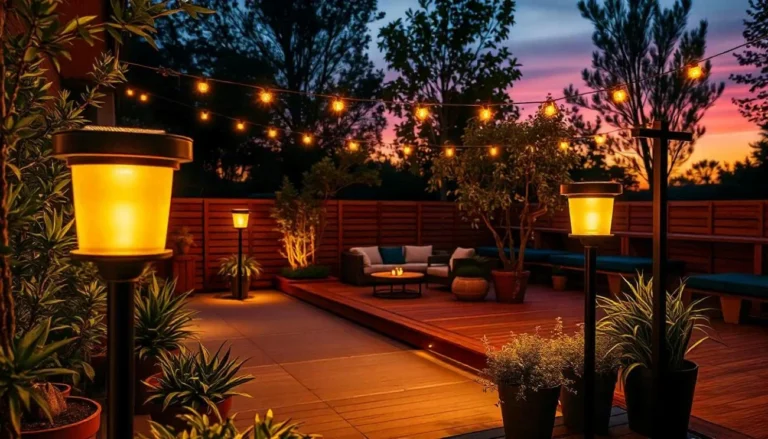
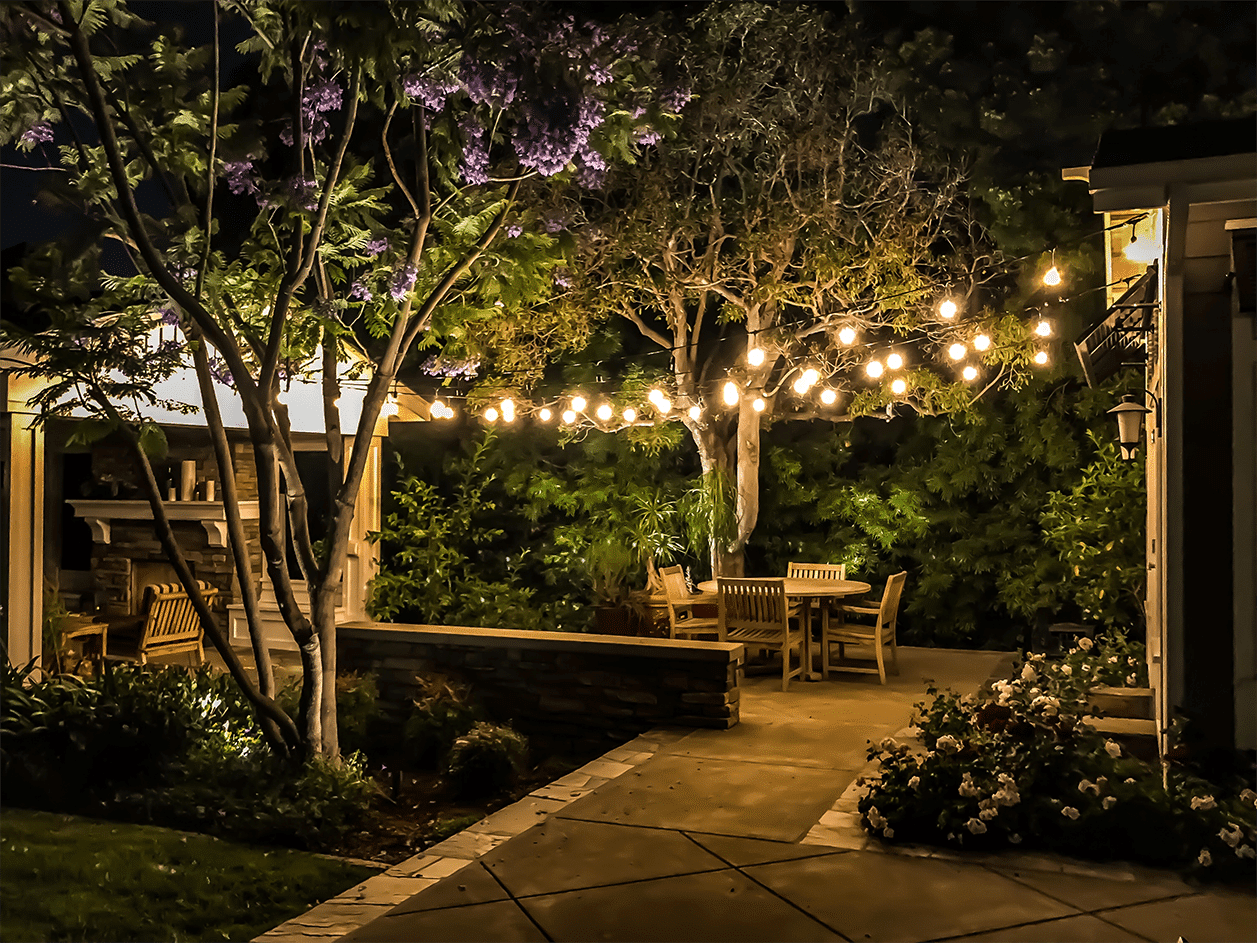
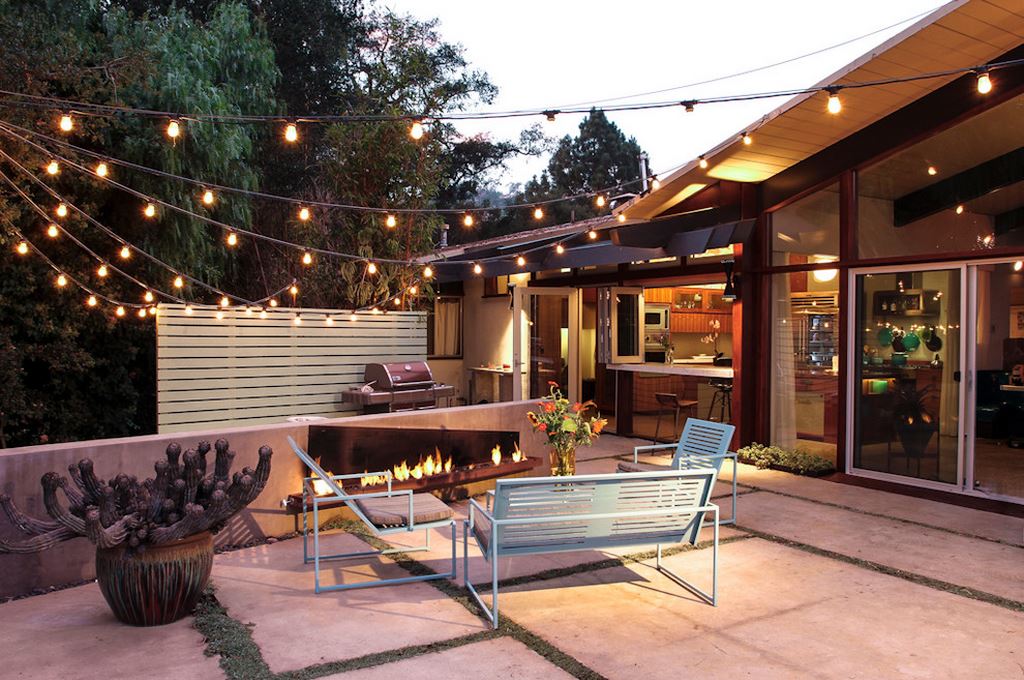
String and Festoon Catenary Systems: Suspended flexible cable arrays fit with weather-rated vintage or modern LED bulbs. They cast a warm, overarching ambient canopy across open dining areas.
-
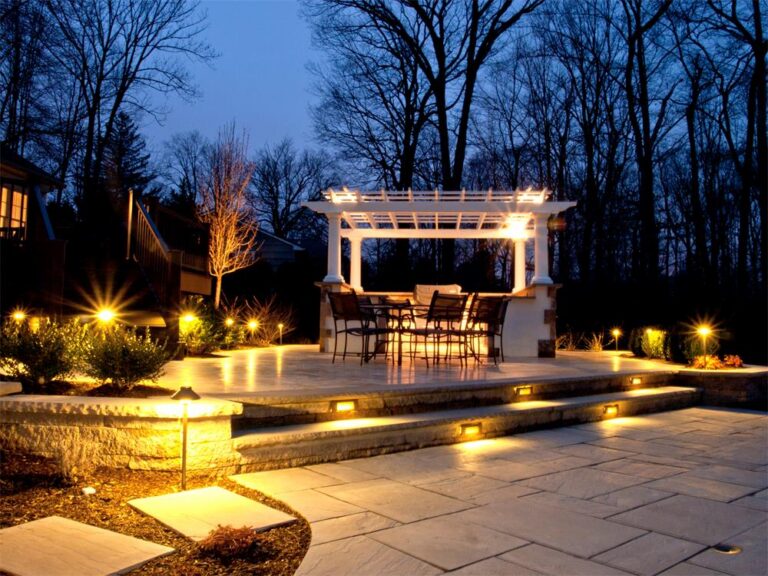
Pergola and Overhead Integrated Downlights: Low-profile recessed or surface-mounted luminaires integrate directly into wooden or aluminum overhead framing. They provide direct task and dining illumination.
-
Hardscape Integrated Step and Retaining Wall Lights: Low-profile fixtures recess into vertical masonry risers or wall caps. They cast horizontal light across walking surfaces without upward glare.
-
Task-Specific Outdoor Kitchen Sconces: Weather-resistant directional task luminaires mount adjacent to grill stations and prep counters to ensure safe food preparation.
-
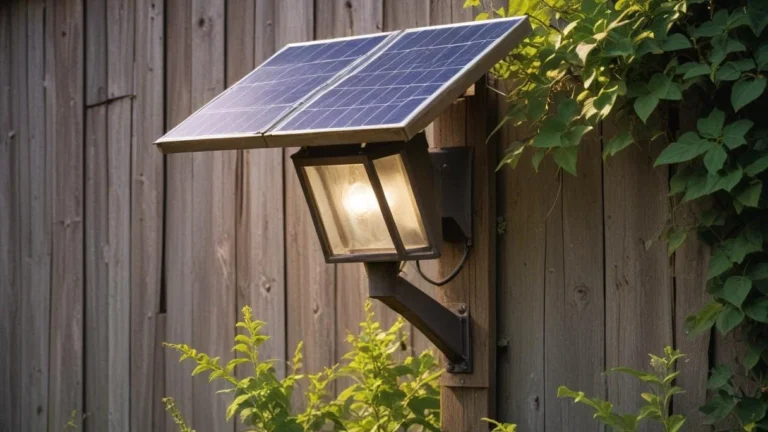
Movable and Rechargeable Cordless Lamps: Portable battery-powered table luminaires offer flexible accent lighting for dining tables and seating groupings without permanent wiring constraints.
-
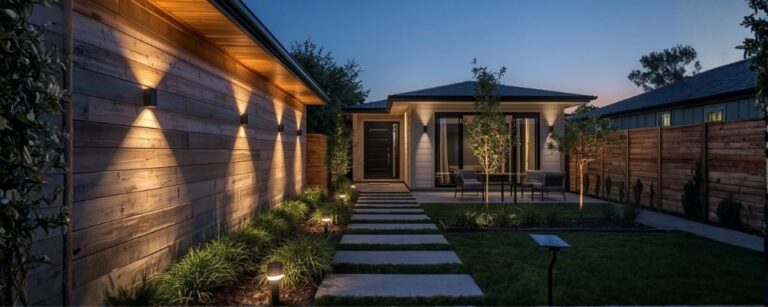
Up-Down Architectural Wall Slices: Flat, geometric housings affix to perimeter house walls. They project light downward and upward to graze textured stucco, brick, or stone siding.
-
Landscape Accent and Grazing Projectors: Adjustable remote-mounted fixtures throw narrow beam spreads across adjacent planting beds or retaining walls to frame the patio perimeter.
| Category | Typical Mounting | Primary Optical Effect | Common Application | Primary Trade-Off |
| Catenary String Lights | Suspended cable / Posts | Broad overhead canopy glow | Open patios, dining terraces | Vulnerable to high wind loads; requires sturdy anchoring |
| Pergola Downlights | Recessed / Surface beam | Focused downward task light | Covered patios, outdoor kitchens | Requires pre-planned wiring concealment within framing |
| Retaining Wall Lights | Recessed vertical masonry | Horizontal safety wash | Patio borders, sunken seating areas | Precise rough-in required during masonry construction |
| Outdoor Kitchen Sconces | Wall-mounted task box | High-CRI directional task wash | Grill stations, prep counters | Prone to grease and moisture accumulation |
| Cordless Table Lamps | Portable surface base | Intimate close-range accent | Dining tables, moveable seating | Requires routine battery recharging or solar maintenance |
Decision Logic for Category Selection
Choosing the appropriate category depends primarily on the architectural substrate and the functional requirement of the patio zone. For open-sky dining terraces without overhead structures, catenary wire systems anchored to structural posts provide optimal ambient coverage. Where permanent roof structures or pergolas exist, integrated recessed downlights combined with wall-mounted perimeter sconces offer a cleaner architectural aesthetic. The guiding principle is to match the mounting method to the structural life of the material. Specifically, fixtures should never compromise waterproofing membranes, exterior insulation finishes, or structural integrity.
Detailed Real-World Scenarios
Analyzing practical applications reveals how lighting theory translates into physical execution across diverse residential settings.
Scenario 1: The Urban Concrete Courtyard
A compact, high-walled urban patio encloses by brick masonry and exposes to intense ambient city light pollution.
-
Constraints: Zero structural overhangs for mounting lights; strict neighbor privacy codes; inability to excavate deep trenches due to utility congestion.
-
Decision Points: The designer installs freestanding architectural posts to support a taut catenary string light grid. They combine this with low-voltage step lights recessed into perimeter raised planter walls.
-
Failure Modes: Relying on high-mounted floodlights would destroy neighbor relations and violate light trespass ordinances. Furthermore, using unshielded floor lamps would create severe upward glare.
-
Second-Order Effects: The warm overhead canopy creates an intimate outdoor room feeling. Consequently, it tricks the eye into ignoring the harsh vertical walls of surrounding buildings.
Scenario 2: The Multi-Tiered Lakeside Deck
An expansive hardwood patio steps down toward a natural shoreline, featuring a built-in kitchen and sunken fire pit.
-
Constraints: High humidity and moisture exposure; extreme temperature swings causing wood expansion; strict environmental regulations protecting aquatic wildlife.
-
Decision Points: All fixtures specify marine-grade 316 stainless steel with IP67 ratings. Stair risers feature amber-shifted low-voltage step lights to prevent disorienting local bat and insect populations.
-
Failure Modes: Standard powder-coated steel fixtures would rust within two seasons. Moreover, using high-color-temperature white light would attract clouds of midges and mosquitoes directly into the dining area.
-
Second-Order Effects: Low-level amber illumination along stair treads guarantees safe navigation down to the water without casting disruptive light beams across the lake surface.
Scenario 3: The Covered Modern Pergola Patio
A minimalist aluminum louvered pergola attaches to a glass-walled contemporary residence.
-
Constraints: Maintaining clean architectural lines; concealing all wiring channels within hollow aluminum extrusion profiles; integrating dimming controls with a smart home automation hub.
-
Decision Points: The team specifies micro-profile linear LED channel extrusions slotted directly into the underside of pergola louvers. They pair these with recessed uplights at the base of structural posts.
-
Failure Modes: Surface-mounting conduit or junction boxes would completely ruin minimalist architectural intent. Additionally, incompatible dimming drivers would cause audible hum and LED flicker.
-
Second-Order Effects: Concealed linear sources provide seamless, glare-free task light for the dining table below. Meanwhile, they allow the glass house wall to remain reflective rather than mirroring interior clutter.
Scenario 4: The Mediterranean Stone Courtyard
A rustic outdoor living space features heavy hand-chiseled fieldstone walls, a masonry fireplace, and antique terra cotta paving.
-
Constraints: Irregular masonry surfaces that complicate surface mounting; protecting historic stone texture from destructive drilling; maintaining a warm, fire-like ambiance.
-
Decision Points: Designers utilize heavy solid-brass bullet spotlights staked into perimeter planting beds to graze stone walls at a shallow angle. They supplement this with portable, heavy-weighted rechargeable bronze table lamps.
-
Failure Modes: Drilling deep anchor holes into fragile fieldstone risks fracturing historic masonry. Furthermore, using clinical 4000K LED bulbs would clash entirely with warm rustic architecture.
-
Second-Order Effects: Grazing the stone surface accentuates its deep natural texture and color variation. Meanwhile, portable table lamps eliminate the need for unsightly extension cords crisscrossing the stone floor.
Planning, Cost, and Resource Dynamics
Executing a sophisticated patio lighting plan involves balancing direct hardware costs with extensive labor, electrical infrastructure, and long-term energy expenditures. Unlike interior lighting where fixtures easily swap out, exterior patio installations require durable underground wiring, weather-sealed enclosures, and structural integration. Because of this, alterations become costly after completion.
Direct costs are dominated by luminaire build quality, optical engineering, and driver reliability. High-end architectural fixtures feature precision-machined metals, replaceable LED light engines, and sophisticated internal dimming protocols. Meanwhile, indirect costs include trenching, low-voltage transformer placement, conduit installation, and programming of smart-home integration hubs. Opportunity costs typically manifest as the trade-off between extensive landscape trenching after patio paving versus coordinating electrical rough-ins prior to hardscape installation.
| Cost Component | Budget Range (USD) | Primary Variables | Long-Term Financial Impact |
| Entry-Level Fixtures | $50 – $150 per unit | Stamped aluminum, integrated non-replaceable LED | Frequent replacement cycle; higher failure rate in harsh climates |
| Mid-Tier Architectural | $150 – $450 per unit | Cast aluminum / brass, replaceable light engines | Balanced lifespan; reliable thermal performance |
| High-End Custom / Spec | $450 – $1,500+ per unit | Marine-grade stainless, custom optics, modular drivers | Maximum durability; lowest lifecycle replacement cost |
| Infrastructure & Wiring | $2,500 – $10,000+ total | Trenching length, transformer capacity, smart controls | Foundation of system stability; difficult to upgrade later |
| Professional Design & Commissioning | $1,500 – $5,000+ flat fee | Site complexity, zoning coordination, scene programming | Prevents costly layout errors and optical glare issues |
Tools, Strategies, and Support Systems
Deploying a resilient, high-performance exterior patio lighting system requires a structured toolkit of diagnostic instruments, design software, and infrastructural support components.
-
Photometric Simulation Software: Programs such as professional lighting calculation tools model light levels, foot-candle distributions, and boundary spill before physical installation.
-
Digital Light Meter: A lux or foot-candle meter is essential for commissioning the system on-site. It verifies that actual light levels conform to design intent and local dark-sky compliance thresholds.
-
Multi-Tap Magnetic Transformers: Unlike electronic transformers, heavy-duty magnetic low-voltage transformers compensate for voltage drop over long wire runs common in expansive patio layouts.
-
Gel-Filled Waterproof Wire Connectors: Specialized direct-burial connectors prevent moisture ingress and subsequent galvanic corrosion at low-voltage splice points.
-
Smart Astronomical Timers & Control Hubs: Automated control systems link to local sunrise and sunset schedules as well as astronomical coordinates, eliminating manual adjustments and seasonal drift.
-
Thermal Imaging Camera: Technicians use this during post-installation testing to identify localized overheating in drivers or junction boxes caused by improper enclosure ventilation.
-
Insulated Trenching and Boring Equipment: This minimizes landscape disruption when routing conduit beneath established patio pavers and surrounding turf.
Risk Landscape and Failure Modes
The intersection of high-voltage electricity, delicate solid-state electronics, and aggressive natural environments generates a distinct taxonomy of operational risks.
-
Moisture Ingress and Hydrolysis: Water penetration through degraded seals or hairline cracks in housing materials leads to immediate short-circuiting and permanent LED driver destruction.
-
Voltage Drop and Luminous Degradation: Inadequate wire gauge sizing over long runs results in voltage starvation at distant fixtures. Consequently, this manifests as uneven brightness and premature electronic flicker.
-
Thermal Overload: Enclosing LED drivers or high-output modules in unventilated structural cavities traps heat. This accelerates semiconductor junction temperature degradation and shifts color output.
-
Galvanic Corrosion: Direct contact between dissimilar metals—such as aluminum fixture bodies in contact with stainless steel fasteners without dielectric isolation—triggers rapid electrochemical degradation.
-
Root and Rodent Damage: Unarmored low-voltage cabling installed too shallowly in perimeter planting beds frequently severs due to landscape tools or chewing by subterranean rodents.
-
Optical Yellowing: Ultraviolet degradation of low-grade polycarbonate lenses causes severe yellowing and opacity over time. This drastically reduces light output and alters intended color temperatures.
Compounding risks occur when multiple minor failures interact. For instance, a minor compromise in a fixture’s top gasket allows seasonal condensation to enter. When combined with excessive operating temperatures from an under-ventilated recess, trapped moisture vaporizes. It then accelerates corrosion on circuit boards and ultimately causes catastrophic driver failure within a single operational season.
Governance, Maintenance, and Long-Term Adaptation
Maintaining an architectural patio lighting system requires a disciplined, cyclical governance framework that goes beyond simple bulb replacement. Because modern fixtures frequently utilize integrated, non-user-serviceable LED arrays or specialized modular engines, maintenance strategies must focus on systemic health monitoring rather than reactive repairs.
Regular inspection cycles should synchronize with seasonal shifts. In autumn, clearing fixtures of accumulated leaf litter and organic debris is essential, as debris traps moisture against optical lenses and impedes thermal dissipation. Then, in spring, inspecting wiring connections within junction boxes for frost heave damage or rodent intrusion is vital. Furthermore, low-voltage transformer outputs require verification with a digital multimeter.
Adjustment triggers for system modification include landscape maturation—where growing perimeter shrubs obstruct previously targeted wall grazers—and shifts in spatial use patterns. When a mature planting blocks a projector beam, repositioning the luminaire or adjusting its beam spread via interchangeable optical lenses becomes necessary. Finally, establishing a digital asset management ledger that records fixture part numbers, driver specifications, and circuit mapping ensures future maintenance executes with minimal diagnostic friction.
Measurement, Tracking, and Evaluation
Assessing the ongoing success of an exterior patio lighting installation requires balancing quantitative metrics with qualitative experiential evaluations. Relying solely on numerical specifications ignores human perception of space and shadow.
-
Quantitative Indicators: Measured foot-candle levels at property boundaries verify dark-sky compliance. Additionally, tracking total system wattage draw per square foot of illuminated space, voltage drop percentage at terminal fixtures, and mean time between failures for electronic drivers provides critical data.
-
Qualitative Signals: Visual comfort assessments evaluate the absence of glare during night dining. Other signals include textural definition of vertical masonry and foliage, seamless visual transitions from interior living zones to exterior patios, and the absence of intrusive light spill into bedroom windows.
Documentation Examples
-
Photometric Compliance Log: A tabular record compares target foot-candle calculations against actual on-site meter readings taken at midnight along property perimeters.
-
Circuit Schematic and Load Ledger: A master electrical drawing details transformer loads, cable gauges, run lengths, and zone allocations to prevent future over-allocation.
-
Driver and Optic Replacement Matrix: A maintenance catalog lists exact manufacturer part numbers, replacement LED module availability, and optical lens dispersion angles for every installed fixture type.
Common Misconceptions and Oversimplifications
-
Myth: Higher lumen counts equate to superior patio design.
-
Correction: Excessive brightness destroys nighttime ambiance, washes out architectural nuance, and creates blinding glare. Instead, modern design relies on optical precision and controlled luminance rather than raw power.
-
-
Myth: All exterior LED fixtures are maintenance-free for 50,000 hours.
-
Correction: While semiconductor diodes may possess long lifespans, surrounding electronic drivers, internal gaskets, and thermal management components frequently fail long before diodes degrade.
-
-
Myth: Color temperature does not matter outdoors as long as fixtures look modern.
-
Correction: Cool color temperatures above 4000K create harsh, institutional atmospheres and disrupt nocturnal wildlife cycles. Conversely, warm spectrums between 2700K and 3000K preserve natural material warmth and human comfort.
-
-
Myth: Low-voltage systems eliminate all electrical safety concerns.
-
Correction: While low-voltage systems reduce shock hazards, improper wire sizing on long runs causes severe voltage drop, overheating, and potential fire risks at high-current transformer terminals.
-
-
Myth: Fixtures with high IP ratings require no seasonal maintenance.
-
Correction: Even IP67-rated fixtures accumulate surface dust, organic films, and mineral deposits from irrigation water that degrade optical performance and require regular physical cleaning.
-
-
Myth: Uplighting every plant and wall creates a sophisticated resort-style aesthetic.
-
Correction: Over-lighting creates visual chaos and eliminates restful darkness essential for spatial depth. Instead, selective restraint and strategic shadow are fundamental to high-end composition.
-
Ethical, Practical, and Contextual Considerations
The deployment of artificial light in the nocturnal landscape carries profound environmental responsibilities. Unshielded exterior illumination disrupts migratory avian navigation, interferes with insect pollination cycles, and suppresses nocturnal mammalian foraging behaviors. Furthermore, light trespass across property boundaries infringes upon the privacy and circadian health of neighbors.
Adhering to strict dark-sky principles—such as utilizing fully shielded fixtures, programming curfews via astronomical timers, and deploying minimum necessary wattages—reconciles modern architectural aspirations with ecological stewardship. Ultimately, the objective is to honor the natural rhythm of day and night while providing precise functional clarity required for contemporary living.
Conclusion
The discipline of patio illumination within modern architecture demands an integration of rigorous technical planning and sensitive aesthetic restraint. By prioritizing optical precision, environmental responsibility, and long-term material resilience over sheer brightness, contemporary design transforms outdoor spaces into harmonious extensions of the built environment. True mastery lies in understanding that darkness and light are equal partners in architectural composition.